


How to Install and Set Up a Fiber AOM System
Before installing a Fiber AOM system, it is important to prepare a clean and stable environment. The workspace should be free from dust, vibrations, and temperature fluctuations. A vibration-isolated optical table is often recommended for precision applications. Ensuring a controlled environment helps prevent alignment issues and signal instability during operation.
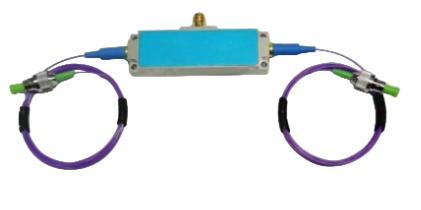
Connecting the Optical Fiber Components
The first step in setup involves properly connecting the input and output optical fibers to the AOM. Care must be taken to align connectors correctly and avoid excessive bending of the fiber, which can introduce losses. Using high-quality fiber connectors and ensuring they are clean will significantly improve signal transmission efficiency.
Setting Up the RF Driver
The RF driver is responsible for generating the acoustic waves inside the AOM. Connect the RF driver to the AOM using the appropriate cables, ensuring secure and stable connections. Set the driver to the recommended center frequency specified by the manufacturer. Gradually adjust the RF power while monitoring system performance to avoid overloading the device.
Aligning the Optical Signal
Proper alignment of the optical signal is critical for achieving high diffraction efficiency. Carefully adjust the input beam or fiber alignment to ensure maximum coupling into the AOM. Monitoring the output power while making small adjustments helps identify the optimal alignment position. Precision at this stage directly impacts overall system performance.
Testing and Verifying System Performance
After installation, it is important to test the system to ensure everything is functioning correctly. Measure key parameters such as insertion loss, modulation depth, and response time. Verify that the output signal matches expected performance specifications. Any discrepancies should be addressed by revisiting alignment, RF settings, or fiber connections.
Final Adjustments and Optimization
Once the system is operational, perform fine-tuning to optimize performance. This may include slight adjustments to RF frequency, power levels, or fiber positioning. Continuous monitoring during this stage helps achieve the best balance between efficiency and stability. Proper final optimization ensures reliable long-term operation of the Fiber AOM system.

 English
 Arabic
 Español
 Português
 Deutsch
 Türkçe
 Dutch
Dutch
 Italiano
 Russian
 Romaian