


Beyond Cyberspace: Physical Risks Emerging from Generative AI
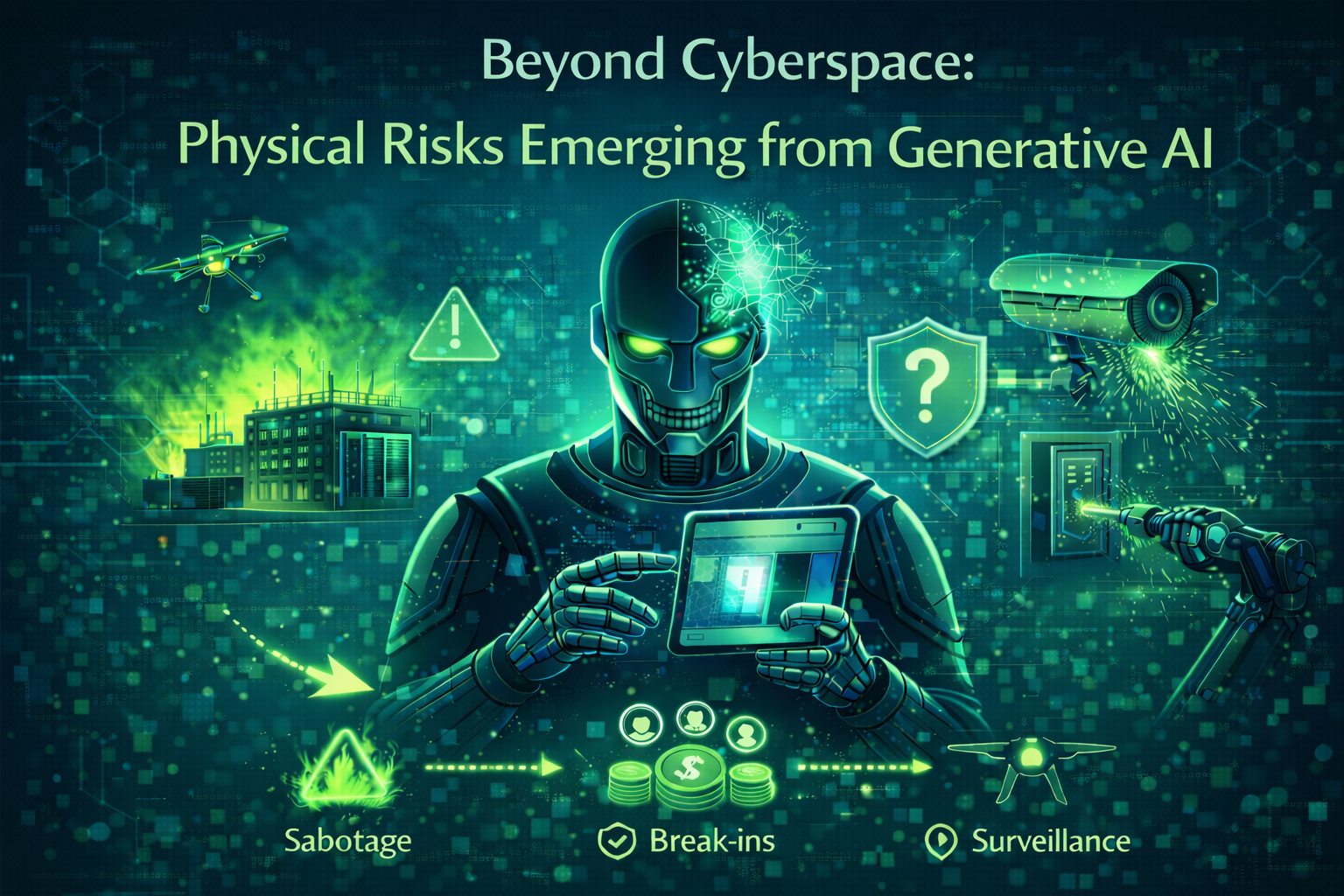
Generative AI (GenAI) is no longer confined to digital creativity it is increasingly influencing real-world systems and operations. While its benefits are undeniable, the technology is also introducing a new class of risks that extend into the physical domain. As GenAI becomes embedded in critical infrastructure, industrial systems, and autonomous technologies, its misuse can lead to tangible, real-world consequences.
One of the most pressing concerns is the manipulation of connected physical systems. GenAI can be used to generate malicious scripts, commands, or configurations targeting Industrial Control Systems (ICS), smart grids, and IoT devices. In sectors like manufacturing or energy, such interference could disrupt operations, damage equipment, or even endanger human lives. As organizations increase automation, the link between digital compromise and physical impact becomes stronger.
Another significant vulnerability arises from deepfake-driven social engineering. GenAI can produce highly realistic audio and video impersonations, enabling attackers to deceive employees or security personnel. These tactics can be used to gain unauthorized physical access to facilities, bypass identity verification, or manipulate critical decisions. Unlike traditional cyberattacks, these methods directly bridge the gap between digital deception and physical intrusion.
GenAI also enhances attack planning and reconnaissance. By analyzing publicly available data, AI models can generate detailed insights about physical locations, infrastructure layouts, and operational processes. This allows attackers to design highly targeted and efficient attacks against physical assets, reducing the likelihood of detection and increasing potential impact.
The rise of AI-generated misinformation further complicates physical security. False alerts, fabricated emergency scenarios, or manipulated sensor data can disrupt real-world operations. In environments such as healthcare, transportation, or emergency services, these disruptions can lead to delayed responses, operational chaos, or even loss of life.
Additionally, the integration of GenAI with robotics and autonomous systems introduces new risks. If these systems are compromised, they could behave unpredictably or maliciously, posing direct threats to human safety. For example, autonomous vehicles or AI-controlled machinery could be manipulated to cause accidents or operational failures.
To address these challenges, organizations must adopt a converged security approach that integrates both cybersecurity and physical security strategies. This includes securing AI models, validating outputs, enforcing strict access controls, and continuously monitoring both digital and physical environments. Implementing Zero Trust principles and strong AI governance frameworks is essential to mitigate emerging risks.
In conclusion, GenAI is reshaping not only how we interact with technology but also how risks manifest in the physical world. As the boundary between digital and physical systems continues to blur, organizations must proactively adapt their security strategies to ensure safety, resilience, and trust in an AI-driven future.
Read more : cybertechnologyinsights.com/
To participate in our interviews, please write to our Media Room at info@intentamplify.com

 English
 Français
 Español
 Português
 Deutsch
 Türkçe
 Dutch
Dutch
 Italiano
 Russian
 Romaian