


Learn LIC Policy Surrender Before Maturity Process and Rules
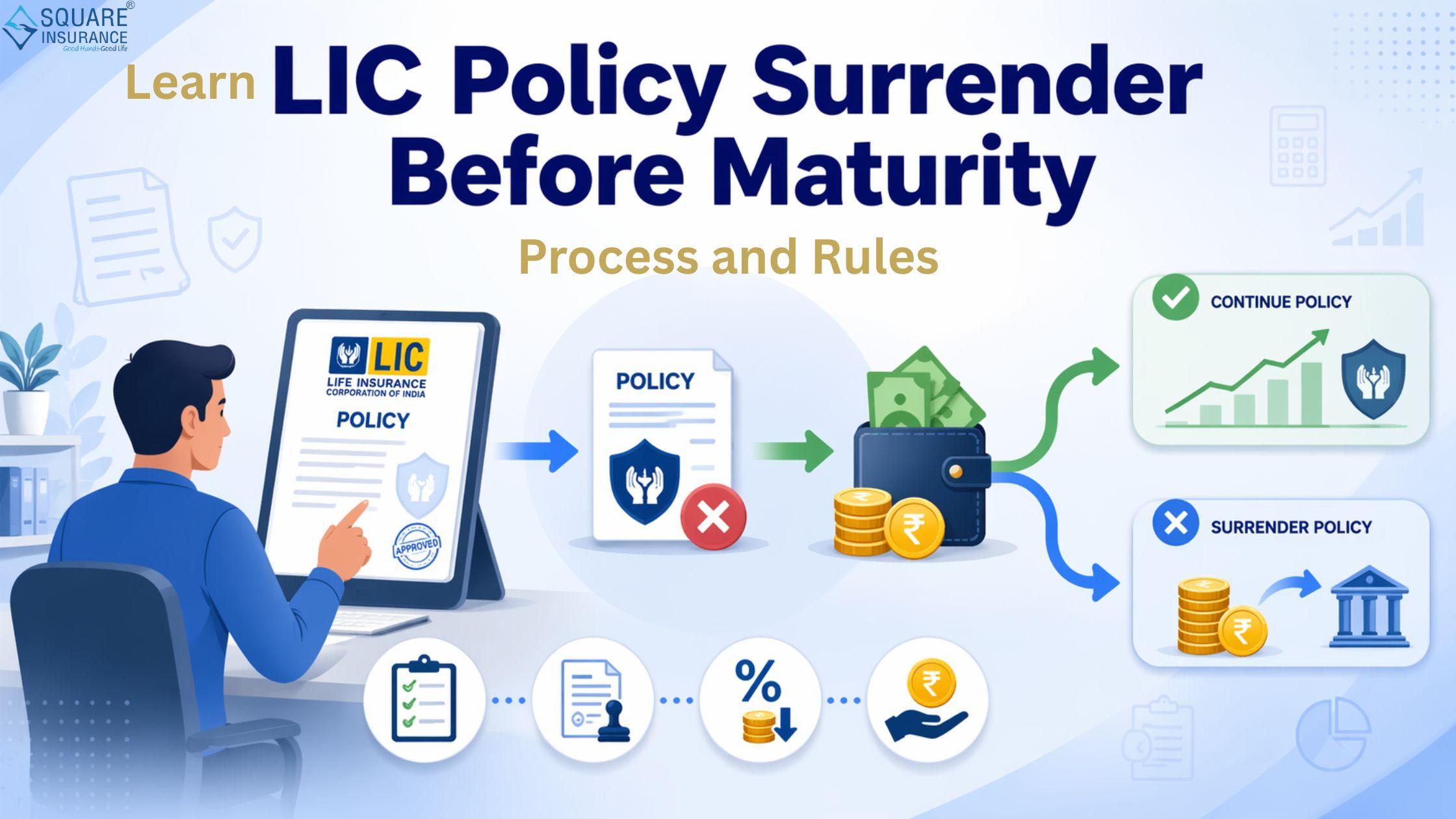
Life insurance policies are long-term financial commitments designed to offer protection and savings benefits over time. However, due to changing financial needs, policyholders may sometimes consider exiting their policy before its maturity. Understanding the full process becomes important when dealing with LIC Policy Surrender Before Maturity as it directly impacts the benefits, charges, and final payout value of the policy.
Surrendering an LIC policy before maturity means voluntarily terminating the contract with the insurance provider and receiving the surrender value instead of waiting for the full policy term to end. This decision should always be made after carefully evaluating financial consequences, policy terms, and alternative options available within the policy structure.
What is LIC Policy Surrender?
LIC policy surrender refers to the process of discontinuing an active life insurance policy before its maturity period. When a policyholder surrenders the policy, they receive a lump sum amount known as the surrender value, which is calculated based on premiums paid and the duration for which the policy has been active.
Not all policies are eligible for surrender. Typically, a policy must complete a minimum lock-in period before surrender value becomes applicable. This period varies depending on the policy type and its terms and conditions.
Eligibility for Surrendering LIC Policy
Before initiating the surrender process, it is important to check eligibility criteria:
- The policy must have completed the minimum premium-paying term.
- Traditional plans like endowment or money-back policies usually acquire surrender value after 2–3 years.
- ULIP-based policies may have a different lock-in period, usually around 5 years.
- The policy must be active and not lapsed beyond revival period.
Understanding eligibility ensures that the policyholder does not face rejection during the surrender process.
Types of Surrender Value in LIC Policies
LIC provides different types of surrender values depending on the policy structure:
1. Guaranteed Surrender Value (GSV)
This is the minimum amount assured by LIC after completing a specific duration. It is usually a percentage of total premiums paid, excluding bonuses and extra charges.
2. Special Surrender Value (SSV)
This value is generally higher than GSV and is calculated based on the policy’s performance, bonuses accumulated, and duration completed.
Policyholders receive the higher of these two values at the time of surrender.
Step-by-Step Process to Surrender LIC Policy
The surrender process involves a few structured steps:
Step 1: Visit LIC Branch Office
The policyholder must visit the nearest LIC branch where the policy was originally issued or serviced.
Step 2: Fill Surrender Form
A surrender request form must be filled accurately with policy details, personal information, and reason for surrender.
Step 3: Submit Required Documents
Documents generally include:
- Original policy bond
- Identity proof
- Bank account details
- Cancelled cheque
- PAN card (if applicable)
Step 4: Verification Process
LIC officials verify the policy details, premium payments, and eligibility criteria before processing the request.
Step 5: Processing of Surrender Value
Once approved, the surrender amount is credited directly to the registered bank account of the policyholder.
Factors Affecting Surrender Value
Several factors influence the final surrender value:
- Number of premiums paid
- Duration of policy completion
- Bonus accumulated under the policy
- Type of insurance plan
- Charges deducted by LIC
Early surrender usually results in lower returns, as insurance policies are designed for long-term financial growth.
Tax Implications on Surrender
Surrendering an LIC policy may have tax consequences. In many cases, the surrender value becomes taxable if the policy does not meet conditions under prevailing tax laws. It is advisable to understand tax liability before making a decision, as it may reduce overall benefits received.
Advantages and Disadvantages of Surrendering LIC Policy
Advantages
- Immediate liquidity in case of financial need
- Exit from an unaffordable premium structure
- Freedom to invest in alternative financial instruments
Disadvantages
- Loss of life insurance coverage
- Lower returns compared to maturity benefits
- Possible tax implications
- Loss of future bonuses
A balanced evaluation is necessary before proceeding.
Alternative Options Instead of Surrender
Instead of surrendering, policyholders may consider:
- Policy Loan: Borrowing against policy value while keeping coverage active
- Paid-up Policy Conversion: Stopping premiums but keeping reduced coverage
- Revival of Lapsed Policy: Restoring benefits by paying due premiums
These alternatives help maintain financial protection while addressing short-term liquidity needs.
Frequently Asked Questions (FAQs)
Q1. Can I surrender my LIC policy anytime?
No, surrender is allowed only after completing the minimum lock-in period specified in the policy terms.
Q2. How is LIC surrender value calculated?
It is calculated based on premiums paid, policy duration, and bonus accumulated, subject to LIC’s surrender value factors.
Q3. Is surrender value taxable?
Yes, in certain cases, surrender value may be taxable depending on policy conditions and applicable income tax rules.
Q4. How long does it take to receive surrender payment?
Generally, it takes around 7–15 working days after successful document verification and approval.
Q5. Will I lose all benefits if I surrender my policy?
Yes, surrendering terminates the policy and stops all future insurance and maturity benefits.
Q6. Can I revive a surrendered LIC policy?
No, once a policy is fully surrendered, it cannot be revived.
Conclusion
Surrendering an LIC policy before maturity is a significant financial decision that should be taken only after careful evaluation of long-term consequences. While it offers immediate liquidity, it also results in the loss of insurance protection and potential maturity benefits. Policyholders must assess alternatives such as loans or paid-up options before making a final decision.
For individuals managing multiple insurance commitments or seeking better clarity on policy decisions, professional guidance and proper planning play an important role in avoiding financial loss.
Square Insurance plays a helpful role in simplifying insurance-related understanding and guiding users toward informed financial decisions.

 English
 Arabic
 Español
 Português
 Deutsch
 Türkçe
 Dutch
Dutch
 Italiano
 Russian
 Romaian