Introduction
A Major Orthopedic Modular Operation Theatre represents a modern, technology-driven approach to surgical infrastructure, specifically designed for complex orthopedic procedures. Compared to conventional operation theatres, modular OTs offer superior infection control, faster installation, and better system integration. Understanding the difference between the two helps healthcare facilities choose the right solution for safe and efficient surgical outcomes.
What Is a Modular OT?
A modular OT is constructed using prefabricated components such as wall panels, ceilings, and integrated systems that are manufactured in controlled environments and assembled on-site. These OTs are designed to maintain strict sterility, optimize workflow, and support advanced medical equipment.
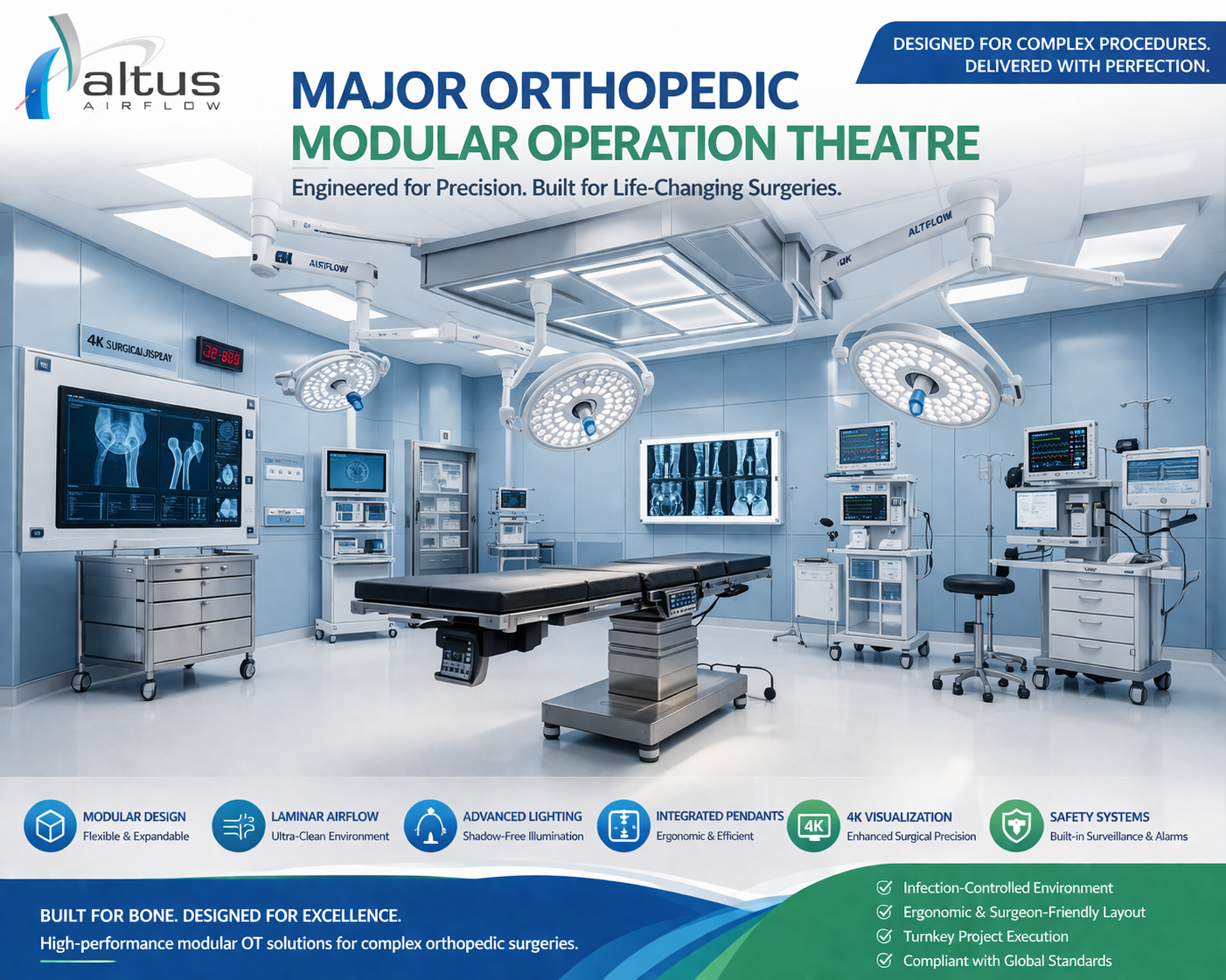
A Major Orthopedic Modular Operation Theatre is specially engineered to handle procedures like joint replacement and spine surgeries, where precision and hygiene are critical.
What Is a Conventional OT?
A conventional OT is built using traditional construction methods such as brickwork, plaster, and manual installation. While functional, these OTs often lack the advanced environmental controls and flexibility required in modern surgical settings.
Key Differences Between Modular OT and Conventional OT
Construction Method
Modular OTs use prefabricated systems for precise and quick installation, whereas conventional OTs rely on time-consuming on-site construction.
Installation Time
Modular OTs are completed faster due to factory-made components. Conventional OTs take longer because of manual construction processes.
Infection Control
A Major Orthopedic Modular Operation Theatre uses seamless, anti-bacterial surfaces and advanced airflow systems to minimize infection risks. Conventional OTs may have joints and cracks that can harbor bacteria.
Airflow and Ventilation
Modular OTs include advanced HVAC systems with laminar airflow and HEPA filters. Conventional OTs typically have basic ventilation systems with limited control over air quality.
Maintenance
Modular OTs are easier to clean and maintain due to smooth surfaces. Conventional OTs require more frequent maintenance.
Flexibility and Upgrades
Modular OTs can be easily upgraded or modified. Conventional OTs are difficult to alter once constructed.
Cost Efficiency
While modular OTs may have a higher initial cost, they offer lower maintenance and operational expenses over time. Conventional OTs may seem cheaper initially but can incur higher long-term costs.
Technology Integration
A Major Orthopedic Modular Operation Theatre supports advanced systems like automation, control panels, and real-time monitoring, unlike conventional OTs.
Compliance with Standards
Modular OTs are designed to meet NABH, ISO, and cleanroom standards, while conventional OTs may not fully comply with modern requirements.
Why Modular OTs Are Ideal for Orthopedic Surgeries
Orthopedic surgeries often involve implants and long operating times, requiring strict sterility and precision.
A Major Orthopedic Modular Operation Theatre ensures:
- Reduced infection risk
- Controlled sterile environment
- Better surgical visibility
- Efficient workflow
Benefits of Modular OT Over Conventional OT
- Faster project completion
- Superior hygiene and infection control
- Advanced airflow systems
- Easy maintenance and durability
- Seamless integration of modern technology
Applications
Modular OTs are widely used in hospitals, orthopedic centers, trauma units, and advanced surgical facilities.
Conclusion
A modular OT offers significant advantages over a conventional OT in terms of hygiene, efficiency, flexibility, and technology. For complex procedures, especially in orthopedics, a Major Orthopedic Modular Operation Theatre provides a safer and more controlled environment. Healthcare facilities looking to upgrade their surgical infrastructure should consider modular solutions for long-term performance and patient safety.
Altus Airflow is one of the trusted names in delivering advanced modular OT solutions, ensuring high-quality design, engineering, and compliance with modern healthcare standards.
Frequently Asked Questions (FAQs)
1. How is a modular OT different from a conventional OT?
A Major Orthopedic Modular Operation Theatre uses prefabricated components, advanced airflow systems, and modern technology, while a conventional OT relies on traditional construction with limited environmental control.
2. Which OT is better for orthopedic surgeries?
Modular OTs are better due to improved sterility, airflow control, and precision.
3. Are modular OTs more expensive than conventional OTs?
They may have a higher initial cost but are more cost-effective in the long run.
4. Can modular OTs be upgraded easily?
Yes, modular OTs are highly flexible and can be upgraded or modified as needed.
5. Do modular OTs meet healthcare standards?
Yes, they are designed to comply with NABH, ISO, and cleanroom standards.
Read Our Previous Blog ---------------> What Is Modular Major Orthopedic Operation Theatre Design?




 Arabic
 Français
 Español
 Português
 Deutsch
 Türkçe
 Dutch
Dutch
 Italiano
 Russian
 Romaian