


BMW Engines: Engineering Excellence, Performance, and Innovation
Introduction
BMW engines are widely recognized for their balance of performance, efficiency, and engineering precision. The German automotive manufacturer BMW has built a strong global reputation for producing engines that deliver both driving pleasure and advanced technology. From compact turbocharged units to powerful inline-six and V8 engines, BMW has consistently pushed the boundaries of automotive engineering.
BMW’s philosophy, often summarized as “Sheer Driving Pleasure,” is deeply connected to its engine development. Every engine is designed not only for power but also for smoothness, responsiveness, and long-term reliability. Over the decades, BMW engines have evolved significantly, adapting to changing emissions regulations, fuel efficiency demands, and customer expectations.
History and Evolution of BMW Engines
BMW began its journey in the early 20th century, initially focusing on aircraft engines. This aviation background heavily influenced the company’s engineering mindset, especially in terms of performance and precision.
After entering the automotive industry, BMW developed a reputation for inline engines, particularly the inline-four and inline-six configurations. The inline-six engine became a signature of the brand due to its natural balance and smooth operation.
In the 1970s and 1980s, BMW introduced more advanced fuel-injected engines, improving efficiency and power output. By the 2000s, turbocharging became a key focus, allowing smaller engines to produce higher power while consuming less fuel.
Today, BMW engines are part of a modern era dominated by turbocharging, hybrid systems, and even fully electric powertrains.
Types of BMW Engines
BMW produces a variety of engine configurations, each designed for specific performance and efficiency goals.
Inline-4 Engines
The inline-four engine is commonly found in entry-level BMW models. These engines are compact, fuel-efficient, and equipped with turbocharging to enhance performance. Despite their smaller size, modern BMW inline-4 engines deliver impressive power outputs and smooth driving dynamics.
They are widely used in models such as the BMW 3 Series and X1, offering a good balance between performance and economy.
Inline-6 Engines
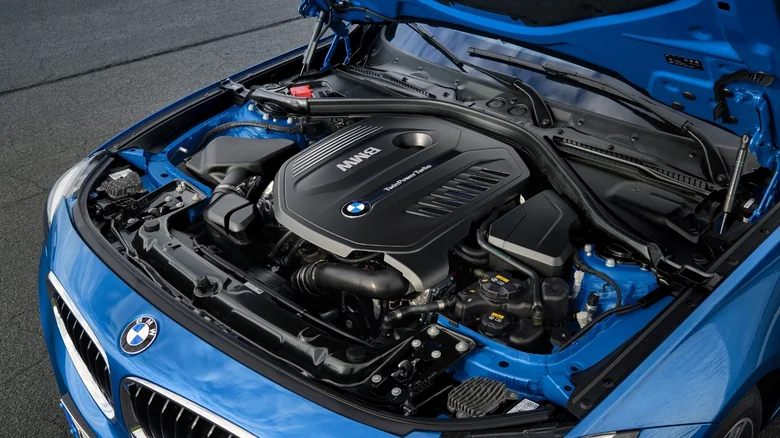
The inline-six engine is often considered the heart of BMW engineering. Known for its perfect balance and silky smooth operation, this engine configuration has been a BMW hallmark for decades.
Modern BMW inline-six engines are turbocharged and deliver exceptional power and torque. They are commonly found in performance-oriented models like the BMW M340i and X5. These engines provide strong acceleration while maintaining refinement and efficiency.
V8 Engines
BMW V8 engines are designed for high-performance luxury vehicles. They deliver strong horsepower and torque, making them suitable for large sedans and SUVs.
These engines are often twin-turbocharged, allowing them to produce incredible performance while maintaining reasonable fuel efficiency for their size. V8 engines are commonly used in models like the BMW M5 and X7.
V12 Engines
Although less common today, BMW’s V12 engines represent the peak of luxury and performance. These engines are extremely smooth and powerful, often used in flagship models such as the 7 Series in previous generations.
The V12 is a symbol of engineering prestige, combining extreme refinement with effortless power delivery.
BMW M Engines: High-Performance Engineering
BMW’s performance division, known as BMW M, specializes in high-output engines designed for motorsport-inspired driving.
M engines are heavily modified versions of standard BMW engines, featuring upgraded turbochargers, improved cooling systems, and enhanced internal components. These engines deliver significantly higher horsepower and torque.
Models like the BMW M3 and M4 use high-performance inline-six engines, while the M5 uses a powerful V8 engine. These engines are engineered for track performance while still being usable on regular roads.
Turbocharging Technology in BMW Engines
One of the most important advancements in modern BMW engines is turbocharging. Turbochargers use exhaust gases to compress incoming air, allowing more fuel to be burned and increasing power output.
BMW has mastered turbocharging technology to improve both performance and efficiency. Even smaller engines now produce power levels that were once only possible with larger engines.
Twin-turbo setups are also common in BMW engines, especially in six-cylinder and eight-cylinder models. This reduces turbo lag and provides smoother power delivery.
Fuel Efficiency and Emissions Control
Modern BMW engines are designed not only for performance but also for environmental responsibility. Strict emissions regulations have pushed BMW to innovate in fuel efficiency technologies.
Features such as direct fuel injection, variable valve timing, and lightweight engine construction help reduce fuel consumption. Start-stop systems are also used to save fuel during idle conditions.
Additionally, BMW is investing heavily in hybrid technology, combining internal combustion engines with electric motors to reduce emissions further.
BMW Hybrid and Electric Powertrains
In response to global environmental concerns, BMW has developed a range of hybrid and fully electric powertrains.
Hybrid engines combine traditional combustion engines with electric motors to improve fuel efficiency and reduce emissions. These systems are found in models like the BMW 530e and X5 xDrive45e.
BMW is also expanding its electric vehicle lineup under the BMW i series. While these vehicles do not use traditional engines, they represent the future direction of the company’s powertrain development.
Reliability and Maintenance of BMW Engines
BMW engines are known for their performance, but like all high-performance machines, they require proper maintenance. Regular oil changes, timely servicing, and using high-quality fuel are essential for maintaining engine health.
Some older BMW engines were known for reliability issues if not properly maintained. However, modern BMW engines have significantly improved in durability and long-term performance.
Proper care ensures that BMW engines can last for many years while maintaining strong performance levels.
The Future of BMW Engines
The future of BMW engines is moving toward electrification and sustainability. While traditional combustion engines will still exist for some time, BMW is heavily investing in electric and hybrid technologies.
Future engines will likely focus on reduced emissions, improved efficiency, and integration with electric drivetrains. Artificial intelligence and smart engine management systems may also play a larger role in optimizing performance.
BMW aims to maintain its identity of driving pleasure while adapting to a more environmentally conscious automotive industry.
Conclusion
BMW engines represent a blend of tradition, innovation, and performance engineering. From the iconic inline-six engines to powerful V8 and advanced hybrid systems, BMW has consistently set high standards in the automotive world.
With a strong focus on technology, efficiency, and driving experience, BMW continues to evolve its engines to meet modern demands. Whether in performance cars, luxury sedans, or future electric vehicles, BMW engines remain a symbol of engineering excellence and driving enjoyment.
For more information.

 Arabic
 Français
 Español
 Português
 Deutsch
 Türkçe
 Dutch
Dutch
 Italiano
 Russian
 Romaian