


What Programming Languages Should a Software Developer Learn?
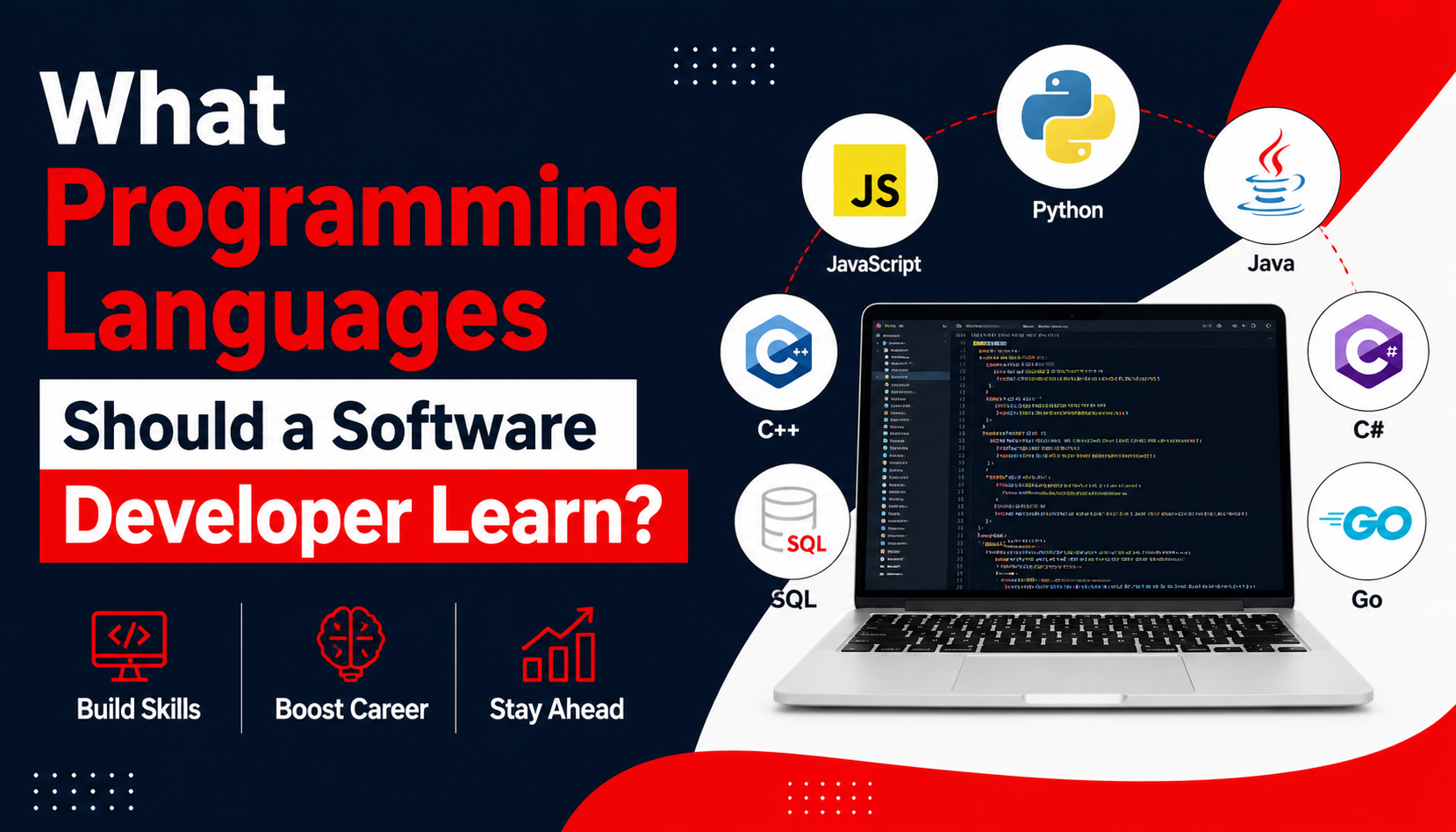
Choosing the right programming languages can shape how quickly someone grows in tech and what kind of work they can do later. A software developer often faces this exact question at the beginning of their journey: which languages actually matter, and which ones are just “nice to know”? The answer depends on goals, but there’s a clear set of languages that consistently show up in real-world projects, hiring requirements, and scalable systems.
Instead of trying to learn everything at once, it’s better to focus on a few strong foundations and then expand based on specialization. Below is a practical breakdown of the most useful programming languages and why they matter.
1. Python – The Beginner Friendly Powerhouse
Python is often the first language recommended because of its simplicity and readability. It’s widely used in web development, automation, data science, artificial intelligence, and even cybersecurity.
What makes Python stand out is its clean syntax. Beginners can focus more on logic instead of complex rules. At the same time, it’s powerful enough to be used in large companies like Google and Netflix.
If someone wants flexibility in their career path, Python is a safe starting point.
2. JavaScript – The Backbone of Web Development
If there’s one language that dominates the web, it’s JavaScript. Every modern browser supports it, making it essential for frontend development.
With frameworks like React, Vue, and Angular, JavaScript has become more than just a scripting language it’s now a full-stack tool. On the backend side, Node.js allows developers to build complete applications using just one language.
For anyone interested in building websites or web apps, JavaScript is non-negotiable.
3. Java – Enterprise-Level Stability
Java has been around for decades, and it still powers massive systems in banking, e-commerce, and Android apps.
Its biggest strength is stability. Java applications are known for being secure, scalable, and reliable. While it may feel more verbose compared to newer languages, it teaches strong object-oriented programming concepts that are useful across all languages.
Many large corporations continue to depend on Java for backend systems, making it a valuable skill in enterprise environments.
4. C# – Microsoft Ecosystem and Game Development
C# (C-Sharp) is heavily used in Microsoft environments and is the primary language for Unity game development.
It combines the power of C++ with a simpler structure, making it easier to learn while still being powerful. Developers working on desktop applications, enterprise tools, or games often rely on C#.
For those interested in gaming or Windows-based applications, this language is a strong choice.
5. C and C++ – Understanding the Core of Computing
C and C++ are lower-level languages that give deeper control over memory and system performance.
While they are not always used in everyday web development, they are extremely important in areas like operating systems, embedded systems, game engines, and high-performance applications.
Learning these languages builds a strong foundation in how computers actually work behind the scenes.
6. SQL – Managing Data Efficiently
Almost every application relies on data, and SQL (Structured Query Language) is the standard for managing it.
Whether it’s user accounts, transactions, or analytics, SQL helps store and retrieve information from databases. Even if someone specializes in frontend or backend development, understanding SQL is essential.
7. Go (Golang) – Modern Backend Performance
Go, created by Google, is gaining popularity for backend development and cloud based systems.
It is fast, simple, and designed for scalability. Companies working with distributed systems and microservices often choose Go because of its performance and efficiency.
Choosing the Right Path
Instead of learning every language at once, it’s smarter to start with one or two based on career goals. For example:
- Web development → JavaScript + Python
- Enterprise systems → Java + SQL
- Game development → C# + C++
- Backend/cloud systems → Go + Python
Consistency matters more than quantity. Mastering a few languages deeply will always be more valuable than knowing many at a surface level.
Final Thoughts
Programming languages are tools, and each one solves a different type of problem. The key is not to chase trends blindly but to build a strong foundation and then expand strategically.
A successful software developer is not defined by how many languages they know, but by how well they can use the right tool for the right job. If you’re planning to grow in this field or even hire skilled talent, many businesses now look toward outsourcing partners like Invedus, Wing Assistant, or Hire With Near to access experienced developers who already have these skills in place.

 English
 Arabic
 Français
 Español
 Português
 Deutsch
 Türkçe
 Dutch
Dutch
 Italiano
 Russian