


Overhead Cable Solutions for Modern Power Distribution Networks
Reliable electricity transmission is the backbone of modern infrastructure, industrial growth, and urban development. As global energy demand continues to increase, utilities and power contractors require dependable transmission and distribution solutions that offer long service life, cost efficiency, and strong electrical performance. One of the most widely used solutions in the power industry is the overhead cable system.
Overhead cables play a critical role in electrical transmission and distribution networks because they provide an economical and efficient method of delivering electricity over long distances. From rural electrification projects to urban power grids and industrial facilities, overhead cable systems remain essential for stable power supply operations.
For engineers, procurement managers, and EPC contractors, understanding the different types of overhead cables and selecting the right specifications is important for ensuring project reliability and operational safety.
What Is an Overhead Cable?
An overhead cable is an electrical conductor installed above ground on poles or transmission towers to transmit and distribute electrical power. These cables are designed to carry electricity efficiently while withstanding environmental conditions such as wind, rain, temperature changes, and mechanical stress.
Compared to underground cable systems, overhead cables offer several advantages:
- Lower installation costs
- Easier maintenance and inspection
- Faster fault detection and repair
- Better heat dissipation
- Flexible installation for long-distance transmission
Because of these benefits, overhead cable systems are widely used in power transmission and distribution networks worldwide.
Main Types of Overhead Cables
Different power projects require different conductor types depending on voltage level, environmental conditions, and mechanical requirements. Below are some of the most common overhead cable solutions used in utility infrastructure.
AAC – All Aluminum Conductor
AAC conductors are manufactured using high-purity aluminum strands. They offer excellent conductivity and are commonly used in short-distance urban distribution networks where high mechanical strength is not the primary requirement.
Key Benefits
- High electrical conductivity
- Lightweight structure
- Corrosion resistance
- Cost-effective solution for urban areas
AAC cables are ideal for low and medium-voltage distribution systems.
AAAC – All Aluminum Alloy Conductor
AAAC conductors are designed using aluminum alloy materials that provide improved mechanical strength and corrosion resistance compared to standard AAC conductors.
Applications
- Coastal regions
- High-humidity environments
- Medium and high-voltage transmission lines
- Long-span installations
AAAC conductors are widely preferred in projects where durability and environmental resistance are critical.
ACSR – Aluminum Conductor Steel Reinforced
ACSR conductors combine aluminum strands with a steel core to provide both excellent conductivity and high tensile strength. These conductors are commonly used for long-distance transmission lines and heavy-load applications.
Advantages
- High mechanical strength
- Suitable for long spans
- Excellent current-carrying capacity
- Reliable performance under heavy loads
ACSR conductors remain one of the most trusted choices for utility-scale transmission projects.
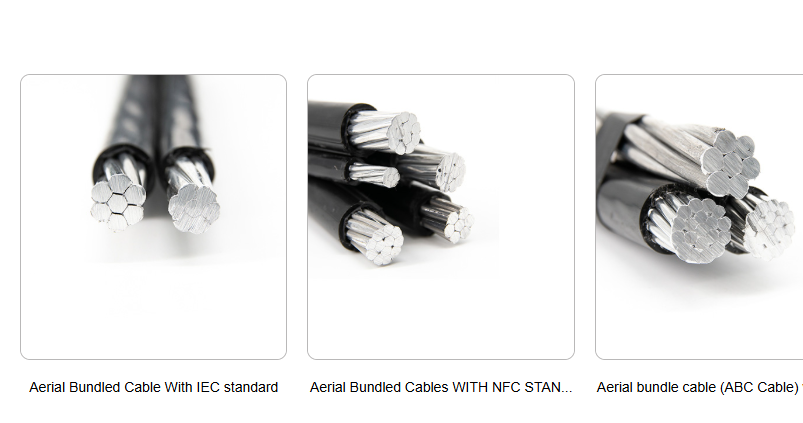
ABC – Aerial Bundled Cable
Aerial Bundled Cable (ABC) systems are insulated overhead cables designed for low-voltage distribution. These cables improve safety and reduce power theft while minimizing maintenance requirements.
Common Applications
- Urban distribution networks
- Residential electrification
- Rural power distribution
- Temporary construction power supply
ABC cables are becoming increasingly popular in modern smart-grid infrastructure projects.
Key Factors to Consider When Selecting Overhead Cable
Selecting the right overhead cable requires technical evaluation and project-specific planning. Engineers and procurement teams must consider several important factors before finalizing cable specifications.
Electrical Load Capacity
The conductor must support the required current load without excessive heating or voltage drop. Proper sizing ensures efficient energy transmission and long operational life.
Mechanical Strength
Environmental conditions such as wind, ice, and long-span installation require conductors with adequate tensile strength. ACSR and AAAC conductors are commonly selected for projects requiring higher mechanical performance.
Environmental Conditions
Corrosion resistance is essential in coastal, industrial, or high-humidity regions. Aluminum alloy conductors often provide better long-term resistance in harsh environments.
Installation Costs
Project budgets often influence conductor selection. Overhead cable systems generally offer lower installation costs than underground cables, making them a preferred option for large transmission networks.
Maintenance Requirements
Utilities prefer cable systems that minimize maintenance downtime and operational disruptions. High-quality conductors reduce long-term maintenance expenses and improve network reliability.
Why Overhead Cables Remain Important in Modern Power Infrastructure
Despite advancements in underground cable systems, overhead cables continue to dominate many transmission and distribution projects due to their operational advantages.
Faster Network Expansion
Power utilities can expand transmission networks more quickly using overhead cable systems. This is especially important for developing regions and industrial expansion projects.
Easier Fault Detection
Unlike underground systems, faults in overhead lines can often be identified and repaired more rapidly, reducing downtime and service interruptions.
Cost Efficiency for Large Projects
For long-distance transmission projects, overhead conductors provide significant savings in installation, maintenance, and repair costs.
Adaptability to Renewable Energy Projects
Modern renewable energy installations such as solar farms and wind power stations frequently rely on overhead conductors for efficient grid connection.
HNBF Power’s Role in Overhead Cable Manufacturing
HNBF Power is a global manufacturer specializing in overhead conductors and power cable solutions for utilities, EPC contractors, industrial facilities, and infrastructure developers. The company provides a complete range of products including AAC, AAAC, ACSR, ABC cables, LV power cables, and concentric cables.
With a strong focus on quality control, international standards compliance, and technical performance, HNBF Power supports customers with customized solutions designed for modern transmission and distribution networks.
Why Industry Buyers Choose HNBF Power
- Advanced manufacturing capabilities
- Strict quality inspection procedures
- International standard compliance
- Customized conductor solutions
- Global export experience
- Reliable technical support for utility projects
By delivering durable and high-performance overhead cable systems, HNBF Power helps utilities and contractors improve power network reliability and operational efficiency.
Future Trends in Overhead Cable Technology
The global power industry is evolving rapidly due to smart-grid development, renewable energy integration, and increasing electricity demand. Future overhead cable technologies are expected to focus on:
- Higher conductivity materials
- Improved thermal performance
- Lightweight conductor designs
- Enhanced corrosion resistance
- Smart monitoring systems for grid reliability
Manufacturers that invest in innovation and quality engineering will continue to play an important role in supporting modern energy infrastructure.
FAQs
What is the difference between AAC and ACSR conductors?
AAC conductors are made entirely of aluminum and provide excellent conductivity, while ACSR conductors include a steel core for higher mechanical strength and long-span applications.
Where are overhead cables commonly used?
Overhead cables are widely used in transmission lines, distribution networks, rural electrification projects, industrial facilities, and renewable energy infrastructure.
Why are ABC cables considered safer?
ABC cables are insulated, which reduces accidental contact risks, minimizes short circuits, and helps prevent power theft.
Which overhead conductor is best for coastal environments?
AAAC conductors are commonly recommended for coastal regions because of their superior corrosion resistance.
Are overhead cables more cost-effective than underground cables?
Yes. Overhead cable systems generally require lower installation and maintenance costs compared to underground cable systems.
Conclusion
Overhead cable systems remain one of the most reliable and cost-effective solutions for modern power transmission and distribution networks. Whether for utility expansion, industrial infrastructure, or renewable energy integration, selecting the right conductor type is essential for ensuring long-term electrical performance and operational reliability.
HNBF Power continues to support global power infrastructure projects with high-quality overhead conductors and customized cable solutions designed for demanding utility applications.
For customized overhead cable solutions, technical specifications, and project support, contact HNBF Power today to discuss your transmission and distribution requirements.

 English
 Arabic
 Français
 Español
 Português
 Deutsch
 Türkçe
 Italiano
 Russian
 Romaian