


Clamshell Packaging: The Smart Display Choice for Modern Retail
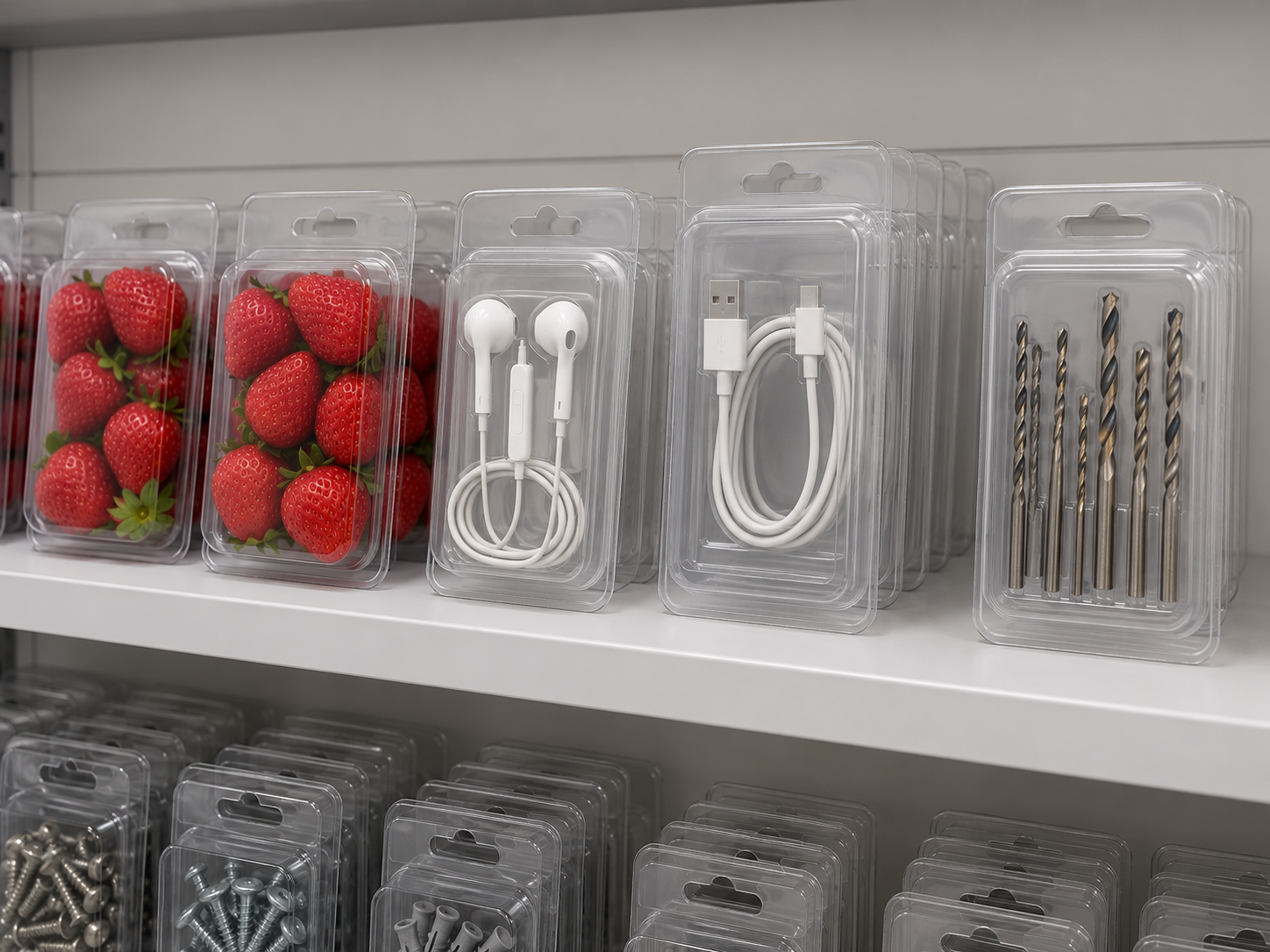
Walk down a hardware aisle or peek into the produce section, and you will spot clamshell packaging within just a few seconds. Those clear plastic packs that snap shut around your strawberries, earbuds, or screwdrivers have quietly become one of the most reliable formats in retail today. They do something very few packaging styles can pull off in one single shot. They protect the product and show it off at the same time without trade-offs. For brands trying to win shelf attention fast, that combo is honestly pure gold for sales.
What Clamshell Packaging Really Is
A clamshell is a plastic container made of two halves that fold together at a hinge. The product sits in the middle, fully visible from every angle a shopper might check. It opens and closes like a clam, which is exactly where the name comes from in the first place originally.
The format usually uses clear plastics like PET or PVC for visibility. Some are resealable, while others are heat-sealed for tamper evidence on items that need extra security on busy retail shelves.
How Clamshells Are Made
The making process is called thermoforming in the industry. Plastic sheets are heated until soft, pressed into a mold, and then cooled into the final shape. After that, the product is placed inside the mold cavity and the pack is sealed shut.
Common ways to seal a clamshell include several options:
-
Snap closure that clicks shut for reusable packs
-
Heat sealing that bonds the edges permanently shut
-
Ultrasonic sealing that creates the strongest bond
Types of Clamshell Packaging
Clamshell packaging comes in a few main styles, each built for a different kind of product and shelf use. The most common types are plastic clamshell, clamshell blister, custom clamshell, stock clamshell, and food clamshell, with each one serving its own market need.
|
Type |
Best For |
|
Plastic Clamshell |
Electronics, tools, retail |
|
Clamshell Blister |
Hardware, small electronics |
|
Custom Clamshell |
Branded premium products |
|
Stock Clamshell |
Fast, budget orders |
|
Food Clamshell |
Berries, salads, bakery |
Picking the right type depends on product weight, shelf style, and your overall brand goals for the year.
Key Features That Make It Work
Clamshells stay popular among growing brands for many good reasons today:
-
Full product visibility from every angle
-
Rigid structure that holds shape in shipping
-
Lightweight build that controls freight cost
-
Moisture and dust resistance in storage
-
Tamper evidence on heat-sealed versions
-
Stackable design for clean shelf rows
Products arrive intact, look clean on the shelf, and tell their own story without needing much extra help from store staff.
Important Note: If you plan to use heat-sealed clamshells, make sure your facility has a sealing machine or partner with a co-packer. Skipping this step costs both time and money later in production runs.
Benefits That Sell Themselves
-
Clear visibility: Customers see exactly what they get
-
Strong protection: Rigid walls absorb shipping bumps
-
Tamper resistance: Sealed packs show signs of opening
-
Cost-effective: Lightweight and damage-resistant build
-
Flexible display: Works on pegs or open shelves
A clamshell can hang from a hook or stand on a shelf with zero changes needed.
Where Clamshells Show Up
These packs appear in more places than most people might guess today:
-
Retail: Phone accessories, cables, toys
-
Food: Berries, salads, muffins
-
Healthcare: Disposable instruments, kits
-
Cosmetics: Brushes, sponges, beauty tools
-
Hardware: Drill bits, screws, blades
For brands building a full lineup of packaging styles, exploring clamshell packaging options helps round out the entire shelf strategy quickly.
Clamshells Vs Other Packaging Types
Clamshells beat blister packs and pouches when your product needs both clear visibility and strong protection at the same time.
|
Feature |
Clamshell |
Blister |
Pouch |
|
Visibility |
High |
Medium |
Low |
|
Protection |
Strong |
Moderate |
Flexible |
|
Cost |
Medium |
Low |
Low |
|
Customization |
High |
Medium |
High |
If your product needs to be seen and protected at once, clamshells usually win. For lightweight, high-barrier packs, flat bottom pouches are honestly a much smarter choice today.
Custom Clamshell Branding
Stock clamshells are fine for basic use, but custom ones speak louder on the shelf. With custom shapes and inserts, your packaging becomes a real marketing tool, not just a plain container.
Custom options include several upgrades worth knowing:
-
Printed inserts with your full brand story
-
Unique structural shapes that grab attention
-
Internal compartments for multi-piece sets
-
Hang holes placed exactly where you want
-
Logo placement visible through clear plastic
Eco-Friendly Clamshells
Green options have grown fast in the last few years. Today's clamshells can use many earth-friendly materials and builds:
-
Recyclable PET that fits curbside programs
-
RPET made from post-consumer plastic waste
-
Biodegradable plastics for short product cycles
-
Paper-based clamshell formats with no plastic
-
Reduced-thickness designs that use less material
These options keep the look clean without harming the planet at all. They also pair well with recyclable pouches for fully earth-friendly product lines.
How To Pick the Right Clamshell
Before placing your order, sort out a few details first:
-
Product weight and full dimensions
-
Display style, peg or open shelf
-
Industry compliance and food rules
-
Sustainability and recycling goals
-
Budget and total order volume
Clear answers upfront save lots of back-and-forth and avoid surprises during your full production run later on.
Future Trends Worth Watching
Clamshell packaging keeps moving forward with new ideas every year. The biggest trends today include recycled content becoming standard, thinner walls with the same strength, smart packaging using QR codes, and paper-plastic hybrid formats. Many brands are also looking at sustainable biodegradable packaging options to stay ahead of consumer demand fast.
Conclusion
Clamshell packaging earns its place because it balances visibility, protection, and price in one neat format. Customers see what they are buying, retailers stack it easily, and brands get strong shelf presence without paying premium fees. Whether you go with stock sizes or full custom designs, the goal stays the same for any brand. With smart design choices, clamshells help your product stand out in any crowded market today.
Get Retail-Ready Clamshell Packaging Today
Your product deserves packaging that protects it, displays it clearly, and helps customers buy with full confidence. Share your packaging details and get a custom quote built around your exact product needs today.
Request your free quote and step into a smarter shelf strategy now.
FAQs
Q1. What is clamshell packaging used for?
It is used for products that need to be visible and protected at the same time. Food, electronics, hardware, and beauty items use it daily.
Q2. Is clamshell packaging recyclable?
Many versions are recyclable, especially those made from PET or RPET films. Check local recycling rules before adding any claim.
Q3. Can clamshell packaging be customized?
Yes. Custom clamshells can be shaped and sized around almost any product, with printed inserts and special features built right in.
Q4. Is clamshell good for food?
Yes. Vented food-safe versions are used widely for produce, bakery, and deli items because they help airflow and keep things fresh.
Q5. Why do businesses prefer clamshell packaging?
It handles protection, visibility, and tamper evidence in one neat format without adding much weight or cost to the final order.

 Arabic
 Français
 Español
 Português
 Deutsch
 Türkçe
 Dutch
Dutch
 Italiano
 Russian
 Romaian