


DeFi Explained: A Step-by-Step Guide for Beginners and Investors
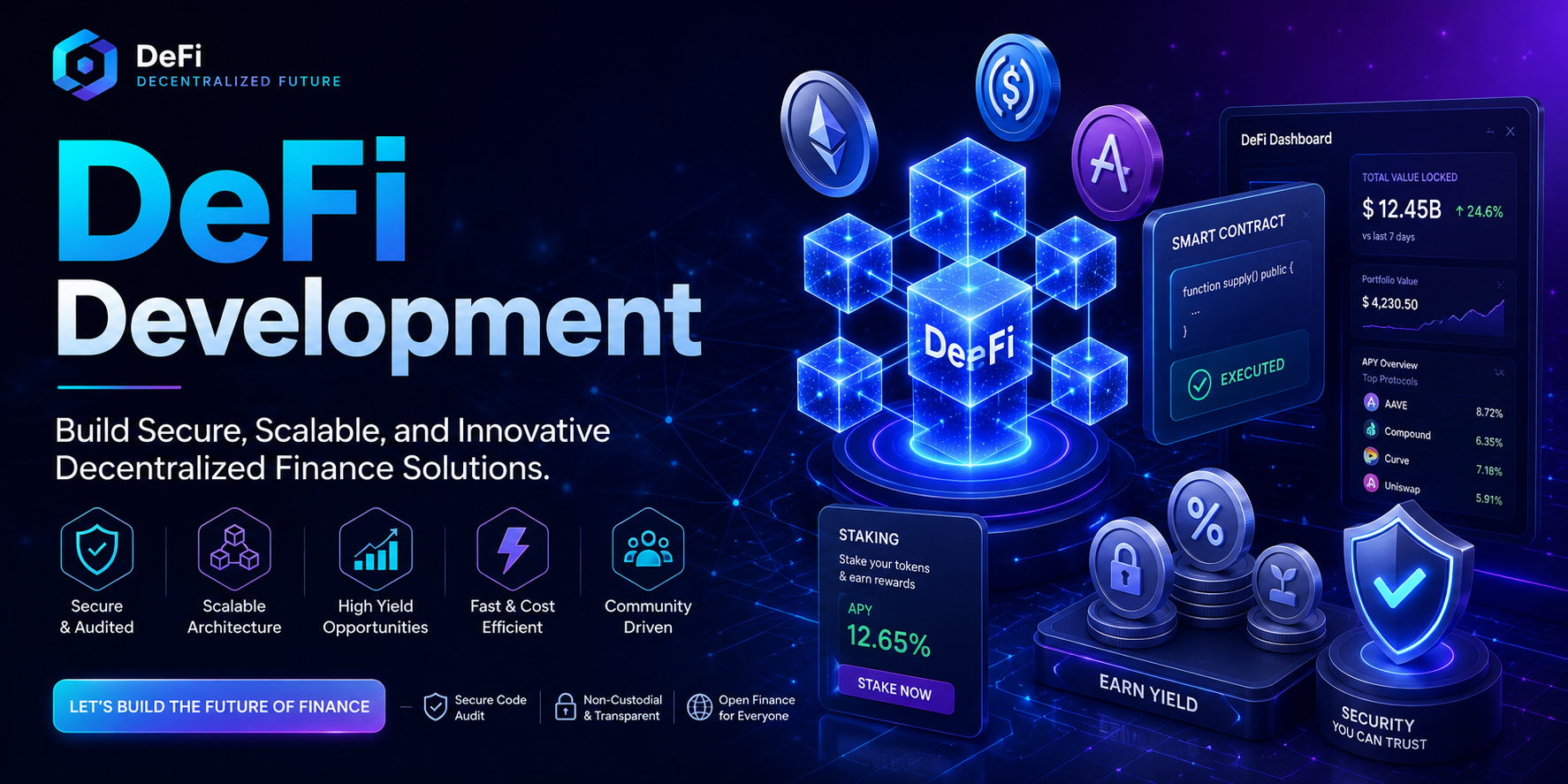
Decentralized Finance, widely known as DeFi, has emerged as one of the most transformative innovations in the blockchain and cryptocurrency ecosystem. Unlike traditional finance, which relies heavily on centralized institutions such as banks and brokerages, DeFi leverages blockchain technology to create transparent, permissionless, and secure financial systems. Over the past few years, DeFi has grown exponentially, with the total value locked (TVL) in DeFi protocols surpassing $100 billion in 2023, demonstrating the enormous potential and demand for decentralized financial solutions.
In this article, we will delve deeply into the concept of DeFi, explaining its mechanisms, benefits, risks, and practical applications. We will also explore the role of defi development companies in building these platforms and the services they provide to ensure robust and scalable decentralized finance solutions. By the end, beginners and seasoned investors alike will gain a comprehensive understanding of DeFi and its significance in the modern financial landscape.
What is DeFi?
DeFi, or Decentralized Finance, represents a broad spectrum of financial applications built on blockchain networks, primarily Ethereum, but increasingly on other chains like Binance Smart Chain, Solana, and Avalanche. The core principle behind DeFi is decentralization: the removal of intermediaries in financial transactions. By replacing banks, brokers, and other middlemen with smart contracts self-executing code that runs on a blockchain DeFi enables users to lend, borrow, trade, and invest with unprecedented efficiency and transparency.
The key components of DeFi include:
- Smart Contracts: These programmable contracts automate financial agreements, eliminating manual processes and third-party oversight.
- Decentralized Applications (DApps): Platforms that provide user interfaces to interact with DeFi protocols.
- Tokens and Stablecoins: Digital assets that facilitate transactions, liquidity, and collateral within the ecosystem.
- Liquidity Pools: Pooled funds provided by users to facilitate trading and lending, rewarding participants with interest or fees.
The Role of DeFi Development Companies and Services
Building secure, scalable, and compliant DeFi platforms requires expert technical knowledge. This is where a decentralized finance development company comes into play. These companies specialize in crafting sophisticated DeFi solutions for businesses, startups, and investors seeking to enter the decentralized finance space.
Defi Development Services
Professional DeFi development services typically include:
- Smart Contract Development: Creating secure and efficient contracts that govern lending, staking, yield farming, and token swaps.
- DApp Development: Designing user-friendly decentralized applications to interact seamlessly with blockchain protocols.
- Liquidity Management Solutions: Implementing mechanisms for liquidity pools, automated market makers (AMMs), and yield optimization.
- Token Development: Issuing custom tokens and stablecoins to support the ecosystem.
- Security Audits: Conducting thorough audits to identify vulnerabilities and ensure regulatory compliance.
A reputable DeFi development company integrates all these services into an end-to-end solution, allowing clients to launch their decentralized platforms efficiently. For example, Blockchain App Factory is known for delivering best-in-class DeFi development services, helping startups and enterprises create robust, scalable, and secure DeFi ecosystems.
Key Benefits of DeFi
Decentralized finance offers multiple advantages over traditional systems:
- Accessibility: Anyone with an internet connection can participate, bypassing geographic and institutional barriers.
- Transparency: Blockchain ensures that every transaction is public and verifiable.
- Security: Smart contracts reduce human error and manipulation, though security audits remain essential.
- Cost Efficiency: By removing intermediaries, transaction fees are significantly reduced.
- Innovation Opportunities: DeFi supports creative financial products, from flash loans to algorithmic stablecoins.
For instance, Compound, a DeFi lending platform, allows users to earn interest on crypto deposits without relying on banks. Similarly, Uniswap, a decentralized exchange (DEX), enables peer-to-peer trading without intermediaries, leveraging liquidity pools to maintain market efficiency.
Popular DeFi Use Cases
While DeFi covers a broad spectrum of financial activities, some applications stand out for their innovation and adoption:
- Lending and Borrowing: Users can lend their crypto to earn interest or borrow against collateral, often instantly.
- Decentralized Exchanges (DEXs): Platforms like Uniswap and SushiSwap allow trading without centralized intermediaries.
- Yield Farming and Staking: Investors can lock their tokens in liquidity pools or staking contracts to earn rewards.
- Insurance Protocols: DeFi insurance platforms like Nexus Mutual provide coverage for smart contract failures and other crypto-related risks.
- Synthetic Assets: Protocols like Synthetix allow the creation of tokenized derivatives representing real-world assets like stocks, commodities, or fiat currencies.
Risks and Challenges in DeFi
Despite its revolutionary potential, DeFi is not without challenges:
- Smart Contract Vulnerabilities: Bugs in code can lead to significant financial losses. For example, the DAO hack in 2016 resulted in a $60 million loss due to a flawed contract.
- Market Volatility: Many DeFi assets are highly volatile, and impermanent loss in liquidity pools can erode earnings.
- Regulatory Uncertainty: Governments are still developing frameworks to regulate decentralized finance, creating potential legal risks.
- User Responsibility: Unlike banks, users are fully responsible for their private keys. Losing them means losing access to funds permanently.
- Liquidity Risks: Low liquidity in smaller protocols can result in slippage or inability to withdraw funds.
Professional decentralized finance development companies mitigate some of these risks by implementing secure smart contract practices, multi-layered audits, and robust DApp architecture, ensuring safer DeFi adoption.
The Future of DeFi
The evolution of DeFi is accelerating as blockchain technology matures. By 2026, analysts predict that DeFi could surpass traditional finance in certain niche areas, particularly in lending, asset tokenization, and cross-border payments. Innovations like layer-2 scaling solutions, cross-chain interoperability, and AI-driven protocols will further enhance efficiency and user experience.
Moreover, institutional adoption is increasing, with major financial firms exploring DeFi protocols for liquidity management, derivatives, and yield optimization. This trend indicates a future where decentralized finance will coexist with, and potentially disrupt, centralized financial systems.
Getting Started with DeFi as an Investor
For beginners, entering the DeFi space may seem daunting. Here’s a step-by-step approach to start safely:
- Educate Yourself: Understand blockchain fundamentals, wallets, and tokenomics.
- Select a Trusted Platform: Use audited platforms from reputable defi development companies.
- Start Small: Begin with limited capital to minimize exposure to risk.
- Diversify: Spread investments across multiple protocols and assets.
- Use Hardware Wallets: Secure your crypto with offline wallets to prevent hacks.
- Monitor Markets: Keep track of protocol updates, audits, and regulatory changes.
Platforms like Blockchain App Factory also provide consulting and development services to help investors and businesses navigate DeFi safely, offering guidance on strategy, risk management, and growth.
Conclusion
DeFi is reshaping the financial landscape by democratizing access, increasing transparency, and enabling innovation. From lending and staking to decentralized exchanges and synthetic assets, the ecosystem offers diverse opportunities for both beginners and experienced investors. However, success in DeFi requires knowledge, caution, and the support of experienced partners.
Engaging a trusted decentralized finance development company such as Blockchain App Factory, which provides comprehensive defi development services, ensures that both investors and businesses can safely and effectively participate in the DeFi revolution. Whether you are launching a new protocol, staking assets, or exploring yield farming, understanding DeFi’s mechanisms and risks is essential for navigating this rapidly evolving space.


 Arabic
 Français
 Español
 Português
 Deutsch
 Türkçe
 Dutch
Dutch
 Italiano
 Russian
 Romaian