


Legacy Strangling: The CEO’s Guide to API-First Microservices and Enterprise Modernization
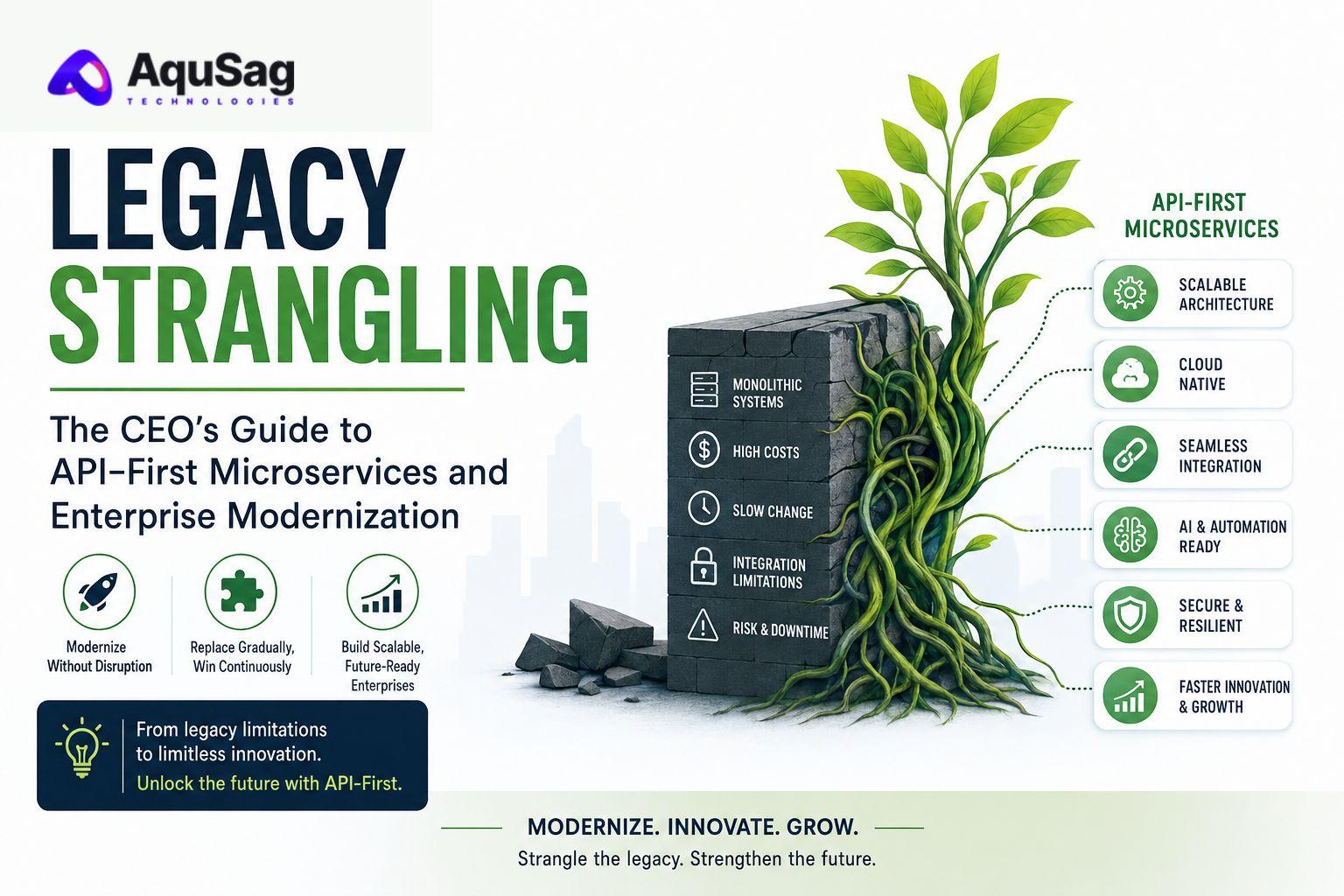
In today’s rapidly evolving digital landscape, businesses are under immense pressure to innovate faster, improve operational efficiency, and deliver seamless customer experiences. However, many enterprises still depend on outdated legacy systems that limit scalability, slow development cycles, and create major integration challenges. As organizations adopt cloud computing, AI-driven automation, and modern digital platforms, the need for scalable and flexible infrastructure has become more important than ever. The strategy of Legacy Strangling: The CEO’s Guide to API-First Microservices is emerging as one of the most effective approaches for enterprise modernization without disrupting ongoing business operations.
Legacy systems were originally designed to support traditional business operations, but they were never built for the speed and connectivity required in modern enterprise ecosystems. Over time, these systems become increasingly difficult to maintain, expensive to scale, and complex to integrate with newer technologies. Businesses relying on monolithic architectures often face slower innovation, higher operational costs, and limited flexibility.
Legacy Strangling provides a practical modernization strategy by gradually replacing outdated systems with modern microservices and APIs. Instead of rebuilding the entire infrastructure at once, organizations can modernize specific functions step by step while keeping existing systems operational. This phased approach significantly reduces migration risks and ensures business continuity throughout the transformation process.
Understanding API-First Microservices
API-First Microservices Architecture focuses on designing applications around APIs from the beginning. APIs act as communication bridges that allow different applications, platforms, and services to interact efficiently.
In a traditional monolithic system, all components are tightly connected into one large application. A small change in one module may impact the entire system, making updates risky and time-consuming. In contrast, microservices divide applications into smaller independent services that handle specific business functions.
Each microservice can be developed, deployed, and scaled independently. This flexibility allows organizations to innovate faster, improve system reliability, and respond quickly to changing business requirements.
API-First Microservices offer several major advantages:
- Faster software deployment
- Improved scalability
- Easier cloud integration
- Better operational flexibility
- Enhanced system reliability
- Simplified third-party integrations
- Improved AI and automation readiness
As businesses increasingly rely on digital platforms, API-driven architectures are becoming essential for long-term scalability and growth.
Why Enterprises Are Moving Away from Legacy Monoliths
Legacy monolithic systems often create operational bottlenecks that slow digital transformation efforts. Although these systems may continue functioning, they become increasingly inefficient as business demands evolve.
Slow Innovation Cycles
Monolithic applications require extensive testing and coordination for even minor updates. Development teams struggle to release new features quickly because all components are interconnected.
High Maintenance Costs
Legacy infrastructure often requires specialized maintenance, outdated hardware support, and expensive upgrades. Over time, operational costs continue increasing while system performance declines.
Integration Challenges
Modern enterprises depend on seamless integration with cloud services, analytics platforms, mobile applications, and AI tools. Legacy systems frequently lack the APIs needed for smooth integration.
Scalability Limitations
Monolithic architectures make it difficult to scale individual services independently. Businesses often waste infrastructure resources by scaling the entire application rather than only the components experiencing increased demand.
Security Risks
Older systems may contain unsupported software frameworks, outdated dependencies, and weak security controls that increase vulnerability to cyber threats and compliance issues.
These limitations prevent organizations from achieving the agility required in modern competitive markets.
How Legacy Strangling Supports Digital Transformation
Legacy Strangling enables businesses to modernize systems incrementally rather than attempting risky large-scale replacements.
The strategy involves introducing modern APIs and microservices around the existing legacy system. Over time, new services gradually take over the responsibilities of older modules until the monolithic application becomes obsolete.
This approach offers several key benefits:
Reduced Migration Risk
Businesses avoid operational disruptions because the legacy system continues functioning during modernization.
Faster Return on Investment
Organizations can prioritize high-value services first and begin realizing benefits early in the transformation process.
Continuous Business Operations
Unlike complete system rebuilds, gradual modernization minimizes downtime and operational instability.
Greater Flexibility
Teams can modernize applications based on business priorities instead of following rigid migration timelines.
This phased modernization strategy is particularly valuable for large enterprises with complex operational dependencies.
The Role of APIs in AI and Automation
Modern enterprises are increasingly adopting AI technologies, intelligent automation, and advanced analytics to improve operational efficiency and customer experiences. However, AI systems require structured and accessible data to function effectively.
API-First architectures make enterprise data easier to access, process, and integrate across systems. Businesses can leverage APIs to support:
- AI-powered automation
- Predictive analytics
- Intelligent customer experiences
- Real-time reporting
- Workflow optimization
- Cloud-native applications
Without modern APIs, many AI initiatives struggle because legacy systems isolate critical business data.
As AI adoption accelerates across industries, API-driven infrastructure is becoming a foundational requirement for future-ready enterprises.
Building a Successful Modernization Strategy
Successful enterprise modernization requires a structured roadmap and strong leadership alignment.
Conduct a Legacy System Assessment
Organizations should begin by evaluating:
- Existing infrastructure
- System dependencies
- Performance bottlenecks
- Integration limitations
- Security vulnerabilities
- High-maintenance components
This assessment helps prioritize modernization efforts effectively.
Establish API Governance
Strong API governance ensures consistency, security, scalability, and compliance across enterprise systems.
Modernize High-Impact Services First
Businesses should focus on systems that deliver the greatest operational value, such as:
- Customer portals
- Payment systems
- Analytics platforms
- CRM integrations
- Automation workflows
Prioritizing high-value services accelerates ROI and improves stakeholder confidence.
Adopt Cloud-Native Infrastructure
Cloud-native platforms support scalable deployment, automated resource management, and operational flexibility, making them ideal for microservices environments.
The Future of Enterprise Architecture
The future of enterprise technology is modular, scalable, cloud-native, and API-driven. Businesses that continue relying heavily on outdated monolithic systems may struggle to compete in increasingly digital markets.
API-First Microservices provide organizations with the flexibility needed to adapt quickly, integrate emerging technologies, and support long-term innovation. Combined with the Legacy Strangling approach, enterprises can modernize infrastructure gradually while reducing operational risks.
As digital transformation continues accelerating across industries, organizations investing in API-driven modernization today will be better positioned to scale efficiently, improve customer experiences, and remain competitive in the evolving digital economy.

 English
 Arabic
 Français
 Español
 Deutsch
 Türkçe
 Dutch
Dutch
 Italiano
 Russian
 Romaian