


How Ground Control Point Targets Improve Mapping Accuracy
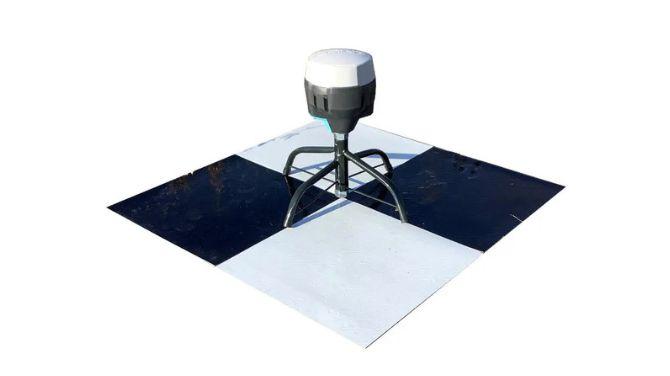
Accurate mapping is essential for industries such as construction, surveying, mining, agriculture, and infrastructure development. While modern drones and photogrammetry software have transformed the way geospatial data is collected, the accuracy of a mapping project often depends on the quality of its reference system. This is where Ground Control Point Targets play a critical role.
These visual markers help connect aerial imagery to precise ground locations, improving the reliability of maps, orthomosaics, digital elevation models, and 3D reconstructions. By serving as known reference points, they reduce positional errors and ensure that mapping data aligns with real-world coordinates.
What Are Ground Control Point Targets?
Ground Control Point Targets are highly visible markers placed throughout a survey area before data collection begins. Surveyors measure the exact coordinates of these markers using high-precision GNSS equipment, such as RTK GPS receivers or total stations.
During photogrammetric processing, mapping software identifies these targets in aerial images and uses their known coordinates to accurately position and scale the final model.
These markers act as anchors that connect drone imagery to a geographic coordinate system, significantly improving spatial accuracy.
Why Mapping Accuracy Matters
Accurate geospatial data supports critical decisions across many industries. Even small positional errors can create major problems in planning, engineering, and asset management projects.
Poorly aligned mapping data may result in:
-
Incorrect measurements
-
Construction layout errors
-
Inaccurate volume calculations
-
Misaligned GIS datasets
-
Costly project delays
Using reliable reference markers helps minimise these risks and improves confidence in the final deliverables.
How Ground Control Point Targets Improve Accuracy
Several factors contribute to the effectiveness of Ground Control Point Targets in aerial surveying and mapping workflows.
Enhanced Georeferencing
One of the primary functions of these markers is improving georeferencing accuracy.
Drone images are typically tagged with location data from onboard GPS systems. While useful, standard GPS positions may contain errors ranging from a few feet to several meters.
By incorporating surveyed reference markers, photogrammetry software can:
-
Correct positional inaccuracies
-
Align imagery with real-world coordinates
-
Improve horizontal and vertical precision
-
Create more reliable mapping outputs
This process produces datasets that better represent actual ground conditions.
Reduced Image Distortion
Aerial imagery can be distorted by camera angles, terrain variations, lens characteristics, and flight conditions.
Reference markers help software compensate for these distortions during processing.
Benefits include:
-
Improved image alignment
-
Better orthomosaic generation
-
More accurate feature placement
-
Reduced geometric errors
As a result, maps appear more consistent across the entire project area.
Improved Elevation Accuracy
Elevation data is crucial for many surveying and engineering applications.
Projects involving:
-
Earthwork calculations
-
Drainage design
-
Road construction
-
Mining operations
-
Terrain analysis
require highly accurate surface models.
Ground reference markers provide fixed elevation control points that help improve the accuracy of digital terrain models (DTMs) and digital surface models (DSMs).
This leads to more reliable topographic information and better project outcomes.
Better Accuracy Across Large Survey Areas
As project size increases, maintaining accuracy becomes more challenging.
Large sites often experience positional drift if imagery relies solely on onboard GPS data. Strategically placed control markers help distribute accuracy throughout the survey area and prevent errors from accumulating.
For large mapping projects, surveyors typically place targets:
-
Near site boundaries
-
At project corners
-
In central locations
-
Across varying elevations
This balanced distribution strengthens the overall mapping framework.
Supporting Survey-Grade Results
Many industries require survey-grade accuracy rather than simple visual representations.
Projects that benefit from high-precision positioning include:
-
Construction site monitoring
-
Utility corridor mapping
-
Land development surveys
-
Infrastructure inspections
-
Engineering design projects
When properly surveyed and distributed, Ground Control Point Targets help achieve the accuracy standards required for professional applications.
Improving Photogrammetry Workflows
Photogrammetry software relies on identifying common features across multiple images. While natural features can sometimes serve as reference points, they are not always reliable.
Dedicated survey markers offer several advantages:
Increased Visibility
High-contrast targets are easier for software to detect.
This improves:
-
Automatic point recognition
-
Image matching accuracy
-
Processing efficiency
-
Overall model quality
Consistent Reference Locations
Natural features can change over time due to weather, vegetation growth, or site activity.
Permanent or temporary survey markers provide stable reference locations throughout the project lifecycle.
Faster Quality Control
Clearly marked reference points simplify data verification and allow surveyors to quickly assess mapping accuracy.
This streamlines project validation and reduces the likelihood of costly rework.
Best Practices for Using Ground Control Targets
To maximize accuracy, surveyors should follow established placement guidelines.
Use High-Visibility Markers
Choose targets with:
-
Strong color contrast
-
Distinct geometric patterns
-
Adequate size for flight altitude
-
Clear visibility from above
Distribute Targets Evenly
Avoid clustering markers in one area.
Instead, spread them across:
-
Corners
-
Boundaries
-
Central zones
-
Elevation changes
Measure Coordinates Accurately
Use professional-grade equipment to collect coordinate data.
Survey-grade GNSS receivers and total stations provide the precision needed for accurate mapping products.
Include Checkpoints
Independent checkpoints help verify the accuracy of the final map and provide additional quality assurance.
Conclusion
Accurate mapping depends on more than advanced drones and powerful software. Reliable ground references remain essential for producing precise geospatial data. Ground Control Point Targets improve georeferencing, reduce distortion, enhance elevation accuracy, and support survey-grade results across a wide range of applications.
Whether you are creating orthomosaics, topographic models, or 3D reconstructions, strategically placed survey markers provide the foundation of accuracy needed for professional aerial mapping. By incorporating Ground Control Point Targets into your workflow and following best practices for placement and measurement, you can significantly improve data quality and ensure dependable results for every project.

 Arabic
 Français
 Español
 Português
 Deutsch
 Türkçe
 Dutch
Dutch
 Italiano
 Russian
 Romaian