


What are Blind Rivets: A Comprehensive Introduction
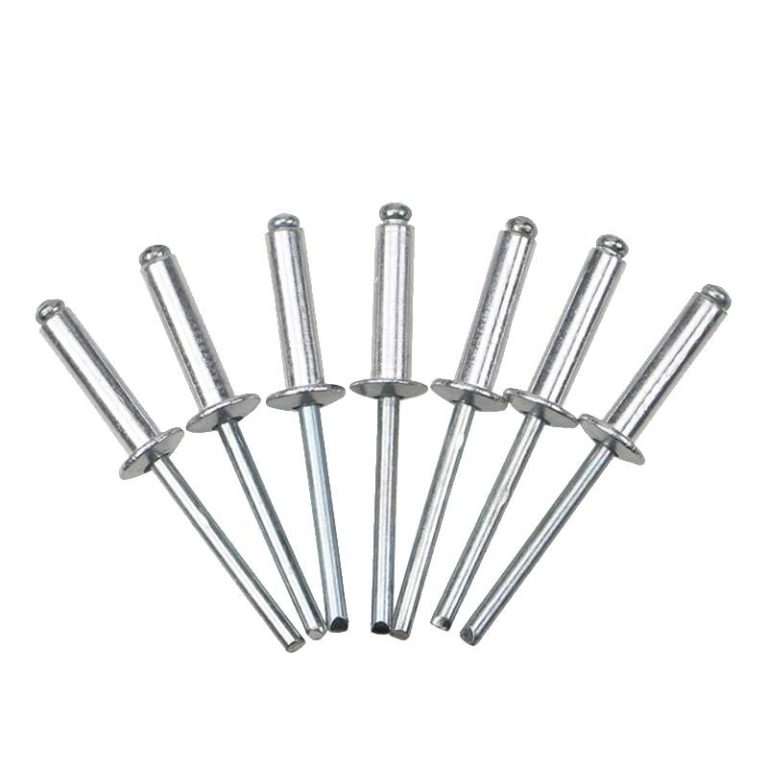
Blind rivets, also known as pop rivets, designed for single-sided riveting, require a specialized riveting gun, available in manual, electric, pneumatic, and automatic variants. These rivets find extensive use in construction, automobiles, ships, aircraft, electrical appliances, and the metal industry, particularly in situations where conventional riveting from both sides is inconvenient.

Categories of Blind Rivets:
Ordinary Open End Blind Rivets:
Featuring open-type countersunk or flat heads.
Closed End Blind Rivets:
Also known as waterproof rivets, with closed countersunk heads.
Materials commonly used include aluminum, iron, stainless steel, and copper.
Structural Rivets:
Distinguished by high strength and a unique feature—the mandrel locks in the riveting body post-riveting. Structural rivets are crucial in industries such as automobiles, railways, and aviation. Types include open-type pull rivets, single grip rivets, double grip rivets, and hem-fix rivets.
Advantages of Blind Rivets:
Single-side construction
Wide range of riveting applications
Quick installation
Large clamping force with good shock resistance
Smooth rivet fracture and strong lock cylinder
Applications of Blind Rivets:
Round Head Rivets:
Widely used for riveting under large lateral loads.
Cone Head Rivets:
Corrosion-resistant, suitable for highly corrosive environments like ship hulls and boiler water tanks.
Countersunk Head and Semi-Sunk Head Rivets:
Used for smooth surfaces and low-load riveting.
Flat Head Rivets:
Flat head rivets are general purpose rivets for various load requirements.
Flat Round Head Rivets:
Ideal for non-metallic materials such as leather, canvas, wood, or metal sheets.
Large Flat Head Rivets:
Used in riveting non-metallic materials.
Semi-Tubular Rivets:
Suitable for low-load riveting.
Headless Rivets:
Designed for non-metallic material riveting.
Hollow Rivets:
Lightweight with a small nail head, used for low-load riveting of non-metallic materials.
Tubular Rivets:
Employed in non-metallic material riveting without significant loads.
Inspection of Blind Rivets:
When inspecting finished blind rivets, considerations include diameter, length of the rivet body and rod, cap thickness, cap diameter, total core length, exposed core size, cap size, and outer diameter after assembly. Tensile strength and shearing resistance are crucial parameters in the inspection process.
Summary:
Blind rivets simplify single-sided operations, improving work efficiency. With various types catering to diverse applications and materials, coupled with advantages like quick installation and stability, blind rivets play a crucial role in the manufacturing industry. Inspection parameters ensure the quality and reliability of these rivets, contributing to their widespread use in diverse industries.

 English
 Arabic
 Français
 Español
 Português
 Deutsch
 Türkçe
 Dutch
Dutch
 Italiano
 Romaian