


Yield Farming vs. Staking: Key Differences Explained
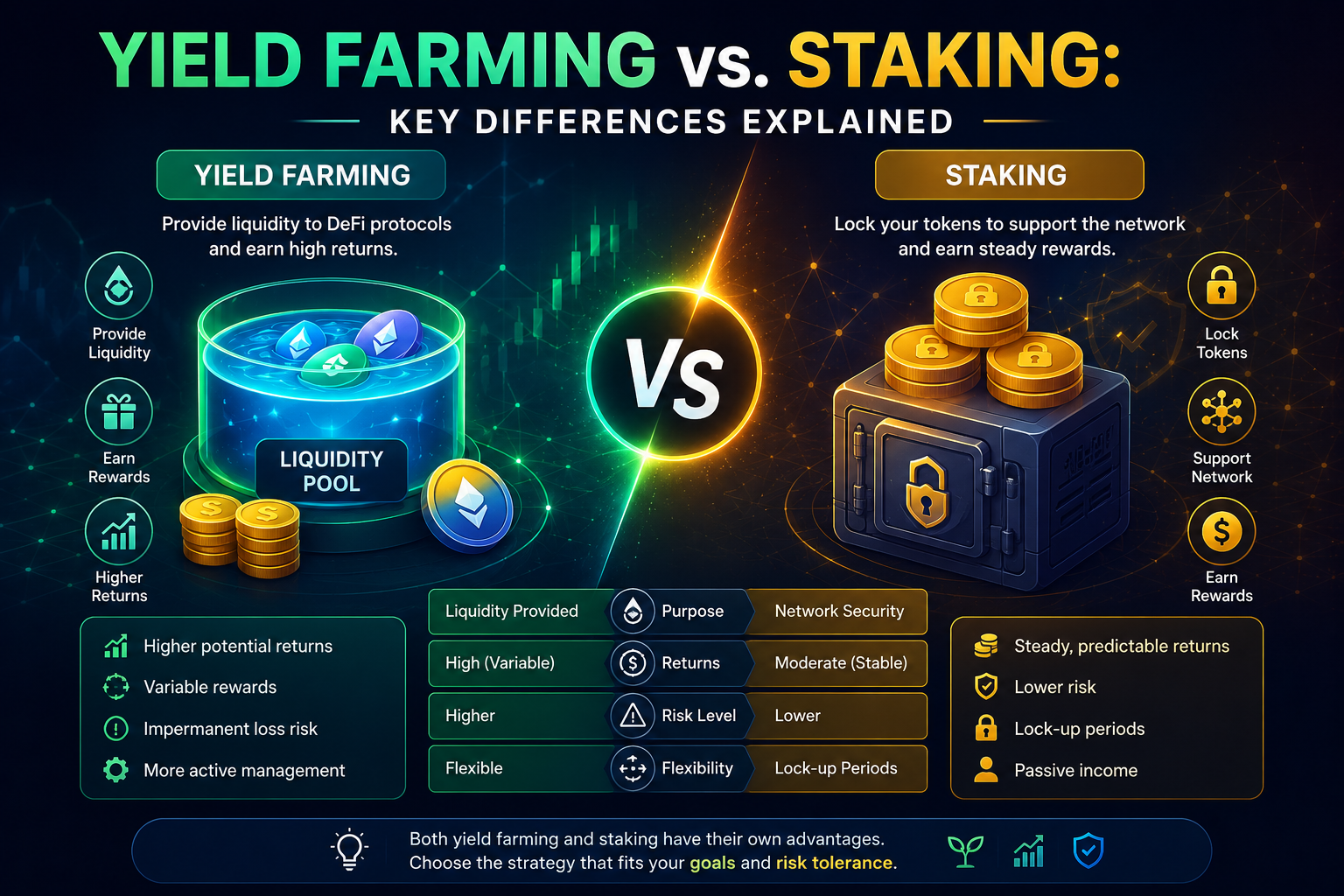
As decentralized finance continues to evolve, two of the most commonly discussed methods for earning rewards from digital assets are yield farming and staking. While both approaches allow users to generate returns on their holdings, they operate differently and serve distinct purposes within the blockchain ecosystem. Understanding these differences is important for anyone exploring decentralized finance platforms or evaluating investment opportunities.
At a basic level, staking involves locking digital assets in a blockchain network to support its operations. These assets help validate transactions, secure the network, and maintain consensus mechanisms. In return, participants receive staking rewards. Staking is commonly associated with Proof-of-Stake (PoS) blockchains, where network participants contribute to security and governance by committing their tokens.
Yield farming, on the other hand, focuses on providing liquidity to decentralized finance protocols. Users deposit assets into liquidity pools, which are then used to facilitate trading, lending, borrowing, or other financial activities. In exchange, liquidity providers earn rewards that may come from transaction fees, incentive programs, or protocol-generated yields.
One of the key differences between the two is their purpose. Staking primarily supports blockchain network security and transaction validation. Yield farming supports decentralized financial applications by supplying liquidity that enables various DeFi services to function efficiently. Both contribute to ecosystem growth, but they do so in different ways.
Risk is another important factor to consider. Staking is generally viewed as a more straightforward approach because assets are locked within a blockchain protocol. While risks still exist, such as token price volatility or validator penalties, the process tends to be relatively simple for users.
Yield farming often involves additional complexity. Liquidity providers may face challenges such as impermanent loss, fluctuating reward rates, smart contract vulnerabilities, and changing market conditions. Since liquidity pools interact with multiple decentralized applications, users must carefully evaluate platform security and risk management practices.
Reward structures also vary significantly. Staking rewards are usually predictable and tied to network participation. Users often receive returns based on the amount of assets staked and the duration of their commitment. Yield farming rewards can be more dynamic, as returns depend on liquidity demand, trading volume, protocol incentives, and total value locked (TVL) within the platform.
Flexibility is another area where differences become apparent. Some staking programs require lock-up periods that restrict access to funds for a specific duration. Yield farming platforms often provide greater flexibility, allowing users to move liquidity between pools and strategies as market conditions change. However, this flexibility may require more active monitoring and portfolio management.
From a development perspective, both models play important roles in modern decentralized finance ecosystems. Organizations exploring DeFi Yield Farming Development Services often focus on creating liquidity-driven platforms that encourage user participation through automated reward distribution, smart contract automation, and cross-chain interoperability. At the same time, staking features are frequently integrated into broader DeFi ecosystems to provide users with multiple earning opportunities.
The choice between yield farming and staking ultimately depends on an individual's goals, risk tolerance, and level of involvement. Users seeking a relatively passive approach may prefer staking, while those interested in maximizing liquidity opportunities may explore yield farming strategies.
As decentralized finance continues to mature, both staking and yield farming will remain essential components of the ecosystem. For businesses evaluating DeFi Yield Farming Development Services, understanding how these mechanisms differ can help create more effective and user-focused financial platforms that meet evolving market demands.

 Arabic
 Français
 Español
 Português
 Deutsch
 Türkçe
 Dutch
Dutch
 Italiano
 Russian
 Romaian