


Why Thermal Paper Remains Essential for Modern Business Operations
Introduction
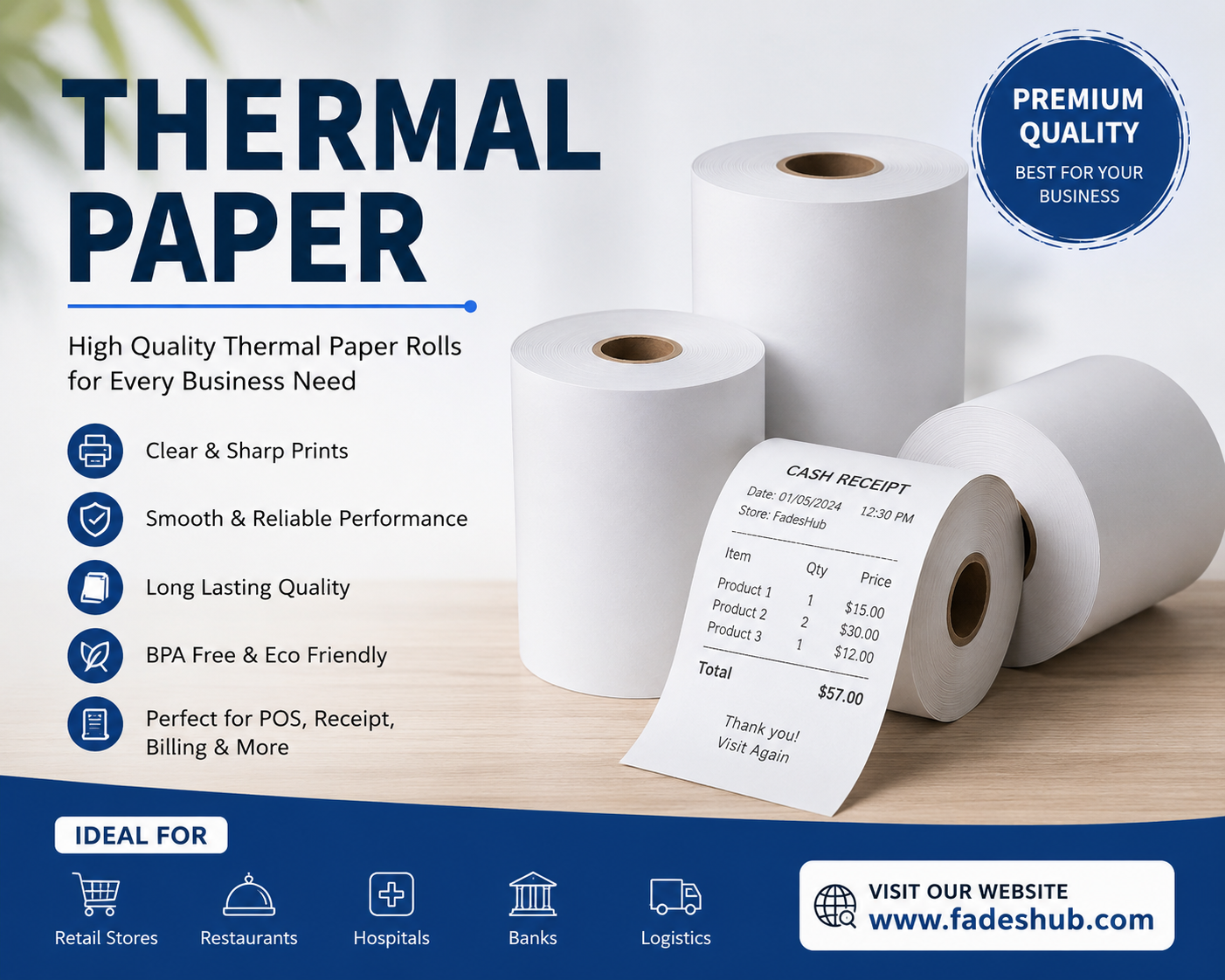
Every day, millions of receipts, tickets, payment slips, and transaction records are printed around the world. Behind many of these printed documents is a specialized material known as thermal paper. While it may appear similar to ordinary paper at first glance, thermal paper is engineered specifically for use with thermal printers, allowing information to be printed without ink, toner, or ribbons. Businesses across multiple industries rely on thermal paper because it offers a simple, efficient, and cost-effective printing solution. Whether used in retail stores, restaurants, banks, hospitals, transportation systems, or logistics companies, thermal paper helps organizations process information quickly and accurately. As businesses continue adopting faster and more automated workflows, thermal paper remains an important component of everyday operations.
What Is Thermal Paper?
Thermal paper is a specially coated paper designed to react to heat. Instead of using traditional printing methods, thermal printers apply controlled heat directly to the paper's surface, creating visible text and images. The unique coating contains heat-sensitive compounds that change color when exposed to specific temperatures. This process allows information to appear instantly without requiring additional printing supplies. Because of this technology, thermal printing systems are often simpler, faster, and easier to maintain than many conventional printing solutions.
How Thermal Printing Works
The printing process begins when thermal paper passes beneath a heated printhead inside the printer. The printer selectively applies heat to designated areas of the paper, causing those sections to darken and form letters, numbers, symbols, or graphics.
This direct-printing method offers several advantages:
-
No ink cartridges
-
No toner replacement
-
No printing ribbons
-
Faster document production
-
Reduced maintenance requirements
These benefits have made thermal printing one of the most widely used technologies for transaction-based printing.
Why Businesses Use Thermal Paper
Organizations choose thermal paper because it supports speed, efficiency, and reliability.
Quick Transaction Processing
Businesses that handle large numbers of customers require fast printing solutions. Thermal paper allows receipts and documents to be produced almost instantly.
Simplified Printing Systems
Without the need for ink or toner, thermal printers are easier to operate and maintain.
Consistent Print Quality
Thermal paper produces sharp and clear output, making information easy to read.
Common Industries That Depend on Thermal Paper
Thermal paper is used across numerous sectors because of its versatility and reliability.
Retail Stores
Retail businesses use thermal paper for customer receipts, sales records, and transaction documentation.
Hospitality Industry
Restaurants, cafés, and food service businesses often use thermal printers for order tickets and payment receipts.
Healthcare Facilities
Hospitals and clinics use thermal paper for appointment slips, queue tickets, and patient-related documentation.
Financial Institutions
Banks and ATM networks rely on thermal paper for transaction records and customer receipts.
Transportation Services
Ticketing systems commonly use thermal paper because of its speed and dependable performance.
Characteristics of High-Quality Thermal Paper
Not all thermal paper rolls are manufactured to the same standard. Their quality can significantly influence printing results and equipment performance.
Smooth Surface Finish
A smooth paper texture helps ensure clear and consistent printing output.
Uniform Coating
Even coating distribution contributes to better image quality and readability.
Reliable Paper Strength
Strong paper construction helps prevent tearing during handling and printing.
Stable Printing Performance
Quality thermal paper supports consistent results throughout the entire roll.
Advantages of Thermal Paper Over Traditional Printing
Thermal paper offers several practical benefits compared to conventional printing methods.
Faster Printing Speeds
Thermal printers can generate documents quickly, supporting high-volume environments.
Reduced Supply Costs
Businesses do not need to purchase ink cartridges or toner supplies regularly.
Quiet Operation
Thermal printing systems generally operate with minimal noise.
Fewer Mechanical Components
Simpler printer designs often result in lower maintenance requirements.
Improved Workflow Efficiency
Quick document production helps businesses serve customers more effectively.
Choosing the Right Thermal Paper
Selecting suitable thermal paper involves understanding business requirements and printer specifications.
Verify Printer Compatibility
Paper dimensions should match the printer's recommended size requirements.
Consider Printing Volume
Organizations with high transaction levels may require larger paper rolls to reduce replacement frequency.
Evaluate Storage Conditions
Environmental factors can influence paper performance and longevity.
Focus on Quality
Higher-quality paper often delivers better print clarity and more reliable results.
Proper Storage Practices
Correct storage helps preserve paper quality and maintain printing performance.
Protect From Excessive Heat
High temperatures may activate the thermal coating before printing.
Avoid Direct Sunlight
Prolonged exposure can affect the appearance and effectiveness of thermal paper.
Store in Dry Conditions
Moisture can impact paper quality and printing performance.
Maintain Original Packaging
Packaging provides protection against dust and environmental exposure.
The Continuing Importance of Thermal Paper
Even as businesses adopt more digital technologies, thermal paper remains an essential part of many daily operations. Retailers continue issuing receipts, transportation providers print tickets, and healthcare facilities generate important documentation through thermal printing systems. Its ability to produce fast, reliable, and cost-effective printed output ensures that thermal paper continues to play a significant role in modern business environments.
Frequently Asked Questions
What is thermal paper used for?
Thermal paper is commonly used for receipts, tickets, transaction records, labels, and various business documents.
Does thermal paper require ink?
No. Thermal paper works with heat-sensitive technology and does not require ink, toner, or ribbons.
Why do businesses prefer thermal paper?
Many businesses prefer thermal paper because it supports faster printing, lower maintenance, and consistent print quality.
Can thermal paper be used in any printer?
No. Thermal paper is specifically designed for thermal printers and may not work properly in standard printers.
How should thermal paper be stored?
It should be stored in a cool, dry location away from excessive heat and direct sunlight.
Which industries use thermal paper the most?
Retail, healthcare, banking, transportation, hospitality, and logistics industries commonly use thermal paper.
Is thermal paper suitable for high-volume printing?
Yes. Thermal printing technology is widely used in environments that require rapid and continuous printing throughout the day.
For more related posts or blogs or content, click here

 English
 Arabic
 Français
 Español
 Português
 Deutsch
 Türkçe
 Dutch
Dutch
 Italiano
 Romaian