


How I Learned to Enjoy Playing Again
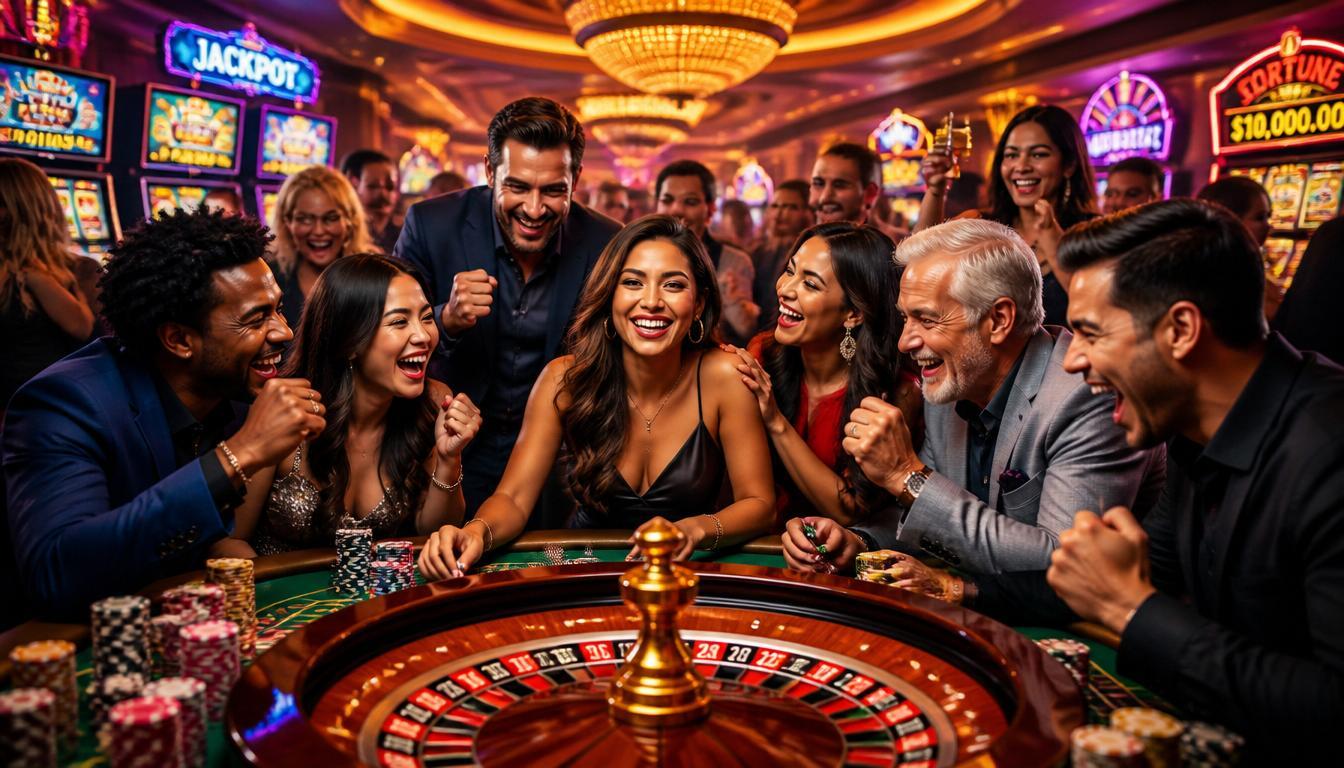
It was a Tuesday night in February, and I was sitting at a table in my kitchen with a bad hand, a cold coffee, and zero desire to keep going. My friend Jake was across from me. He'd driven forty minutes to play cards. I lasted another three rounds, then said I had a headache and went to bed at 9 PM. I didn't have a headache.
That moment stuck with me longer than it should have. Not because I was rude — though I was — but because I couldn't explain why I felt nothing. Playing used to be the thing I looked forward to all week.
I stopped for almost two years
After that night I just… stopped. No dramatic decision. I didn't delete apps or cancel anything. I just kept saying "next weekend" and next weekend never came.
At some point I started reading about why people quit hobbies they used to love. Not because I was worried, more because I was curious. There's a pattern that shows up in a lot of research: people stop enjoying things not because the thing changed, but because their relationship with it changed. Psychology Today has written a lot about how motivation in leisure shifts — especially when you start treating a fun activity like a performance. That hit close.
Because that's exactly what I'd done. At some point playing stopped being play. It became something I was supposed to be good at.
What I had wrong the whole time
I used to watch strategy videos before game nights. I kept notes on outcomes. I tracked patterns. I was, genuinely, not fun to play with.
Looking back, I was optimizing the fun out of everything. There's solid work out of UC Berkeley's Greater Good Science Center on how outcome-focused thinking drains the pleasure from experience — when your brain is always measuring, it stops absorbing. You're no longer in the game. You're auditing it.
I didn't understand that then. I thought I was getting better. I was actually getting worse at the part that matters.
And then a friend called me on a Thursday.
It wasn't Jake. It was an old friend from college, Priya, who lives two cities away and who I'd maybe spoken to four times in the last three years. She was visiting. She wanted to do something low-key. "Maybe some cards? Or anything really."
The night it clicked again
We ended up at my place with a bottle of wine, a bowl of chips, and no stakes beyond who had to do the dishes. We played for maybe four hours. I lost most of it. I didn't care at all.
The weird thing is what happened earlier that day. I'd been down a rabbit hole online trying to figure out what to suggest we play — board game, card game, something online, who knows. I came across a betting odds comparison resource I'd bookmarked months before, one of those sites that actually breaks down platforms honestly without trying to sell you a bonus. I wasn't planning to gamble. I just wanted to see what kinds of games were popular, what interfaces looked like, what people actually played for fun versus money. It gave me a clearer picture of the online side of things — and reminded me that most people who play aren't chasing wins. They're chasing the feeling.
That evening with Priya, I finally understood what that felt like again.
Three things that actually helped
I'm not going to pretend I had a breakthrough and everything was fixed. It took a few months of small changes before playing felt normal again. These are the three that made the biggest difference for me.
Playing on very low stakes first. Not zero stakes — that felt flat too — but low enough that losing didn't sting. For online stuff, this meant reading up on responsible play first. Gambling Therapy has free resources on keeping play recreational, which sounds heavy but is actually just practical advice on not letting a hobby tip into something that costs you more than it gives. Good baseline reading for anyone who plays online, even casually.
Playing with people who are worse than me. This sounds terrible and I'm a little embarrassed to include it, but it helped. Not because I liked winning — I think I just needed to remember that everyone at the table is figuring it out. Nobody's a pro. We're all just there.
Reading about game design instead of game strategy. This was the biggest shift. BoardGameGeek's community forums have years of discussion on what makes a game feel good to play — not win, just play. I got interested in mechanics, in why certain games create tension and others don't, in what designers were trying to do. It made me a more curious player rather than a more competitive one.
What "fun" actually means to me now
There's a concept called flow — the psychologist Mihaly Csikszentmihalyi spent decades studying it. Positive Psychology describes flow as the state where you're so absorbed in something that time disappears. It's not about winning. It's about being fully inside the activity.
I'd had flow before — I remembered it from when I first started playing, years ago. I just forgot it was the goal. I replaced it with metrics.
These days I play online sometimes, and in person when I can. The online side is fine — you can find platforms that don't pressure you, that let you set your own pace. BeGambleAware's guidance on healthy play habits is worth a read if that's your space, not because you need to be warned, but because it's useful to have a clear sense of your own limits before you need them.
In person is still better for me. Something about being in the same room, the small talk between rounds, the way someone groans when they flip a bad card. You can't replicate that online. But both have a place.
The Stuart Brown TED Talk on why play matters throughout adult life was something I watched around this time too. He talks about how adults tend to treat play as a reward, something you earn after the real work is done. But play isn't a reward. It's maintenance. It keeps something in you working that gets rusty without it.
I think that's what happened to me. I stopped playing, the rusty thing got rustier, and then I wondered why I felt dull.
I still lose more than I win. Most hands, most nights, most games. But I don't think that was ever the point. I think the point was always just to sit down, shuffle the cards, and see what happens next.
Priya's visiting again in August. I already said yes.

 Arabic
 Français
 Español
 Português
 Deutsch
 Türkçe
 Dutch
Dutch
 Italiano
 Russian
 Romaian