


How Zero Trust Reduces Modern Cybersecurity Risks
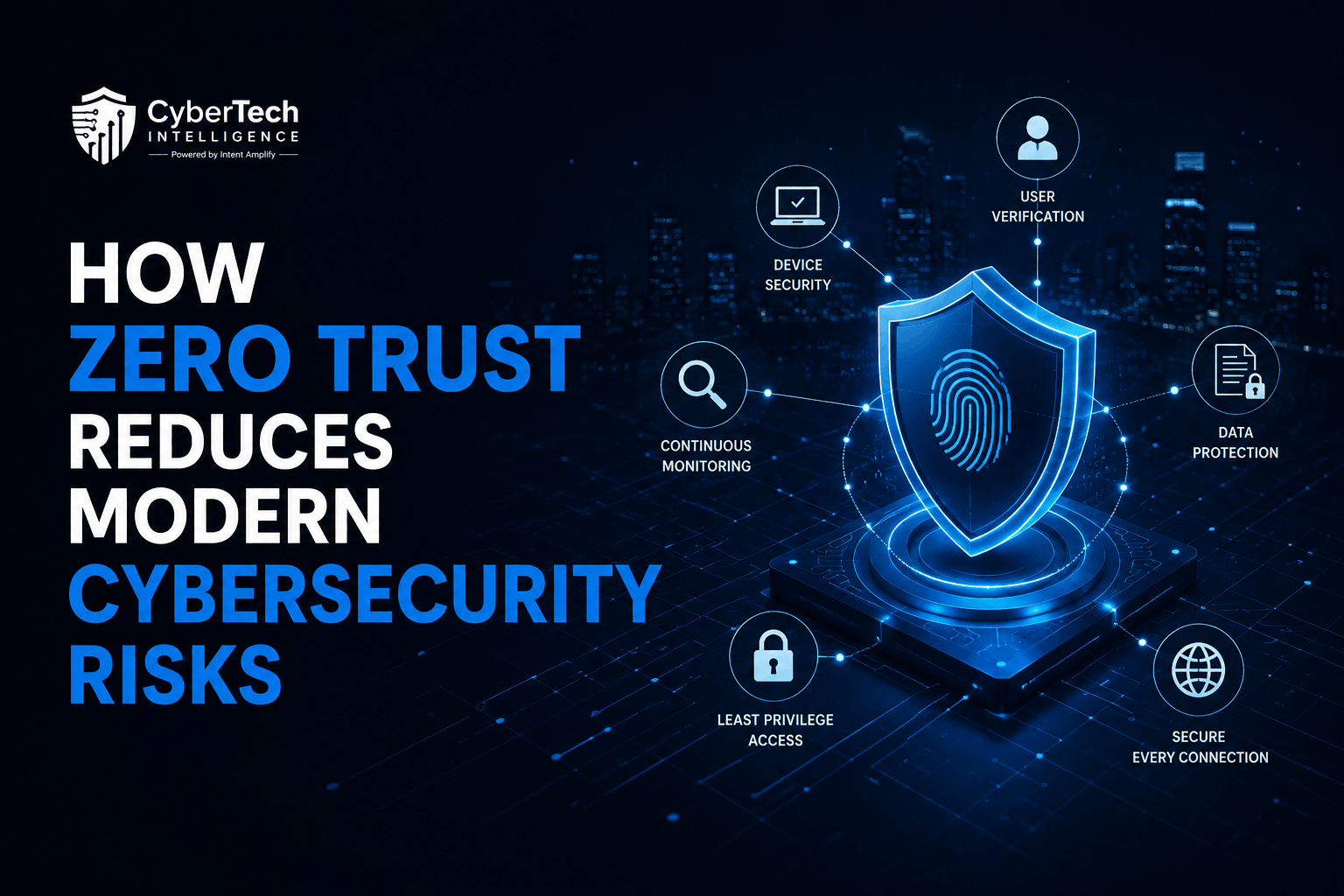
The modern cybersecurity landscape is more complex than ever before. Organizations face a growing number of threats, including ransomware attacks, phishing campaigns, insider threats, credential theft, and advanced persistent threats (APTs). At the same time, businesses are adopting cloud technologies, supporting remote workforces, and managing increasingly distributed IT environments. Traditional security models that rely on a strong network perimeter are no longer sufficient to protect critical assets in this evolving digital world. As a result, many organizations are turning to Zero Trust security as a more effective approach to reducing cybersecurity risks.
Zero Trust is a cybersecurity framework built on the principle of "never trust, always verify." Unlike traditional security models that automatically trust users and devices inside a corporate network, Zero Trust assumes that every access request could potentially be malicious. Whether a user is accessing resources from within the office or remotely, their identity, device, and access permissions must be continuously verified before access is granted. This approach significantly reduces the opportunities for cybercriminals to exploit vulnerabilities and gain unauthorized access to sensitive systems.
Read More: https://tinyurl.com/4fcu85h8
One of the primary ways Zero Trust reduces cybersecurity risks is by minimizing the attack surface. Traditional security architectures often provide broad access privileges once users are authenticated. If attackers successfully compromise an account, they may be able to move laterally throughout the network and access valuable data. Zero Trust limits access by enforcing strict identity verification and least-privilege principles, ensuring users only have access to the resources necessary to perform their roles.
Identity protection is a critical component of Zero Trust security. Compromised credentials remain one of the leading causes of cyberattacks and data breaches. Cybercriminals frequently use phishing attacks, credential stuffing, and social engineering tactics to gain access to user accounts. Zero Trust frameworks help mitigate these risks through strong identity verification measures such as multi-factor authentication (MFA), adaptive authentication, and continuous user validation. Even if a password is compromised, additional security layers make unauthorized access significantly more difficult.
Zero Trust also enhances device security by ensuring that only trusted and compliant devices can access organizational resources. In today's hybrid work environment, employees often use laptops, smartphones, and other devices from various locations. If an unmanaged or infected device connects to the network, it can create serious security risks. Zero Trust continuously evaluates device health, security posture, and compliance status before granting access. Devices that fail to meet security requirements can be restricted or denied access entirely.
Another major cybersecurity risk addressed by Zero Trust is lateral movement. Once attackers gain initial access to a network, they often attempt to move between systems to escalate privileges, locate sensitive data, and expand their control. Traditional networks may allow relatively unrestricted movement after authentication. Zero Trust prevents this by implementing network segmentation and micro-segmentation strategies that isolate resources and restrict communication between systems. This containment approach limits the potential impact of a successful breach and prevents attackers from easily expanding their access.
Cloud adoption has transformed how organizations manage data and applications, but it has also introduced new security challenges. Employees, partners, and customers frequently access cloud resources from multiple devices and locations. Traditional perimeter-based security controls are less effective in these environments because there is no clearly defined network boundary. Zero Trust addresses this challenge by applying security controls directly to users, devices, and applications rather than relying solely on network location. This ensures consistent protection across cloud, on-premises, and hybrid environments.
Insider threats are another area where Zero Trust provides significant protection. Not all security risks originate from external attackers. Employees, contractors, and third-party vendors may intentionally or unintentionally expose sensitive information. Excessive permissions, weak access controls, and inadequate monitoring can increase the risk of insider incidents. Zero Trust reduces these risks by enforcing least-privilege access policies, continuously monitoring user behavior, and requiring ongoing verification for sensitive actions. This helps organizations identify unusual activities and respond before significant damage occurs.
Continuous monitoring is a key element of the Zero Trust model. Cybersecurity threats evolve rapidly, and trust should never be assumed based on a single authentication event. Zero Trust platforms continuously assess user behavior, device activity, network traffic, and access patterns to identify anomalies that may indicate malicious activity. By detecting suspicious behavior early, organizations can respond more quickly to potential threats and reduce the likelihood of successful attacks.
Regulatory compliance and data protection requirements also benefit from Zero Trust implementation. Many industries must comply with strict regulations regarding the handling of sensitive information, including personal, financial, and healthcare data. Zero Trust frameworks help organizations meet compliance requirements by providing stronger access controls, detailed audit trails, and enhanced visibility into user activities. These capabilities improve accountability and support compliance efforts across multiple regulatory frameworks.
As cyber threats become more sophisticated, organizations need security strategies that can adapt to changing risks. Zero Trust provides a flexible and scalable approach to cybersecurity that aligns with modern business operations. Whether supporting remote employees, securing cloud applications, protecting sensitive data, or defending against advanced threats, Zero Trust helps organizations maintain stronger control over their digital environments.
The shift toward Zero Trust is not simply a technology upgrade—it represents a fundamental change in how organizations approach security. By continuously verifying users and devices, limiting access privileges, monitoring activity, and segmenting critical resources, Zero Trust significantly reduces the opportunities for attackers to exploit vulnerabilities. This proactive security model helps organizations strengthen their resilience, improve risk management, and better protect valuable assets in an increasingly complex threat landscape.
As businesses continue to embrace digital transformation, Zero Trust will play an increasingly important role in reducing cybersecurity risks and supporting long-term security objectives. Organizations that adopt Zero Trust principles are better equipped to defend against modern threats while enabling secure access, operational efficiency, and business growth.
Read More: https://tinyurl.com/4fcu85h8

 English
 Arabic
 Français
 Español
 Português
 Deutsch
 Türkçe
 Italiano
 Russian
 Romaian