


Open-Source Load Testing Tools for DevOps: Building High-Performance Applications at Scale
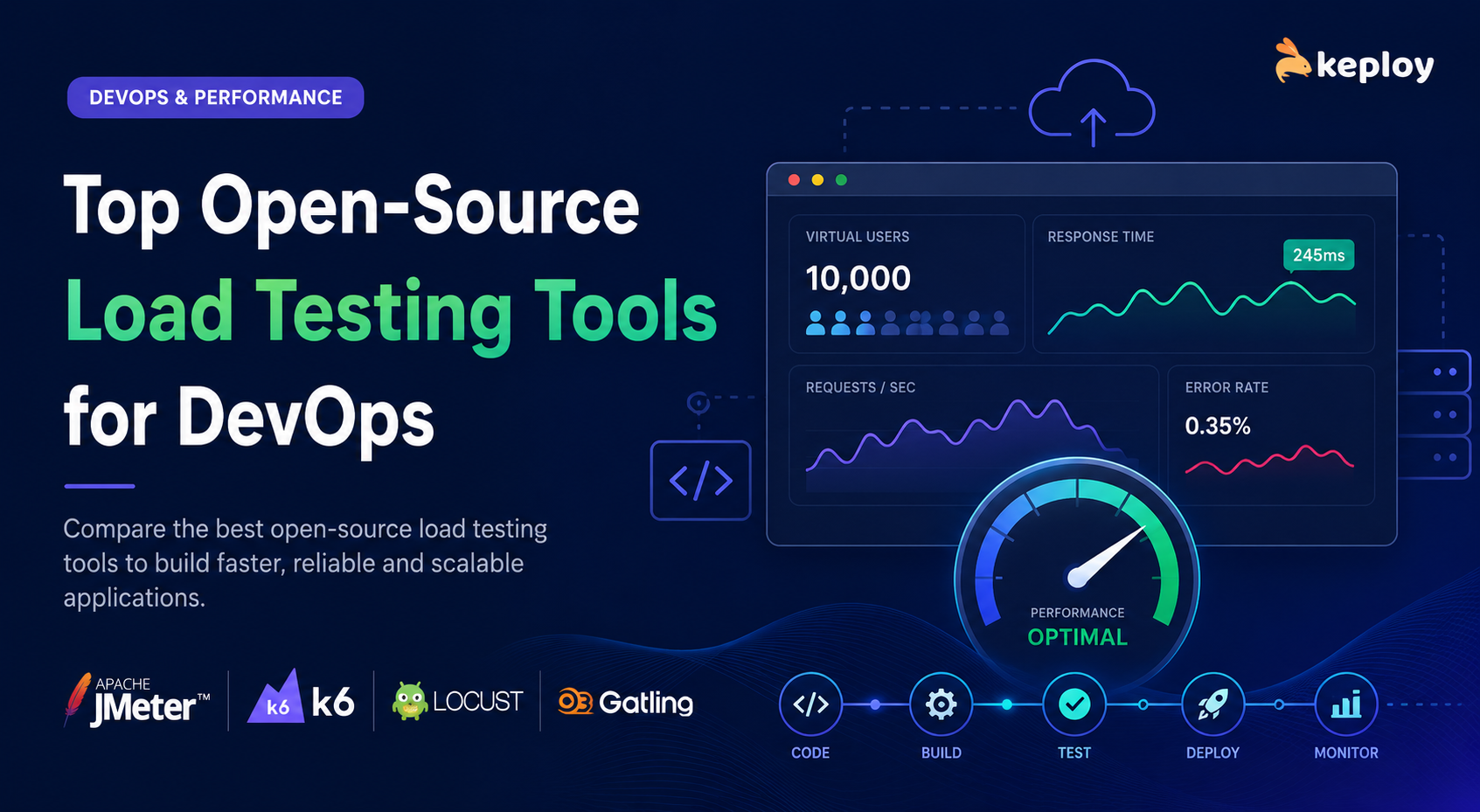
Modern applications are expected to deliver fast, reliable experiences regardless of how many users are accessing them. Whether it's an e-commerce platform handling holiday traffic, a SaaS product serving thousands of customers, or an API supporting critical business operations, performance failures can result in lost revenue, damaged reputation, and frustrated users.
This is why load testing has become a fundamental practice in DevOps. By using the right load testing tools, teams can simulate real-world traffic, identify bottlenecks, and ensure their applications remain stable under pressure. Fortunately, many powerful open-source solutions make performance testing accessible without expensive licensing costs.
In this article, we'll explore the importance of load testing, key features to look for, and some of the best open-source load testing tools available for DevOps teams.
Why Load Testing Matters
Load testing evaluates how an application behaves when subjected to expected or peak levels of user activity. The goal is to understand system performance before real users encounter issues.
Load testing helps teams:
-
Measure response times
-
Detect performance bottlenecks
-
Validate scalability
-
Improve infrastructure planning
-
Reduce production failures
-
Enhance user experience
Without proper load testing, applications may perform well during development but struggle when real-world traffic increases.
The Role of Load Testing in DevOps
DevOps emphasizes continuous integration, continuous delivery, and rapid software releases. As deployment frequency increases, performance testing must become an integral part of the development pipeline.
Integrating load testing into DevOps workflows enables teams to:
Catch Issues Early
Performance regressions can be detected before reaching production.
Improve Release Confidence
Teams gain assurance that new features will not negatively impact system performance.
Support Continuous Testing
Automated load testing can run alongside functional tests in CI/CD pipelines.
Reduce Downtime
Identifying bottlenecks before deployment helps prevent outages.
Enhance Customer Satisfaction
Reliable application performance leads to better user experiences.
What to Look for in Load Testing Tools
Choosing the right tool depends on project requirements and team expertise.
Important features include:
-
Scalability
-
Automation support
-
CI/CD integration
-
Reporting and analytics
-
Protocol compatibility
-
Ease of use
-
Distributed testing capabilities
Open-source solutions often provide many of these capabilities while remaining flexible and cost-effective.
Top Open-Source Load Testing Tools
1. Apache JMeter
Apache JMeter is one of the most widely used performance testing tools available today. It supports web applications, APIs, databases, messaging systems, and more.
Key Features:
-
Graphical test creation
-
Distributed load generation
-
Extensive plugin ecosystem
-
Detailed performance reporting
Best For: Teams seeking a mature and highly customizable testing platform.
2. k6
k6 has become a favorite among DevOps engineers because of its automation-friendly design and JavaScript-based scripting.
Key Features:
-
JavaScript test scripts
-
Command-line execution
-
CI/CD integration
-
Real-time performance metrics
Best For: Organizations embracing Infrastructure as Code and automated testing.
3. Locust
Locust allows developers to define user behavior using Python code, making it highly flexible and easy to customize.
Key Features:
-
Python-based scripting
-
Distributed execution
-
Web-based dashboard
-
Dynamic workload modeling
Best For: Teams with strong Python expertise.
4. Gatling
Gatling is known for high-performance execution and advanced reporting capabilities.
Key Features:
-
Efficient resource utilization
-
Detailed HTML reports
-
Enterprise-scale testing
-
CI/CD support
Best For: Large-scale performance testing initiatives.
5. Artillery
Artillery is designed specifically for modern APIs, microservices, and cloud-native applications.
Key Features:
-
YAML-based configuration
-
Cloud-native architecture
-
API-focused testing
-
Real-time metrics
Best For: API and microservices performance testing.
6. Vegeta
Vegeta is a lightweight HTTP load testing solution written in Go.
Key Features:
-
Command-line simplicity
-
Fast execution
-
Low resource consumption
-
Easy automation
Best For: Quick performance validation and API testing.
Combining Load Testing with Automated Testing
Load testing identifies performance issues, but teams also need to verify that application functionality remains correct under load.
This is where tools like Keploy add value.
Keploy automatically generates API test cases from real traffic and enables automated regression testing. By combining Keploy with load testing tools, organizations can validate both performance and functionality during the development lifecycle.
Benefits include:
-
Reduced manual testing effort
-
Faster regression testing
-
Improved test coverage
-
Better release confidence
-
Seamless CI/CD integration
Best Practices for Effective Load Testing
Simulate Real User Behavior
Create realistic traffic patterns that reflect actual usage.
Establish Baselines
Track key performance metrics over time.
Automate Performance Tests
Integrate testing directly into CI/CD workflows.
Monitor Infrastructure Metrics
Analyze CPU, memory, database, and network performance alongside application metrics.
Test Continuously
Performance testing should be part of every major release cycle.
Combine Functional and Performance Testing
Use tools such as Keploy to ensure functionality remains intact while evaluating performance.
Common Load Testing Challenges
While load testing offers significant benefits, teams often face challenges such as:
-
Creating realistic test scenarios
-
Managing large-scale traffic generation
-
Interpreting performance data
-
Maintaining test scripts
-
Integrating testing into existing workflows
Choosing the right tools and adopting automation can help overcome these obstacles.
Future Trends in Load Testing
Performance testing continues to evolve alongside modern software architectures.
Emerging trends include:
-
Continuous performance testing
-
AI-assisted test generation
-
Cloud-native load generation
-
Shift-left testing strategies
-
Kubernetes-focused performance validation
Organizations that adopt these practices can identify issues earlier and deliver more reliable applications.
Conclusion
Application performance is a critical component of software quality. As systems become more complex and user expectations continue to rise, load testing is no longer optional. Open-source load testing tools provide powerful capabilities for evaluating scalability, reliability, and performance without significant costs.
Whether you choose Apache JMeter, k6, Locust, Gatling, Artillery, or Vegeta, integrating performance testing into your DevOps workflow can significantly improve release quality and user satisfaction. Combined with automated testing solutions like Keploy, teams can build comprehensive testing strategies that ensure both performance and functionality.

 English
 Arabic
 Français
 Português
 Deutsch
 Türkçe
 Dutch
Dutch
 Italiano
 Russian
 Romaian