


How Custom Oil and Gas Software Development Improves Operational Efficiency
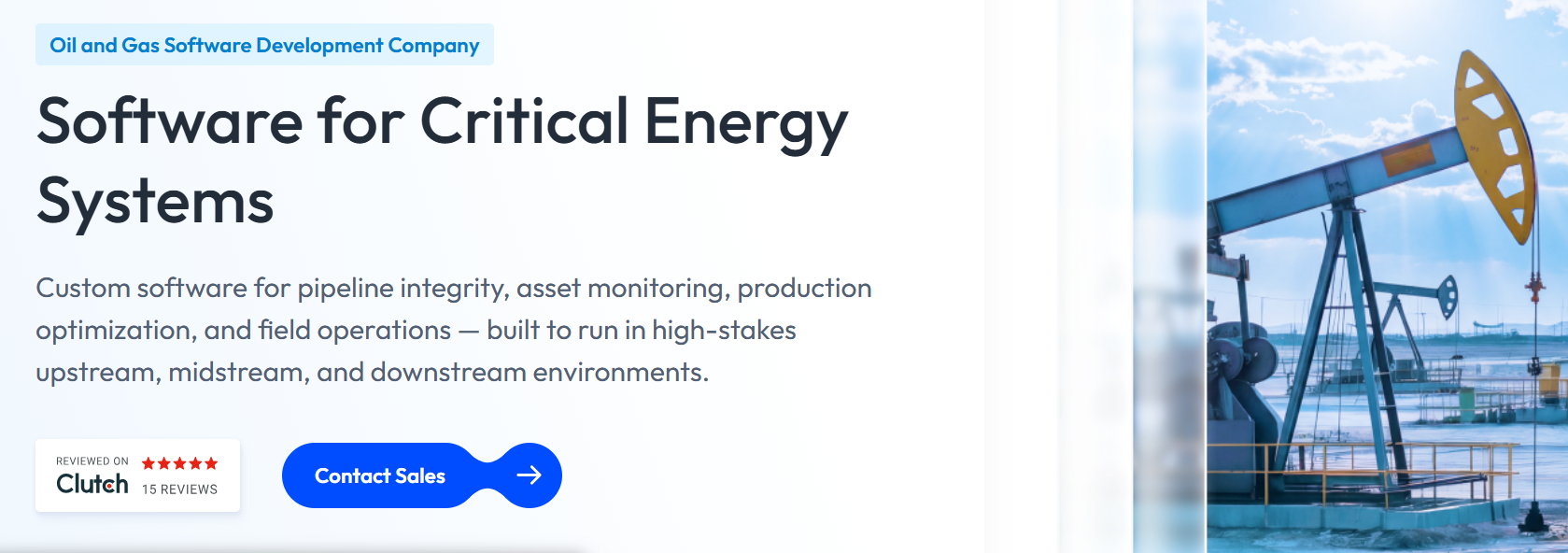
The oil and gas industry has always operated in one of the world's most demanding business environments. Companies manage complex exploration projects, offshore platforms, drilling operations, pipelines, refineries, transportation networks, and strict environmental regulations—all while facing volatile commodity prices and increasing pressure to improve sustainability.
In such a challenging landscape, operational efficiency is no longer simply a competitive advantage. It has become a business necessity.
Many organizations initially adopt commercial off-the-shelf software to digitize operations. While these solutions can address general business needs, they often struggle to support the highly specialized workflows that define upstream, midstream, and downstream operations. As companies expand, integrate new assets, and adopt emerging technologies, standardized software frequently becomes a bottleneck.
This is why many energy organizations invest in oil and gas software development tailored specifically to their operational requirements. Custom software aligns technology with existing business processes rather than forcing employees to adapt their workflows around generic applications. The result is higher productivity, improved safety, better asset utilization, and more informed decision-making.
Why Operational Efficiency Matters More Than Ever
Operational efficiency directly impacts profitability throughout the energy value chain.
Small improvements can generate substantial savings because oil and gas companies operate expensive infrastructure that includes:
- drilling rigs
- offshore platforms
- refineries
- storage facilities
- pipeline networks
- transportation fleets
- maintenance teams
- specialized equipment
Unexpected downtime, inaccurate maintenance schedules, delayed inspections, or poor data visibility can cost millions of dollars annually.
Digital transformation allows organizations to replace manual processes with automated workflows that improve productivity while reducing operational risks. Industry leaders increasingly view technology investments as strategic initiatives rather than IT expenses.
The Limitations of Generic Software
Many enterprises rely on multiple disconnected systems:
- ERP platforms
- spreadsheets
- maintenance software
- SCADA systems
- GIS platforms
- document management systems
- inspection applications
These tools often operate independently, creating data silos.
Common challenges include:
- duplicate data entry
- inconsistent reporting
- slow decision-making
- poor visibility across departments
- integration difficulties
- limited automation
- outdated interfaces
- expensive licensing
Generic enterprise software rarely understands the unique workflows involved in reservoir management, drilling operations, production optimization, or environmental compliance.
Custom solutions eliminate these issues by integrating all operational processes into a unified ecosystem.
Centralized Data Improves Decision-Making
Oil and gas operations generate enormous amounts of information every second.
Examples include:
- pressure readings
- temperature measurements
- production volumes
- seismic data
- equipment diagnostics
- maintenance records
- inspection reports
- environmental monitoring
- logistics information
Without centralized management, valuable insights remain hidden inside disconnected databases.
Custom software provides:
- unified dashboards
- real-time reporting
- automated alerts
- historical analysis
- predictive analytics
- executive KPIs
Decision-makers no longer wait for manually prepared reports. Instead, they gain immediate visibility into operational performance across the organization.
Automation Eliminates Manual Work
Energy companies still perform numerous repetitive administrative tasks.
Examples include:
- inspection scheduling
- work order creation
- permit management
- inventory updates
- regulatory reporting
- contractor coordination
- equipment tracking
Automation significantly reduces administrative overhead.
Instead of manually processing paperwork, employees can focus on higher-value engineering and operational activities.
Automation also minimizes:
- human error
- missed deadlines
- duplicate records
- reporting inconsistencies
Predictive Maintenance Reduces Downtime
Equipment failures are among the largest sources of operational losses.
Unexpected failures affect:
- pumps
- compressors
- turbines
- drilling equipment
- valves
- pipelines
- processing facilities
Traditional maintenance relies on fixed schedules.
However, equipment rarely fails according to a calendar.
Custom software integrates:
- IoT sensors
- vibration analysis
- pressure monitoring
- temperature monitoring
- machine learning
- historical maintenance records
These systems detect early warning signs before failures occur.
Maintenance teams receive alerts based on actual equipment conditions instead of arbitrary schedules.
Benefits include:
- fewer breakdowns
- lower maintenance costs
- improved equipment lifespan
- higher production uptime
Predictive maintenance has become one of the highest-value applications of digital transformation within the industry.
Better Asset Management
Oil and gas companies operate thousands of physical assets distributed across remote locations.
Managing these assets manually becomes increasingly difficult.
Custom asset management platforms provide:
- complete equipment history
- maintenance schedules
- warranty information
- spare parts inventory
- inspection records
- operating conditions
- performance analytics
Field engineers can access this information directly from mobile devices while working on-site.
This significantly improves maintenance planning and resource allocation.
Real-Time Field Visibility
Operations often span multiple countries and remote environments.
Managers require immediate visibility into field activities.
Custom dashboards display:
- production rates
- drilling progress
- equipment health
- safety incidents
- workforce status
- logistics updates
- environmental metrics
Instead of relying on delayed reports, executives receive live operational intelligence.
This allows organizations to respond quickly to changing conditions.
Improved Safety Performance
Safety remains the industry's highest priority.
Custom software helps improve safety by supporting:
- digital inspections
- permit-to-work systems
- incident reporting
- hazard identification
- contractor management
- emergency response planning
- safety training records
Mobile applications allow workers to submit reports directly from the field.
Managers receive immediate notifications when safety issues arise.
Digital workflows improve compliance while reducing paperwork.
Regulatory Compliance Made Easier
Energy companies operate under extensive regulatory requirements.
Compliance involves:
- environmental monitoring
- emissions reporting
- workplace safety
- equipment inspections
- documentation management
- audit preparation
Manual compliance processes consume significant time.
Custom software automates:
- reporting
- document storage
- audit trails
- approval workflows
- compliance reminders
Organizations spend less time preparing audits while reducing regulatory risks.
Supply Chain Optimization
The oil and gas supply chain includes:
- procurement
- transportation
- storage
- inventory
- contractors
- equipment suppliers
Disruptions can delay production and increase costs.
Custom logistics platforms improve:
- inventory forecasting
- shipment tracking
- warehouse management
- supplier coordination
- purchasing workflows
Organizations gain better control over materials and critical spare parts.
Integration Across Existing Systems
Few companies begin digital transformation from scratch.
Most already operate:
- SAP
- Oracle
- Microsoft Dynamics
- SCADA
- MES
- GIS
- laboratory systems
- finance software
Custom software integrates these systems rather than replacing them.
Integration provides:
- single source of truth
- automated synchronization
- reduced manual entry
- improved reporting
- better operational coordination
Mobile Applications for Field Workers
Many employees work in remote environments with unreliable connectivity.
Custom mobile applications provide:
- offline functionality
- inspection forms
- equipment checklists
- GPS integration
- digital signatures
- photo documentation
- synchronization when internet becomes available
Field personnel remain productive regardless of location.
AI-Powered Operational Intelligence
Artificial intelligence increasingly supports:
- production forecasting
- drilling optimization
- anomaly detection
- predictive maintenance
- energy consumption optimization
- workforce planning
Machine learning identifies patterns that humans might overlook.
Over time, AI improves forecasting accuracy while helping organizations reduce operational costs.
Digital Twins Improve Asset Performance
Digital twins create virtual representations of physical assets.
These models continuously update using real operational data.
Engineers can simulate:
- production changes
- maintenance scenarios
- equipment failures
- operational improvements
Instead of relying solely on historical information, companies evaluate future outcomes before implementing changes.
Cloud-Based Scalability
Modern energy companies increasingly adopt cloud-native platforms.
Benefits include:
- flexible infrastructure
- easier remote access
- automatic updates
- disaster recovery
- scalable computing
- centralized security
Cloud deployment also simplifies collaboration across geographically distributed teams.
Cybersecurity Built Into Operations
Critical infrastructure requires strong cybersecurity.
Custom software incorporates:
- multi-factor authentication
- role-based permissions
- encrypted communications
- audit logs
- secure APIs
- threat monitoring
Security becomes part of operational workflows rather than an afterthought.
Measuring Operational Improvements
Organizations implementing custom software typically monitor KPIs such as:
| KPI | Expected Improvement |
|---|---|
| Equipment downtime | Reduced |
| Maintenance costs | Lower |
| Production efficiency | Higher |
| Incident response time | Faster |
| Regulatory reporting | Automated |
| Asset utilization | Improved |
| Inventory accuracy | Increased |
| Manual paperwork | Significantly reduced |
Although actual results vary depending on implementation, many organizations achieve measurable improvements across multiple operational areas after replacing fragmented legacy systems with integrated digital platforms.
A Typical Implementation Roadmap
Successful digital transformation usually follows several phases:
1. Business Assessment
Teams identify operational challenges and prioritize improvement opportunities.
2. Requirements Analysis
Stakeholders define functional and technical requirements.
3. Solution Design
Architects design scalable software architecture aligned with business goals.
4. Development
Developers build custom modules using agile methodologies.
5. Integration
The new platform connects with existing enterprise systems.
6. Testing
Extensive testing ensures reliability and security.
7. Deployment
Software is gradually introduced across business units.
8. Continuous Improvement
User feedback drives ongoing optimization.
Why Choosing the Right Development Partner Matters
Technology alone does not guarantee success.
An experienced development partner understands both software engineering and industry-specific operational challenges.
A capable partner should provide:
- domain expertise
- cloud architecture
- AI integration
- IoT connectivity
- cybersecurity
- mobile development
- enterprise integration
- long-term support
Companies that combine technical excellence with deep industry understanding can deliver software that continues generating value for years.
One example is Zoolatech, a software engineering company that helps enterprises build scalable digital platforms, modernize legacy systems, integrate cloud technologies, leverage AI, and accelerate enterprise digital transformation. Its expertise in custom engineering enables organizations across complex industries to develop flexible, high-performance software solutions tailored to evolving business needs.
Future Trends
The next generation of custom software will increasingly incorporate:
- autonomous inspections using drones
- AI-powered operational assistants
- edge computing
- advanced digital twins
- predictive environmental monitoring
- robotics integration
- generative AI for engineering workflows
- carbon emissions optimization
Organizations investing today will be better positioned to adapt to future market demands.
Conclusion
The energy industry is undergoing one of the most significant digital transformations in its history. Companies must simultaneously improve productivity, reduce costs, strengthen safety, meet regulatory requirements, and remain competitive despite volatile market conditions.
Custom oil and gas software development enables organizations to achieve these objectives by replacing disconnected legacy systems with integrated digital platforms built specifically for their operational needs. From predictive maintenance and automated workflows to AI-powered analytics, IoT integration, mobile field applications, and real-time operational dashboards, tailored software solutions create measurable improvements across every stage of the value chain.
As technology continues to evolve, organizations that embrace custom software will be better equipped to increase operational efficiency, improve resilience, and build a stronger foundation for long-term growth. Companies like Zoolatech demonstrate how experienced software engineering partners can support this transformation by delivering scalable, secure, and future-ready digital solutions designed around each organization's unique operational challenges.

 English
 Arabic
 Français
 Español
 Português
 Deutsch
 Türkçe
 Dutch
Dutch
 Italiano
 Romaian