


Prism Problems: Common Optical Issues and Practical Solutions
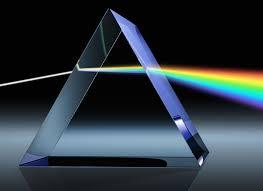
A prism is one of the most important optical components used in modern technology. From cameras and microscopes to medical devices, binoculars, AR systems, and scientific instruments, prisms help redirect, split, or combine light with exceptional precision.
Although prisms have no moving parts, they still face performance challenges. Poor alignment, contamination, coating damage, and material defects can all reduce image quality. In precision optical systems, even a tiny error may affect the final result.
The good news is that most prism-related issues have well-understood causes and proven engineering solutions. This article explores the most common prism problems and explains how manufacturers reduce them using trusted optical design practices rather than marketing claims.
Why Prism Quality Matters
A prism does much more than bend light.
Depending on its design, it may:
- Redirect light paths
- Rotate images
- Split light into multiple beams
- Combine optical signals
- Correct image orientation
Because light travels through several optical surfaces, small imperfections can quickly reduce overall system performance.
High-quality prisms improve:
- Image sharpness
- Brightness
- Contrast
- Optical efficiency
- Measurement accuracy
Problem 1: Optical Misalignment
One of the most common issues affecting a prism is incorrect alignment.
Even tiny positioning errors may cause:
- Blurred images
- Reduced optical efficiency
- Beam deviation
- Double images
- Poor image registration
Manufacturers minimise alignment errors by using precision machining, automated assembly equipment, and optical calibration systems.
In advanced optical instruments, alignment tolerances are often measured in micrometres.
Problem 2: Reflection Losses
Whenever light passes through glass, part of it naturally reflects from the surface.
Multiple prism surfaces increase cumulative reflection losses, reducing overall brightness.
To improve transmission, manufacturers apply anti-reflection (AR) coatings that reduce unwanted reflections over specific wavelength ranges.
Well-designed coatings help:
- Increase light transmission
- Improve contrast
- Reduce ghost images
- Enhance colour accuracy
The result is a brighter and clearer optical system.
Problem 3: Surface Contamination
Dust, fingerprints, oil, and moisture can significantly affect optical performance.
Even a small amount of contamination may scatter incoming light and reduce image quality.
Common contaminants include:
- Dust particles
- Skin oils
- Cleaning residue
- Water spots
- Airborne pollutants
Manufacturers recommend cleaning optical surfaces only with approved lens cleaning materials and microfiber cloths.
A paper towel may clean your kitchen bench, but your prism deserves much better treatment.
Problem 4: Coating Damage
Modern optical coatings are extremely thin.
Although they improve performance, improper handling can damage them.
Common causes include:
- Abrasive cleaning
- Chemical exposure
- Poor storage
- Incorrect handling
Damaged coatings may increase reflection, reduce transmission, and lower image contrast.
Proper storage and careful cleaning help extend coating life.
Problem 5: Material Imperfections
Optical glass quality directly affects prism performance.
Manufacturers inspect optical materials for defects such as:
- Internal bubbles
- Inclusions
- Striae
- Stress birefringence
- Refractive index variations
High-quality optical glass undergoes strict quality control before machining begins.
These inspections help ensure consistent optical performance across the finished component.
Problem 6: Thermal Effects
Temperature changes affect both glass and mounting structures.
Expansion and contraction may slightly alter optical alignment in precision systems.
Engineers reduce thermal effects by selecting:
- Stable optical materials
- Precision mounting systems
- Compatible structural materials
- Controlled manufacturing tolerances
Thermal stability becomes especially important in aerospace, defence, and scientific instruments.
A prism prefers stable temperatures almost as much as photographers prefer clear skies.
Problem 7: Incorrect Prism Selection
Not every prism performs the same function.
Choosing the wrong design may reduce system performance.
Different applications require different prism types, including:
- Right-angle prisms
- Dove prisms
- Roof prisms
- Penta prisms
- Beam splitter prisms
- Corner cube prisms
Each design solves a specific optical problem.
Selecting the correct prism depends on:
- Optical path
- Image orientation
- Polarisation requirements
- Wavelength range
- Mechanical constraints
Good system design begins with selecting the appropriate optical component.
Technologies That Improve Prism Performance
Modern optical manufacturing continues to improve prism quality through advanced production techniques.
| Technology | Main Benefit |
|---|---|
| Precision polishing | Better surface accuracy |
| Anti-reflection coatings | Higher light transmission |
| Optical-grade glass | Improved image quality |
| Precision alignment | Better optical performance |
| Automated inspection | Consistent manufacturing quality |
| Protective coatings | Increased durability |
| Computer optical simulation | Optimised prism design |
What Buyers Should Consider
When selecting a prism for an optical system, avoid focusing only on dimensions.
Instead, evaluate:
- Optical material
- Surface quality
- Coating type
- Angular accuracy
- Surface flatness
- Manufacturing tolerances
- Wavelength compatibility
Reliable manufacturers provide detailed optical specifications rather than broad marketing statements.
These technical details help engineers choose components that meet actual performance requirements.
Final Thoughts
A prism remains one of the most reliable and versatile optical components available today. However, achieving excellent performance depends on more than the prism's shape. Material quality, precision polishing, coating performance, alignment accuracy, and proper handling all influence the final image.
By understanding common problems such as optical misalignment, reflection losses, contamination, coating damage, thermal effects, and incorrect prism selection, designers and buyers can make better decisions and build more reliable optical systems. Modern manufacturing technologies continue to improve prism performance, helping industries achieve higher precision across imaging, measurement, medical, and display applications.

 English
 Arabic
 Español
 Português
 Deutsch
 Türkçe
 Dutch
Dutch
 Italiano
 Russian
 Romaian