


Top RWA Tokenization Platform Use Cases Across Industries
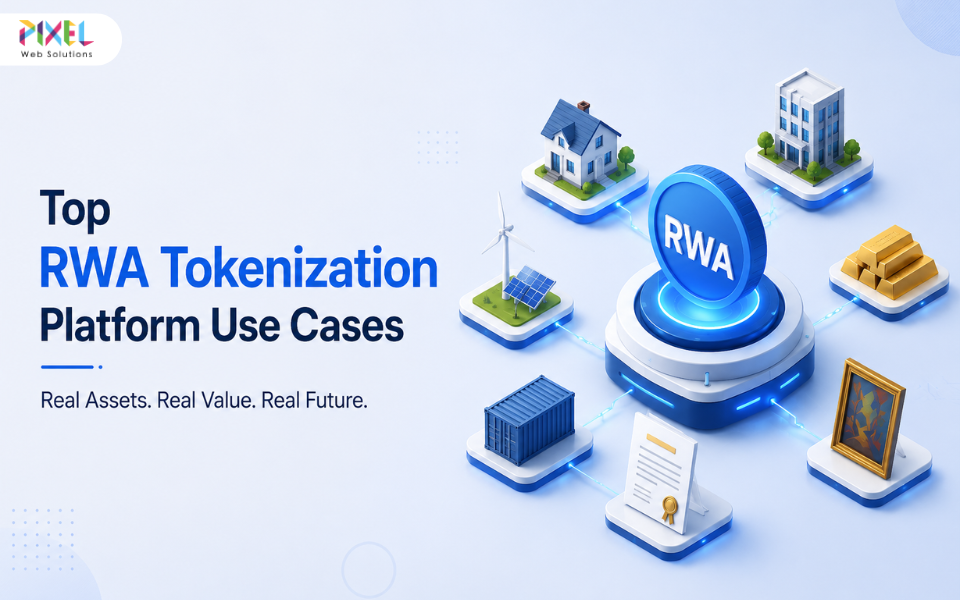
The adoption of RWA tokenization platforms is accelerating as businesses seek innovative ways to unlock the value of real-world assets. By converting physical and financial assets into blockchain-based digital tokens, companies can improve liquidity, enable fractional ownership, and simplify asset management.
From real estate and banking to healthcare and renewable energy, RWA tokenization is transforming how assets are owned, traded, and invested in. In this guide, we'll explore what an RWA tokenization platform is, why it's gaining momentum, and the top use cases across industries.
What Is an RWA Tokenization Platform?
An RWA tokenization platform is a blockchain-powered solution that converts real-world assets into digital tokens representing ownership or investment rights. These tokens can be securely traded, transferred, and managed on a blockchain network.
Assets commonly tokenized include:
-
Real estate
-
Precious metals
-
Private equity
-
Bonds
-
Agricultural land
-
Fine art
-
Luxury collectibles
-
Intellectual property
-
Renewable energy assets
By leveraging blockchain and smart contracts, businesses can automate transactions, enhance transparency, and reduce reliance on intermediaries.
Why Is RWA Tokenization Gaining Momentum?
The growing demand for digital assets and decentralized finance (DeFi) has accelerated the adoption of RWA tokenization platforms.
Some of the key reasons include:
-
Improved liquidity for traditionally illiquid assets
-
Fractional ownership that lowers investment barriers
-
Global investment opportunities
-
Faster and secure transactions
-
Enhanced transparency through blockchain
-
Automated processes using smart contracts
These advantages make RWA tokenization attractive for enterprises, investors, and financial institutions alike.
Top RWA Tokenization Platform Use Cases Across Industries
1. Real Estate
Real estate is one of the most popular applications of RWA tokenization.
With an RWA tokenization platform, businesses can tokenize:
-
Residential properties
-
Commercial buildings
-
Rental properties
-
Real estate investment funds (REITs)
Key Benefits
-
Fractional property ownership
-
Increased market liquidity
-
Global investor participation
-
Faster property transactions
2. Financial Services
Financial institutions use RWA tokenization to digitize traditional financial assets.
Common examples include:
-
Bonds
-
Private equity
-
Investment funds
-
Asset-backed securities
Key Benefits
-
Reduced settlement time
-
Lower operational costs
-
Greater transparency
-
Improved investment accessibility
3. Banking
Banks are adopting tokenization to modernize financial operations.
Popular use cases include:
-
Loan tokenization
-
Collateral management
-
Trade finance
-
Asset-backed lending
Key Benefits
-
Faster approvals
-
Reduced paperwork
-
Enhanced operational efficiency
4. Healthcare
Healthcare organizations are increasingly tokenizing valuable assets to improve funding and resource management.
Examples include:
-
Medical equipment
-
Pharmaceutical assets
-
Hospital infrastructure
Key Benefits
-
Easier fundraising
-
Better asset transparency
-
Efficient ownership management
5. Supply Chain & Logistics
Tokenization improves visibility and financing throughout the supply chain.
Assets that can be tokenized include:
-
Inventory
-
Warehouses
-
Shipping containers
-
Freight assets
Key Benefits
-
Real-time asset tracking
-
Improved transparency
-
Easier inventory financing
6. Agriculture
Agriculture is another sector benefiting from blockchain-powered asset tokenization.
Examples include:
-
Farmland
-
Crops
-
Agricultural equipment
-
Irrigation systems
Key Benefits
-
Fractional ownership
-
Better access to capital
-
Improved investment opportunities
7. Precious Metals & Commodities
Commodities are ideal for tokenization because they represent high-value physical assets.
Popular assets include:
-
Gold
-
Silver
-
Diamonds
-
Oil and gas
Key Benefits
-
Digital ownership
-
Simplified trading
-
Increased liquidity
8. Renewable Energy
Renewable energy companies use tokenization to attract investors and fund sustainable projects.
Common assets include:
-
Solar farms
-
Wind farms
-
Carbon credits
-
Green infrastructure
Key Benefits
-
Easier project funding
-
Global investor access
-
Transparent ownership
9. Luxury Assets
Luxury assets often have high entry barriers for investors.
Tokenization makes shared ownership possible for:
-
Fine art
-
Luxury watches
-
Rare collectibles
-
Vintage automobiles
Key Benefits
-
Fractional investment
-
Better liquidity
-
Broader investor participation
10. Intellectual Property
Creators and businesses can tokenize intangible assets to generate new revenue opportunities.
Examples include:
-
Patents
-
Music rights
-
Film rights
-
Software licenses
Key Benefits
-
Automated royalty distribution
-
Transparent ownership records
-
Improved monetization
Common Benefits of RWA Tokenization Across Industries
Regardless of the industry, an RWA tokenization platform offers significant advantages.
Some of the most notable benefits include:
-
Enhanced liquidity
-
Fractional ownership
-
Global investment accessibility
-
Faster settlements
-
Lower transaction costs
-
Smart contract automation
-
Greater transparency
-
Improved security
-
Reduced dependency on intermediaries
Challenges of Implementing an RWA Tokenization Platform
While the opportunities are significant, businesses should also consider several implementation challenges:
-
Regulatory compliance
-
Asset valuation
-
Legal documentation
-
Technology integration
-
Cybersecurity risks
-
Cross-border regulations
Addressing these challenges early helps ensure a secure and compliant tokenization ecosystem.
Future of RWA Tokenization Across Industries
The future of RWA tokenization platforms looks pretty promising as blockchain adoption keeps growing. There’s this sense that emerging tech like AI, cross-chain interoperability, and decentralized finance or “DeFi” for short will help tokenization spread into even more industries over time, like really.
Also, as institutional adoption starts to climb, the organizations that choose to embrace RWA tokenization right now should be in a strong position to open up fresh investment opportunities and push steady long-term growth.
Conclusion
The use cases for RWA tokenization platforms go way beyond real estate it’s kind of obvious, but still, a lot of teams underestimate it. Sectors like finance, banking, healthcare, agriculture, logistics, renewable energy, luxury assets, and intellectual property are already using tokenization to boost liquidity, raise transparency, and simplify how they handle asset management day to day.
As blockchain technology keeps evolving, companies that move early on RWA tokenization can get a real competitive advantage and open up fresh investment avenues. If you are thinking about launching a secure and scalable solution, teaming up with a seasoned RWA tokenization platform development company might be the fastest route to building a compliant, future-ready platform that fits your business objectives exactly.
 Deutsch
 English
 Arabic
 Français
 Español
 Português
 Türkçe
 Dutch
Dutch
 Italiano
 Russian
 Romaian