


Building a Safer Hospital Bed Setup at Home: Mattress, Rails, and What Most Families Overlook
Most families focus on the bed frame when setting up a homecare hospital bed. They choose between semi-electric and fully electric, think about height range, and consider whether it fits the room. What gets left for later — and often causes real problems — are the two components that directly determine daily safety: the mattress the patient actually lies on and the rails that determine whether they can move safely in and out of bed without falling.
These aren't afterthoughts. A pressure-redistributing mattress and properly installed, safety-rated bed rails are the layer of protection between a patient and the complications that most frequently derail homecare recoveries — pressure injuries on one side, transfer falls on the other.
Why the Mattress Matters More Than Most Families Realize
When a patient spends significant hours in bed each day — resting, sleeping, repositioning — the surface beneath them is constantly either managing or creating pressure at bony prominences like the heels, sacrum, hips, and shoulder blades. A standard innerspring or basic flat foam mattress was never engineered with this sustained, repetitive loading in mind. Over days and weeks, the pressure concentrates in the same spots, blood flow to those areas is compromised, and skin tissue begins to break down from the inside out.
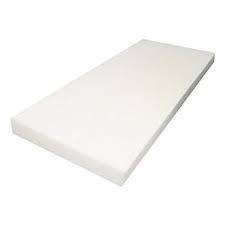
The solution isn't the most expensive mattress available — it's a mattress designed with therapeutic zones that specifically address how pressure distributes across different regions of the body during extended lying. The DynaRest Multi-Zone Foam Pressure Mattress is built precisely for this clinical purpose, using high-density foam with horizontal precision-cut construction across multiple therapeutic zones that work together to reduce shear friction, facilitate airflow through the sleep surface, and redistribute weight away from the contact points where pressure injuries most commonly develop.
The horizontal cross-cut design is one of the more clinically meaningful engineering decisions in this category. Rather than a solid, uniform foam block that compresses evenly everywhere, the cut channels create independent cells that respond individually to the contours and weight distribution of the specific patient lying on them. This targeted compression means the zones beneath the heels and sacrum — the highest-risk areas — compress differently than those beneath the thighs and calves, delivering focused pressure relief where it's most needed rather than averaging the support across the entire surface.
A vapor-permeable, fluid-resistant cover manages the moisture and heat that accumulate against skin during extended lying — two environmental factors that accelerate tissue breakdown and contribute to pressure injury development independent of mechanical pressure alone. The non-skid base keeps the mattress securely positioned on the bed frame during repositioning and care tasks, and the construction meets CFR 1632 and CFR 1633 flammability standards for homecare and long-term care use. With a 350-pound weight capacity and dimensions suited to standard homecare hospital bed frames, it provides a complete Group I therapeutic support surface for patients at low to moderate pressure injury risk without the cost and complexity of alternating pressure systems that are more appropriate for higher-acuity situations.
Why Standard Bed Rails Often Aren't Enough
Once the mattress question is settled, the next frequently underestimated component is the bed rail. Most families assume any bed rail solves the problem of fall prevention. The clinical reality is more specific: bed rails can themselves become a source of patient harm if they're not designed to eliminate entrapment risk — the danger of a patient becoming trapped in the gap between the rail, the mattress, and the bed frame during repositioning or when trying to exit the bed.
The U.S. Food and Drug Administration has documented hundreds of rail-related entrapment injuries and fatalities over the years, primarily involving rails that weren't designed to the safety standards now codified in ASTM F3186-17. A rail that meets this standard has been tested and certified to prevent entrapment at all seven risk zones identified by the ASTM specification — including zones at the rail-to-mattress interface, between the rail segments, and between the rail and the headboard or footboard. Most consumer bed rails don't meet this standard. A few institutional-grade rails do.
The Stander EZ Click LTC Bed Handle: ASTM-Certified for Institutional Beds
The Stander EZ Click LTC Bed Handle and Bed Rail is one of the few bed rails that has been independently tested and certified to pass all seven ASTM F3186-17 entrapment zones — and specifically on articulating, adjustable bed frames of the kind used in long-term care and homecare hospital settings. This distinction matters because most ASTM-certified rails are tested on static, flat frames. A rail that passes entrapment testing on a flat bed may create new entrapment geometries when the head or foot section is raised on an adjustable base, since articulation changes the gaps between the rail, mattress, and frame at different positions. The EZ Click LTC rail was designed and tested to maintain entrapment protection regardless of the bed's articulated position — a meaningful safety advantage for patients whose beds are regularly adjusted throughout the day.
The rail attaches to the metal frame of most institutional and homecare hospital beds via a smart clamping system that secures without modification to the bed, using provided bolts and an Allen key for a stable, tool-tightened connection. The 20.5-inch wide handle per side provides a genuinely functional grab surface for patients transferring in and out of bed — not just a safety barrier, but an active transfer assist tool that supports up to 500 pounds of downward pressure. For patients building enough strength and confidence to move more independently, having a solid grip point at the bedside during the sit-to-stand transition is often what makes the difference between a safe independent transfer and one that requires caregiver assistance.
The EZ click release button allows the handle to be detached from its base with a single press — giving caregivers immediate, unobstructed access to the patient for dressing, repositioning, wound care, or linen changes without fumbling with the rail or leaving it permanently down. The rail returns to its secured position just as quickly. A built-in phone holder keeps a patient's device within reach at the bedside, and the set includes two rails — one for each side of the bed — ensuring bilateral protection rather than coverage on a single side only.
How These Components Work Together
It helps to think about a homecare hospital bed setup as three separate problems that require three separate solutions. The frame and its positioning capability determine how the patient can be repositioned and how caregivers can access them. The mattress determines what happens during the hours the patient is lying still — whether pressure accumulates or is actively redistributed. And the rail system determines what happens during the moments of transition — getting into bed, getting out, repositioning at the edge — when fall and entrapment risk is highest.
None of these components solves the other's problem. A well-fitted mattress doesn't prevent transfer falls. A well-designed rail doesn't redistribute pressure during sleep. A feature-rich adjustable frame doesn't address either one independently. Thinking about the bed setup as a system — and equipping each layer appropriately for the patient's actual risk profile — is what produces a safe, functional homecare environment rather than one that's partially addressed.
For families navigating the broader question of which bed frame best supports both caregiver ergonomics and patient positioning, there's a useful guide exploring how hi-low adjustable bases like the Golden Passport compare across Queen and Twin XL configurations, covering the clinical benefits of height adjustment for both patients and caregivers managing daily care at home.
SimplyRenting, operated by Sky Medical Supplies in Denver, Colorado, carries both the DynaRest multi-zone foam mattress and the Stander EZ Click LTC bed rails as part of its homecare bed and safety equipment range, with weekly and monthly rental options that allow families to access the right combination of components without committing to full purchase pricing before knowing which setup works best in their specific home environment.
The Bottom Line
A homecare hospital bed is only as safe as its least-considered component. The mattress beneath the patient and the rails guiding their movement in and out of bed are not optional accessories — they're the functional safety layer that determines whether a homecare setup actually protects the patient or simply provides a place to sleep. Choosing each component based on the patient's specific weight, mobility, and risk profile, rather than defaulting to whatever is most readily available, is what turns a bed setup from adequate into genuinely safe.

 Arabic
 Français
 Español
 Português
 Deutsch
 Türkçe
 Dutch
Dutch
 Italiano
 Russian
 Romaian