


Implementing Project-based Learning for Preschoolers
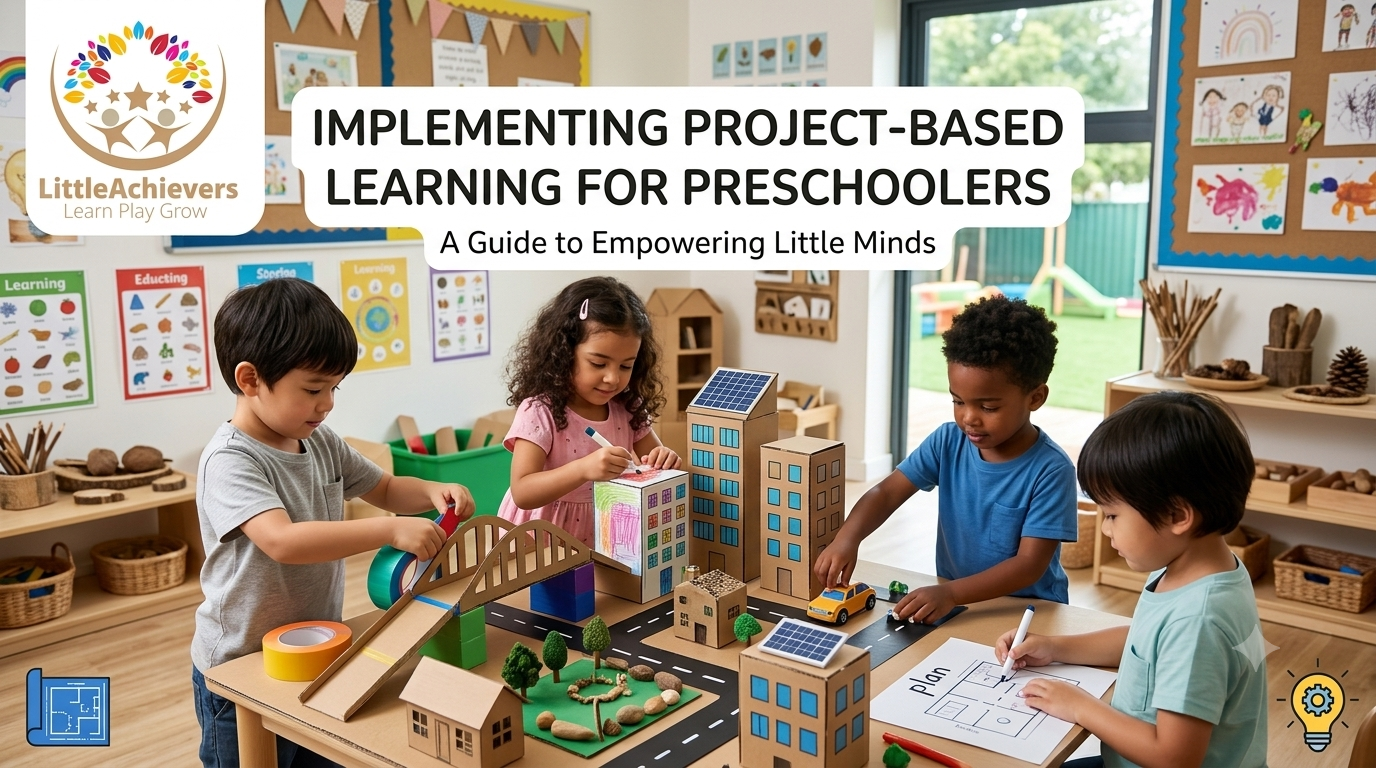
When young kids learn, they do it with their hands, with questions and through curiosity and wonder. They have a deep interest in how the world around them works and what things are made of. This is where project-based learning is taking hold of our young students and our learning environment in our classrooms.
When you teach kids to investigate questions about things they are truly interested in, they can learn essential life skills while exploring the world around them. Many parents searching for an early education centre today want more than colouring pages and flashcards – they want opportunities for wonder and discovery.
What is Project-based Learning?
This is a learning process in which children explore a subject through project work centring around a main idea or idea/question. It is about investigating a subject for days or weeks rather than simply remembering what is taught.
For example, a child might choose the subject of plants and work over a week to find out about the growth of plants, about different types of plants, different types of insects and carry out related artwork and so on.
Project learning can be based around any subject the children are interested in. Some examples are weather, transport, community helpers and insects. Every aspect is for the sake of learning. Through this method a child sees connections between his experience in the classroom and the world around him.
Why Preschoolers Benefit from This Approach
Young kids love to discover new things! Project-based learning provide kids the opportunity to learn about topics that they find fascinating. Also, it promotes creativity and provide young kids opportunities to develop a sense of problem-solving abilities. Kids feel assurance by having part of every project phase.
They choose the themes, make experiments, produce and exhibit their work. An early education centre can employ a project-based learning approach for the better development of skills such as literacy, language, numeracy, social and science skills for a fun-filled learning experience.
Learning Through Real Experiences
Children are also more motivated and engaged with hands-on projects involving real things and real-life events. For example, they might plant some seeds, investigate bugs living in the schoolyard, or construct mini cities from used materials. Such learning can be deeply memorable; children will be far more likely to remember something that they personally found out for themselves than something that someone told them. Teachers could also take the children on nature walks, ask people from the local community into school, or set up small, simple experiments.
Encouraging Teamwork
The children practise working together through the use of our projects. Working collaboratively, they learn how to share equipment and develop the skills of listening to each other, sharing ideas and collaborating to finish projects. There is always more than one way of thinking; children get the opportunity to listen and respect differences in opinions and learn how to compromise and find solutions for conflict.
Supporting Communication Skills
For every project, opportunities for conversation abound. When children discuss their thinking, they tell of their investigations and they ask the question which may guide their exploration.
Teachers facilitate discussions during each stage of the project, using new vocabulary to support children's sharing of ideas and increasing children's self-confidence to articulate themselves. The opportunity for children to showcase their work to friends and families adds the development of spoken language skills and confidence too.
Building Creativity
The great thing about project-based learning for children is that their imagination gets a workout! The child can draw, paint, model, build, create stories or take part in role plays. There is never just one answer and they have the opportunity to see how they could do things differently, or in another way. Creativity also helps the child with problem-solving skills and if something isn’t working, then they will be prepared to modify their idea.
The Teacher's Role
Although teachers structure and lead the overall program, they do not control each child's experience. Teachers watch children for interests and ask open-ended questions to spark interest. They do not just tell answers but encourage children to discover them. They also provide the materials and setup environments to explore with.
How Families Can Participate
Parents help make project-based learning a family affair by continuing the classroom’s work and discoveries with at-home activities such as reading related books, collecting nature finds, or reviewing the project together. When family members participate, children are able to express their learning with increased pride and it also provides a sense of cohesiveness between the home and preschool environments.
A feature many parents looking for an early learning centre in Mt Druitt value in programs is this involvement and connection with the family.
Project Ideas for Preschoolers
Easy projects tend to deliver the best results. For instance, a gardening project provides children information about plants and insects. The transport project introduces children to different means of transportation and helps them learn counting, drawing and playing.
Besides, children may learn about healthy food in a course of preparing simple snacks, sorting fruits and vegetables and making visits to a local market. Weather projects enable children to observe the changes taking place in the course of different seasons and to keep the records of the weather in the form of a picture and symbols.
Project-based Learning Compared with Traditional Methods
Many conventional traditional learning centres revolve around methods of teacher-led instruction and drilling and practice. Even though it has advantages, it could be that children would get fewer opportunities to explore and learn things from their own interests.
By taking a more project-based learning style, kids would learn by getting active and asking questions. Instead of simply being observers, children would be active participants who learn from and experiment with things that really capture their curiosity, also fostering academic as well as individual growth.
Conclusion
Parents searching for an early learning centre in Mt Druitt often appreciate programs that help turn normal everyday experiences into educational ones for children. The project-based learning opportunities foster curiosity and self-confidence in preschoolers and foster many life skills. By giving them the opportunity to research relevant issues, the ability to collaborate with one another, and practice to answer uncomplicated problems, the children become active learners who naturally enjoy a new challenge.
References
 Deutsch
 English
 Arabic
 Français
 Español
 Português
 Türkçe
 Dutch
Dutch
 Italiano
 Russian
 Romaian