


How do modern laser tag systems work
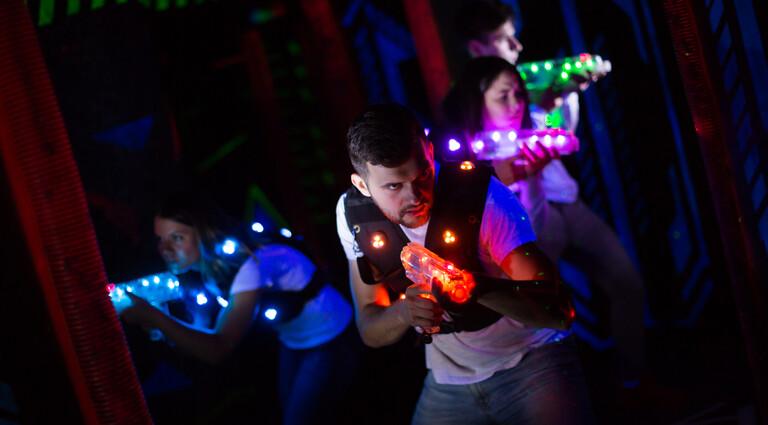
Modern commercial laser tag has evolved from simple toys into high-precision, military-grade setups. High-tech venues require durable hardware and complex network infrastructure to run smoothly.
Investors looking for reliable arena setups prefer Laser Tag Systems because their equipment combines high-precision optics with robust software. This integration guarantees optimal performance and player retention.
Understanding the physics behind modern laser tag systems helps operators make informed purchase decisions. This knowledge directly impacts business ROI and long-term hardware durability.
What technology powers commercial laser tag equipment
Commercial laser tag relies on a combination of infrared optoelectronics, radiofrequency communication, and microcontrollers. The core of this laser tag hardware is the infrared emitter.
The emitter uses a focused light-emitting diode to shoot a narrow light beam. This beam behaves like a flashlight but remains highly concentrated over long distances.
Unlike cheap toys, professional laser tag equipment uses modulated infrared light signals. Modulation prevents interference from ambient light sources, such as fluorescent lamps or bright sunlight.
Here is a comparison of the technical specifications of key hardware components:
|
Component |
Technical Specification |
Primary Function |
|---|---|---|
|
Infrared Emitter |
880nm - 940nm wavelength |
Shoots the modulated light signal |
|
Optical Lens |
Collimator lens, 20mm - 40mm |
Focuses the IR beam for maximum range |
|
Radio Module |
2.4 GHz transceiver |
Sends real-time data to the server |
|
CPU Core |
32-bit ARM microcontroller |
Processes triggers, hits, and sound |
These components work together to ensure that every shot is registered instantly. Investing in high-grade optoelectronics is crucial for running a successful commercial laser tag business.
How do sensors detect infrared signals during a battle
The receiving end of the system is just as advanced as the emitter. Players wear specialized headbands or vests covered in highly sensitive silicon photodiodes.
These infrared sensors are designed to detect a specific frequency of light. When the modulated beam hits the photodiode, it generates a tiny electric current.
The microcontroller in the vest instantly processes this electrical impulse. It decodes the embedded digital signature to identify which opponent fired the shot.
To ensure accurate hit registration in an indoor laser tag arena, the sensors are designed to handle several tasks:
-
Optical filtration. The sensor dome filters out visible light and only allows infrared wavelengths to pass.
-
Signal demodulation. Built-in microchips strip away constant light noise to isolate the tagger's specific pulse frequency.
-
Angle correction. Curved diffusers spread the incoming light to allow 360-degree hit detection.
This advanced filtering prevents false hit registrations caused by reflections off arena walls. Reliable detection ensures fair play, which keeps customers coming back to your facility.
Why are professional laser tag systems safer than paintball
Safety is a primary concern for families, corporate clients, and venue insurers. Paintball and airsoft rely on physical projectiles that can cause bruising, pain, and dental injuries.
In contrast, professional setups use harmless light beams. Because there is no physical impact, players do not need to wear heavy protective masks or padded suits.
This makes the game highly accessible to a broader demographic, including young children and corporate groups. It also reduces the venue's liability insurance costs significantly.
Furthermore, an indoor laser tag arena requires minimal cleanup compared to a paintball field. There are no paint splatters, shattered plastic BBs, or broken barriers to clean daily.
This high level of safety directly translates to a more profitable business model. Operators can host back-to-back birthday parties without worrying about player injuries or long cleanup times.
What software features help track real time game statistics
Modern venues do not just track hits; they provide a complete gamified experience. This is made possible by advanced real time software running on a local server.
The software communicates with the taggers and vests using a high-speed radio network. Every shot, hit, and base capture is transmitted instantly to the control room.
This constant data flow allows the system to generate live leaderboards. Spectators can watch the scores change second-by-second on lobby screens.
The main functions of this specialized software platform include:
-
Live scoring. The system updates player ranks, accuracy rates, and team points instantly during the match.
-
Scenario management. Operators can change game rules, health points, and weapon styles with a single click.
-
Cloud synchronization. Players can track their lifetime achievements, ranks, and stats through a mobile app.
This high level of gamification keeps players engaged over multiple visits. Offering detailed, shareable performance metrics is a proven way to increase repeat bookings at your venue.
Can tactical laser tag equipment be used for outdoor games
Tactical gear is specifically engineered to withstand harsh environmental conditions. Unlike indoor setups, outdoor equipment must handle bright sunlight, moisture, and rough handling.
Bright sunlight is the biggest challenge for infrared receivers because solar radiation contains vast amounts of natural infrared light. Advanced systems use optical sun filters to solve this.
The lens systems on outdoor taggers are also different. They use larger collimator lenses to focus the beam into a tighter cone, extending the range.
Running successful outdoor laser tag games requires specific hardware modifications:
-
Ruggedized housing. Taggers are made from high-impact Mil-Spec polymers that resist drops on rocks or asphalt.
-
Sunlight filters. Sensors use specialized dark lens covers to block out solar infrared noise.
-
High-power LEDs. The emitter diodes run at higher currents to cut through bright daylight.
These technologies allow players to engage in tactical battles over distances exceeding 500 feet. This durability makes the gear ideal for mobile party operators and outdoor adventure parks.
What components are essential for a complete laser tag setup
Opening a commercial venue requires more than just buying a few taggers. A complete business setup includes hardware, software, and arena accessories.
The core of your inventory will consist of professional taggers and matching sensor vests or headbands. These must be durable enough to survive hundreds of weekly games.
You also need the central control hardware, which includes a radio base station and a dedicated server computer. This server runs the arena management software.
A standard commercial package contains several vital components:
-
Professional taggers. Durable emitters with built-in screens, speakers, and feedback vibration motors.
-
Sensor headbands. Wireless, lightweight bands with multiple receiver nodes for full coverage.
-
Smart devices. Interactive field devices like electronic bases, medic boxes, and target gates.
-
Base station. A high-power radio transceiver that connects all devices to the server.
Having the right mix of interactive devices allows you to offer diverse game scenarios. This variety prevents the gameplay from becoming repetitive for local players.
Frequently asked questions about commercial laser tag systems
When investing in equipment, new operators often have questions about safety, maintenance, and setup specifications. Here are the answers to the most common queries.
Is laser tag technology safe for children under five years old
Yes. The infrared light used in professional systems is completely harmless. It is the same technology used in television remote controls.
The lenses do not emit hot or focused laser beams that could damage eyes. However, the physical weight of the tagger might be too heavy for very young children.
For toddlers, light weight models without vests are recommended. This ensures they can play comfortably without getting tired too quickly.
How long do batteries last in professional taggers
Most professional taggers use high-capacity lithium-iron-phosphate or lithium-ion batteries. These batteries are designed for intensive commercial use.
On a single charge, high-quality taggers can operate continuously for 10 to 20 hours. This is more than enough to cover a full weekend of back-to-back bookings.
Venues typically charge the equipment overnight. Modern setups also feature fast-charging docks that can top up the batteries during short breaks.
What is the maximum signal range for outdoor laser tag equipment
Under optimal conditions, professional outdoor taggers can reach targets up to 800 feet away. This range is achieved using advanced lens collimation.
In bright, direct sunlight, the effective range may decrease slightly due to solar noise. However, high-quality sensors still maintain a range of 500 feet in the desert sun.
Indoor systems are typically calibrated for shorter distances. This prevents the beam from bouncing off too many reflective surfaces in tight spaces.

 English
 Arabic
 Français
 Português
 Deutsch
 Türkçe
 Dutch
Dutch
 Italiano
 Russian
 Romaian