


Complete Guide to Building a Successful Fuel Delivery App
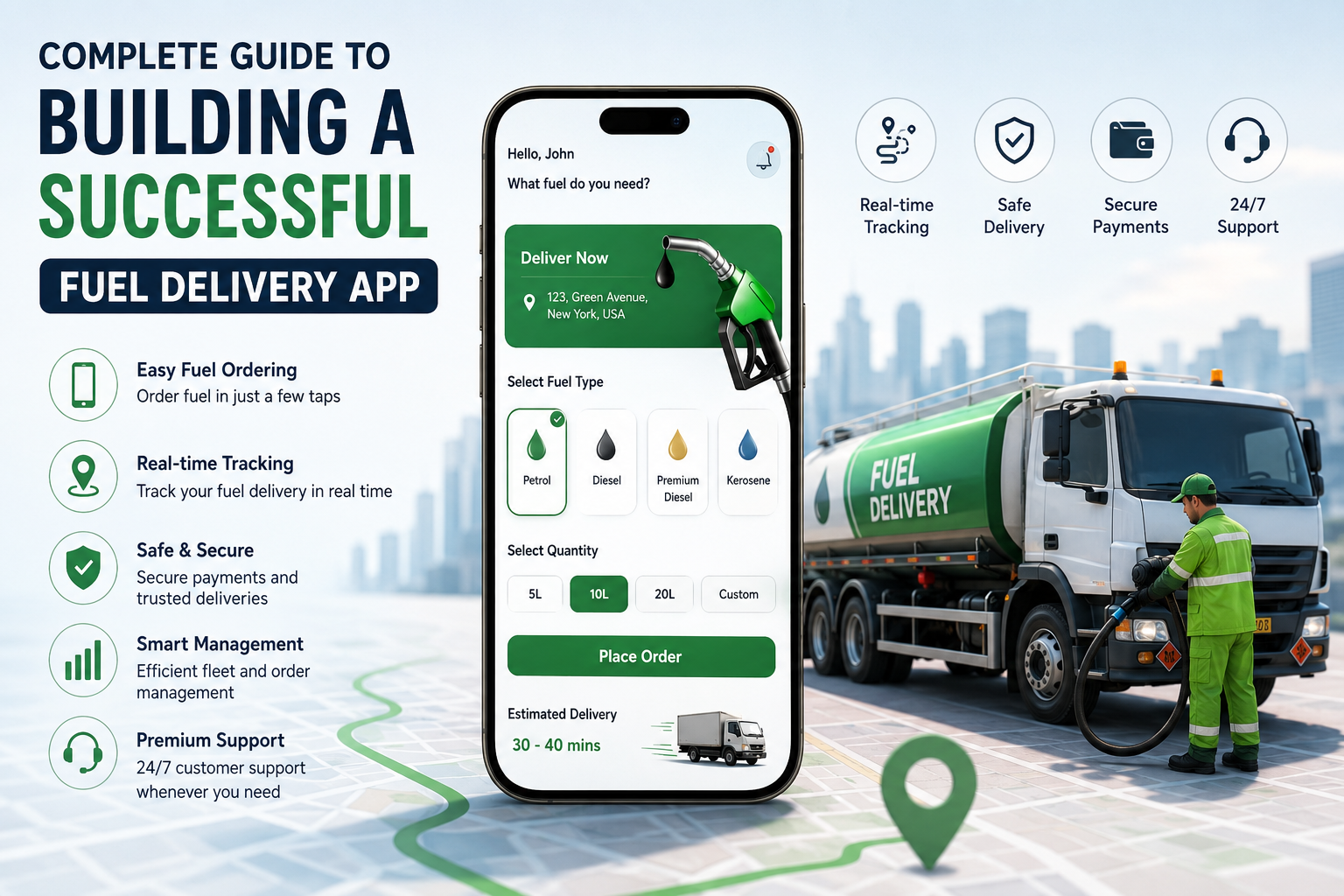
The fuel distribution industry has undergone significant changes with the rise of digital platforms and on-demand services. Customers increasingly expect convenience, speed, and accessibility in every aspect of their daily routines, including refueling vehicles and equipment. This shift in expectations has encouraged businesses to explore mobile solutions that simplify fuel ordering and delivery operations.
Building a successful application in this sector involves much more than creating a digital ordering interface. Companies must understand customer behavior, delivery logistics, compliance obligations, payment security, and operational scalability before entering the market. A reliable fuel delivery app development company often combines these elements into a structured and efficient technology ecosystem that supports sustainable growth.
This guide explores the essential considerations involved in creating a robust fuel delivery platform and outlines the factors that influence long-term success.
Understanding Market Demand for On-Demand Fuel Delivery Services
The popularity of on-demand services has transformed consumer expectations across industries. Businesses and individual customers now seek solutions that reduce travel time and improve convenience, making fuel delivery an attractive alternative to traditional refueling methods.
Several sectors contribute to growing demand:
-
Individual vehicle owners seeking convenience.
-
Commercial fleets requiring scheduled refueling.
-
Construction companies operating heavy equipment.
-
Agricultural businesses managing machinery across large areas.
-
Emergency services requiring uninterrupted fuel access.
Understanding target audiences is the foundation of a successful platform strategy. Different customer groups have varying priorities regarding delivery speed, scheduling flexibility, pricing transparency, and payment methods.
Market research should include competitor analysis, customer surveys, and regional demand assessments. These insights help define the scope of services and identify opportunities for differentiation in a competitive marketplace.
Businesses that invest time in understanding customer expectations are better positioned to develop applications that solve genuine operational challenges rather than simply replicating existing solutions.
Defining Core Features That Shape User Experience and Operations
Feature selection directly influences customer satisfaction and operational efficiency. Every component should support a seamless experience for customers, delivery personnel, and administrators.
Customer-facing functionality often includes:
-
User registration and profile management.
-
Real-time fuel ordering capabilities.
-
Location tracking and GPS integration.
-
Multiple payment methods.
-
Order history and invoice management.
-
Delivery scheduling options.
-
Notifications and order status updates.
Driver applications generally include route information, delivery confirmation systems, navigation assistance, and communication tools.
Administrative dashboards play an equally important role by providing access to:
-
Order management systems.
-
Fleet monitoring tools.
-
Customer support interfaces.
-
Performance analytics.
-
Inventory visibility.
-
Pricing controls.
A capable fuel delivery app development company usually focuses on balancing feature richness with usability to prevent unnecessary complexity that may discourage adoption.
The objective is to create an experience that minimizes friction while improving operational visibility across the entire delivery process.
Choosing Technology Infrastructure for Secure Mobile Transactions
Technology decisions made during the planning stage significantly influence future scalability and maintenance requirements. Selecting the right architecture allows businesses to expand services without major disruptions.
The mobile application ecosystem generally includes three primary components:
-
Customer application.
-
Driver application.
-
Administrative management panel.
Backend infrastructure often relies on cloud environments capable of handling high transaction volumes and real-time location updates. Scalability becomes especially important during periods of increased demand or geographic expansion.
Security should remain a top priority throughout the development lifecycle. Sensitive customer information, payment credentials, and delivery records require strong protection mechanisms.
Key security measures include:
-
End-to-end encryption.
-
Secure authentication systems.
-
Multi-factor verification.
-
Data backup procedures.
-
Access control permissions.
-
Fraud monitoring mechanisms.
Many organizations also integrate advanced technologies such as artificial intelligence, predictive analytics, and machine learning to improve route optimization and demand forecasting.
These capabilities help businesses reduce operational costs while improving service reliability and customer satisfaction.
Meeting Compliance Standards and Safety Rules Across Regions
Fuel transportation is heavily regulated in most markets, making compliance a critical consideration during application planning and deployment.
Regulatory requirements often differ depending on geographic location, fuel type, and delivery method. Businesses must work closely with legal and operational experts to ensure that all procedures align with local regulations.
Common compliance areas include:
-
Hazardous material transportation rules.
-
Driver certification requirements.
-
Vehicle inspection standards.
-
Environmental protection guidelines.
-
Fuel storage regulations.
-
Licensing and permit obligations.
Safety measures extend beyond documentation and approvals. Delivery operations require continuous monitoring to reduce risks associated with transportation and fuel handling.
Operational safety practices may include:
-
Emergency response procedures.
-
Spill management protocols.
-
Vehicle maintenance schedules.
-
Driver training programs.
-
Real-time monitoring systems.
Ignoring compliance requirements can result in financial penalties, operational delays, and reputational damage. Therefore, regulatory planning should begin long before application deployment.
Organizations that establish compliance frameworks early in the process often experience smoother expansion and more predictable operational outcomes.
Designing Efficient Logistics for Routing and Fleet Management
Logistics management is one of the most challenging aspects of fuel delivery operations. The success of the business depends heavily on efficient scheduling, optimized routing, and accurate resource allocation.
Real-time route optimization allows businesses to minimize travel distances while maximizing delivery capacity. This improves both profitability and customer satisfaction.
Effective logistics planning typically addresses:
-
Traffic conditions.
-
Delivery priorities.
-
Vehicle availability.
-
Fuel inventory levels.
-
Driver schedules.
-
Geographic coverage areas.
Modern mapping technologies provide dynamic route adjustments based on changing conditions such as road closures or severe weather events.
Fleet management systems can also monitor important operational indicators, including:
-
Vehicle utilization rates.
-
Driver performance metrics.
-
Delivery completion times.
-
Maintenance schedules.
-
Fuel consumption patterns.
A specialized fuel delivery app development company often integrates these logistics capabilities directly into the application ecosystem to provide real-time visibility for all stakeholders.
The combination of automation and analytics enables organizations to improve operational efficiency while reducing manual coordination efforts.
Evaluating Development Stages and Budget Planning Requirements
Successful projects require careful planning across multiple development phases. Attempting to accelerate implementation without proper preparation often leads to increased costs and technical debt.
Typical project stages include:
-
Market research and requirement gathering.
-
User interface and experience design.
-
Backend architecture development.
-
Mobile application creation.
-
Integration testing.
-
Compliance verification.
-
Deployment and monitoring.
Each stage contributes to overall project quality and should receive adequate attention during scheduling and budgeting discussions.
One of the most frequently asked questions is the cost to build fuel delivery app solutions capable of supporting large-scale operations. The answer varies significantly depending on feature complexity, technology choices, geographic scope, and regulatory requirements.
Several variables influence investment levels:
-
Number of platforms supported.
-
Third-party integrations.
-
Custom feature requirements.
-
Security implementation standards.
-
Scalability expectations.
-
Maintenance requirements.
The broader field of delivery app development provides useful benchmarks, but fuel-focused platforms typically involve additional technical and compliance considerations that influence budgeting decisions.
Organizations that establish realistic timelines and financial expectations are better equipped to avoid project delays and unexpected expenditures.
Exploring Revenue Models That Sustain Long-Term Growth Paths
Developing a sustainable business model is just as important as building a technically sound platform. Revenue diversification helps organizations remain resilient during changing market conditions.
Businesses commonly adopt multiple monetization strategies simultaneously to improve financial stability.
Popular approaches include:
-
Delivery service charges.
-
Subscription plans.
-
Priority delivery fees.
-
Fleet management contracts.
-
Enterprise service agreements.
-
Dynamic pricing models.
Many industry stakeholders also ask, how does a fuel delivery app make money beyond direct delivery charges. The answer often lies in combining transaction-based income with recurring service agreements and operational partnerships.
Predictable recurring revenue streams provide greater financial stability than relying exclusively on individual transactions.
Careful analysis of customer behavior and operational costs helps determine which pricing structures deliver the best balance between profitability and customer retention.
Revenue strategies should remain flexible enough to evolve alongside market conditions and customer expectations.
Selecting Experienced Partners for Technical Project Execution
Technology partnerships have a substantial influence on project outcomes. Selecting the right development team can determine whether a platform launches successfully or struggles with performance issues and delays.
Several factors should be evaluated during the selection process:
-
Industry experience.
-
Technical expertise.
-
Regulatory understanding.
-
Security capabilities.
-
Communication practices.
-
Post-launch support services.
Decision makers should carefully review previous projects and assess the team's ability to manage complex operational requirements.
Choosing a knowledgeable fuel delivery app development company can simplify coordination across technical, logistical, and compliance functions while reducing implementation risks.
Clear documentation, transparent timelines, and structured project management processes contribute significantly to successful collaboration between stakeholders and technical teams.
Organizations should prioritize long-term partnership potential rather than focusing exclusively on initial project costs.
Preparing Scalable Strategies for Expansion and Service Quality
Growth planning should begin during the earliest stages of product design rather than after market entry. Applications built without scalability considerations often require expensive redesign efforts as demand increases.
Scalability involves several dimensions, including:
-
Geographic expansion.
-
Increased transaction volumes.
-
Additional service categories.
-
Fleet growth.
-
New payment systems.
-
Enhanced analytics capabilities.
Performance monitoring tools help identify bottlenecks before they affect customer experience. Continuous improvement initiatives allow businesses to adapt quickly to changing market conditions.
Customer feedback also plays an essential role in guiding future enhancements. Regular analysis of user behavior and service metrics provides valuable insight into emerging needs and operational opportunities.
Businesses that maintain flexibility in their technology and operational strategies are generally better prepared to respond to industry changes and competitive pressures.
A scalable foundation enables organizations to pursue growth opportunities without compromising reliability, efficiency, or service quality.
Conclusion
Building a successful digital platform for on-demand fuel services requires far more than application development alone. Market research, operational planning, regulatory compliance, logistics optimization, and technology selection all contribute to long-term performance.
Organizations that approach the process strategically are better equipped to deliver reliable services, maintain operational efficiency, and adapt to evolving customer expectations. By balancing innovation with practical execution, businesses can establish sustainable solutions capable of supporting future growth in an increasingly convenience-driven marketplace.

 English
 Arabic
 Français
 Español
 Português
 Deutsch
 Türkçe
 Dutch
Dutch
 Italiano
 Russian