


Options Trading Platform Development Guide for 2026
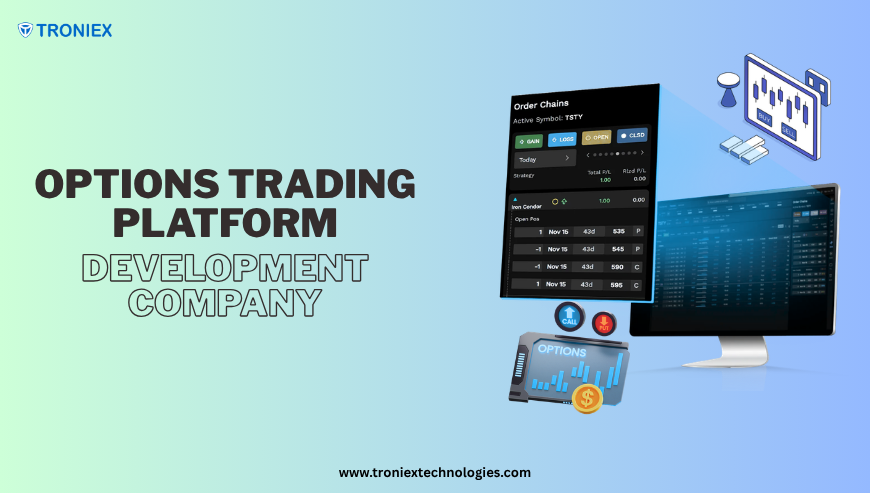
The options trading industry is undergoing rapid transformation as artificial intelligence, automation, cloud-native infrastructure, and real-time market analytics redefine how investors trade derivatives. In 2026, entrepreneurs, fintech startups, brokerage firms, and financial institutions are investing in intelligent options trading platforms that deliver institutional-grade performance while remaining accessible to retail traders. Recent market developments also show that AI-driven investing and automated strategy creation are becoming core differentiators rather than optional features.
For founders planning to launch a next-generation options trading solution, success depends on far more than an attractive user interface. A modern platform requires sophisticated risk management, high-speed execution, regulatory readiness, advanced analytics, and a scalable technology architecture capable of supporting future growth.
Why Options Trading Platforms Are Growing Rapidly
Global investors increasingly use options for hedging, income generation, speculation, and portfolio diversification. Meanwhile, brokerages are expanding beyond traditional equity trading by offering advanced derivatives products through unified digital platforms.
Businesses entering this market benefit from:
- Growing retail and institutional participation
- Higher transaction volumes
- Recurring revenue opportunities
- Premium subscription services
- AI-powered advisory products
- Multi-asset expansion opportunities
Industry experts also note that modern brokerages are investing heavily in better derivatives infrastructure, market data capabilities, and integrated analytics as options trading becomes a mainstream offering.
Essential Features of a Modern Options Trading Platform
Building a competitive platform in 2026 requires combining performance, security, and intelligent automation.
Core features include:
- Real-time options chain
- Live Greeks calculation
- Strategy builder
- Portfolio management
- Multi-leg order execution
- Risk management engine
- Interactive trading charts
- AI-powered market insights
- Automated alerts
- Paper trading environment
- Portfolio analytics dashboard
- Secure KYC and AML integration
- Multi-device synchronization
- Institutional-grade security
Modern trading platforms increasingly differentiate themselves through intelligent automation, real-time analytics, and advanced risk controls rather than basic trading functionality alone.
AI Is Reshaping Options Trading
Artificial intelligence has evolved from a competitive advantage into a fundamental component of modern trading software.
AI capabilities now include:
- Market trend prediction
- Volatility forecasting
- Strategy recommendations
- Automated risk assessment
- Portfolio optimization
- Trade signal generation
- Personalized trader dashboards
- Behavioral analytics
- Fraud detection
- Smart notifications
These capabilities enable traders to make faster, data-driven decisions while reducing manual analysis and operational complexity. AI adoption is accelerating across both institutional and retail trading platforms.
Technology Stack Considerations
Selecting the right architecture directly impacts scalability and long-term profitability.
A modern platform typically includes:
- React or Flutter frontend
- High-performance backend services
- Low-latency order management
- Real-time market data streaming
- FIX protocol integration
- Cloud-native microservices
- Kubernetes deployment
- PostgreSQL and Redis
- AI/ML infrastructure
- Multi-layer cybersecurity
- REST and WebSocket APIs
For derivatives platforms, continuous margin monitoring, live Greeks calculations, and low-latency execution are particularly important architectural requirements.
Security and Compliance
Financial applications handle sensitive customer information and execute high-value transactions, making security a top priority.
Key security measures include:
- End-to-end encryption
- Multi-factor authentication
- Role-based access control
- Secure API gateways
- DDoS protection
- Continuous monitoring
- Audit logging
- Regulatory reporting
- Disaster recovery
- Data backup and redundancy
Compliance with regional financial regulations should be incorporated from the beginning rather than added later, helping businesses reduce operational risks and accelerate market entry.
Development Process
An efficient development lifecycle typically includes:
- Business requirement analysis
- Platform architecture design
- UI/UX development
- Trading engine implementation
- Market data integration
- AI feature development
- Risk management module creation
- Security testing
- Regulatory validation
- Performance optimization
- Production deployment
- Ongoing maintenance and feature enhancements
Following an iterative development approach enables businesses to launch an MVP quickly while continuously improving functionality based on user feedback.
Choosing the Right Development Partner
Technology expertise significantly influences the success of an options trading platform. Businesses should evaluate partners based on:
- Financial technology expertise
- Trading domain knowledge
- AI capabilities
- Security engineering
- Cloud infrastructure experience
- Scalable architecture design
- Regulatory understanding
- Post-launch support
An experienced development company can shorten development cycles while minimizing technical debt and operational risks.
Why Choose Troniex Technologies?
Troniex Technologies specializes in developing secure, scalable, and AI-powered trading solutions for startups, brokerage firms, fintech companies, and enterprise financial institutions.
Its end-to-end Options Trading platform development services include:
- Custom platform development
- AI-powered trading automation
- Multi-asset trading solutions
- Options strategy builders
- Advanced analytics dashboards
- Real-time risk management
- Broker API integration
- Cloud-native infrastructure
- Enterprise-grade cybersecurity
- Continuous maintenance and optimization
By combining financial domain expertise with modern software engineering, Troniex Technologies helps businesses launch high-performance trading platforms that are built for scalability, compliance, and long-term innovation.
Conclusion
Options trading platforms are becoming increasingly sophisticated as AI, automation, cloud computing, and advanced analytics reshape financial markets. Businesses that invest in intelligent, secure, and scalable platforms today will be well-positioned to capture the growing demand for digital derivatives trading.
Whether you're launching a fintech startup, expanding an existing brokerage, or building an enterprise-grade trading ecosystem, partnering with an experienced technology provider such as Troniex Technologies can accelerate development while ensuring your platform meets modern performance, security, and regulatory expectations.

 English
 Arabic
 Français
 Español
 Português
 Deutsch
 Türkçe
 Dutch
Dutch
 Russian
 Romaian