


Site Reliability Engineering Trends to Watch in 2026
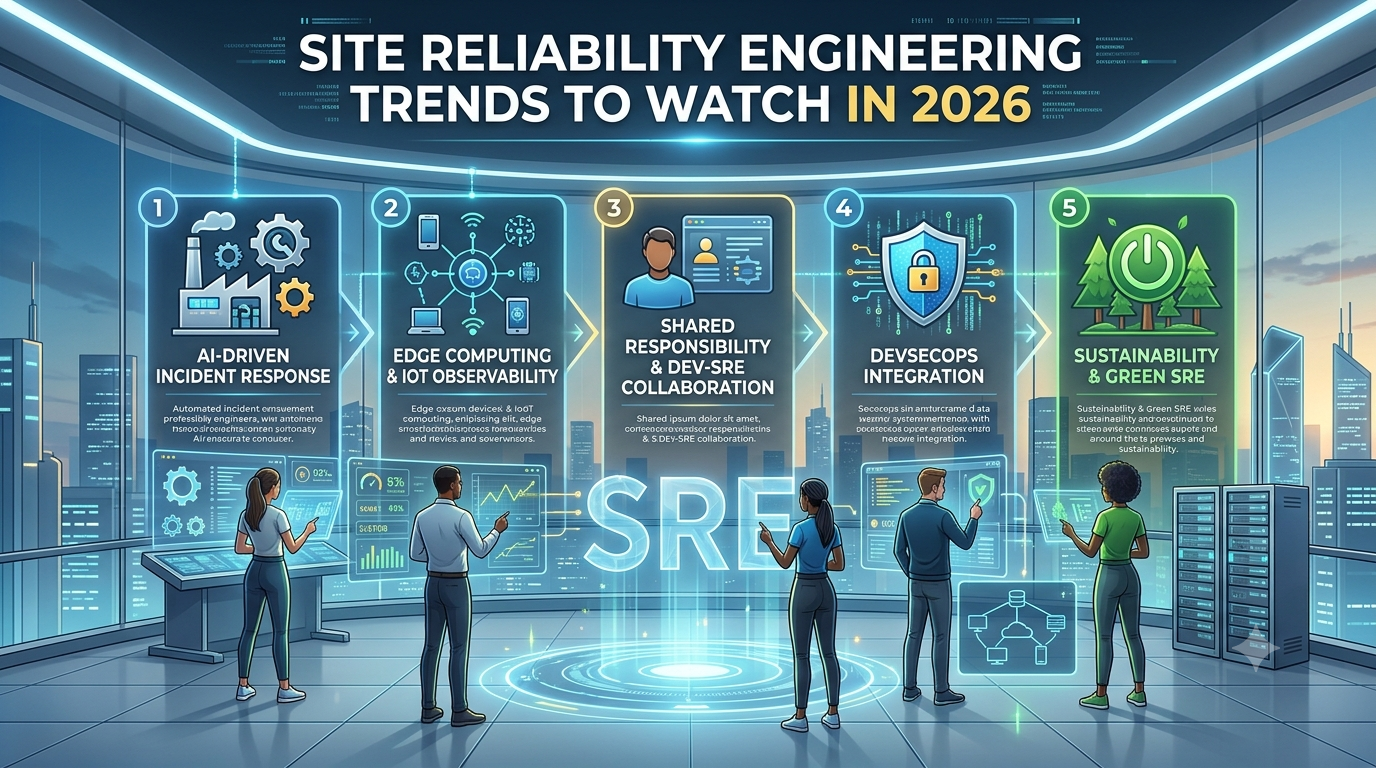
As organizations continue to accelerate digital transformation, Site Reliability Engineering (SRE) is becoming a key driver of business resilience and operational excellence. In 2026, enterprises are expected to invest more heavily in automation, AI-powered operations, and proactive reliability strategies to ensure seamless customer experiences. Professionals looking to stay ahead should consider pursuing SRE Certification and participating in SRE Training to build the skills required for the future of IT operations.
1. AI-Driven Incident Management
Artificial Intelligence is reshaping how organizations detect and resolve incidents. Modern monitoring platforms can now identify anomalies, predict outages, and recommend remediation steps before customers are impacted. Instead of reacting to failures, SRE teams are shifting toward predictive reliability using machine learning and intelligent automation.
This trend allows engineers to reduce Mean Time to Detect (MTTD) and Mean Time to Resolve (MTTR), improving overall service availability.
2. Greater Focus on Reliability Engineering
Organizations are moving beyond simply maintaining uptime. They are defining measurable Service Level Objectives (SLOs), Service Level Indicators (SLIs), and error budgets to balance innovation with reliability.
Engineering teams are expected to release software faster without sacrificing stability, making reliability an essential part of the software development lifecycle rather than an afterthought.
3. AI-Powered Observability
Traditional monitoring tools generate enormous volumes of logs, metrics, and traces. In 2026, observability platforms will increasingly use AI to correlate data across distributed systems, helping teams identify root causes within minutes.
Enhanced observability reduces alert fatigue by prioritizing critical issues instead of overwhelming engineers with unnecessary notifications.
4. Platform Engineering and SRE Collaboration
Platform Engineering continues to grow alongside SRE. Internal developer platforms provide standardized environments, while SRE teams ensure these platforms remain reliable and scalable.
This collaboration enables developers to focus on building applications while platform and reliability engineers manage infrastructure, automation, and operational excellence.
5. Cloud-Native Reliability Becomes Standard
As organizations continue migrating to Kubernetes, containers, and multi-cloud environments, SRE practices will become increasingly important for managing complex infrastructures.
Automation for scaling, self-healing systems, infrastructure as code, and continuous monitoring will become standard practices across cloud-native applications.
6. Understanding SRE vs SWE
A growing trend in 2026 is the increasing discussion around SRE vs SWE (Site Reliability Engineer vs Software Engineer). While Software Engineers primarily focus on developing applications and delivering new features, Site Reliability Engineers emphasize system reliability, scalability, automation, and operational performance.
The distinction is becoming more important as organizations build specialized teams where both roles collaborate closely to deliver reliable digital services.
7. Continuous Learning and Certification
As SRE practices evolve, organizations are prioritizing structured learning programs for their engineering teams. Earning an SRE Certification validates expertise in reliability engineering, automation, incident response, monitoring, and cloud operations.
Likewise, comprehensive SRE Training helps professionals gain practical experience with real-world reliability challenges, making them valuable assets in modern DevOps and cloud environments.
Conclusion
The future of Site Reliability Engineering in 2026 revolves around AI, automation, observability, and cloud-native operations. Businesses are recognizing that reliability is no longer optional—it is a competitive advantage. Whether you're exploring SRE vs SWE career paths or planning to advance your expertise, investing in SRE Certification and SRE Training is an excellent way to prepare for the evolving demands of modern IT infrastructure.

 English
 Arabic
 Français
 Español
 Português
 Deutsch
 Türkçe
 Dutch
Dutch
 Italiano
 Russian