


Experiential learning
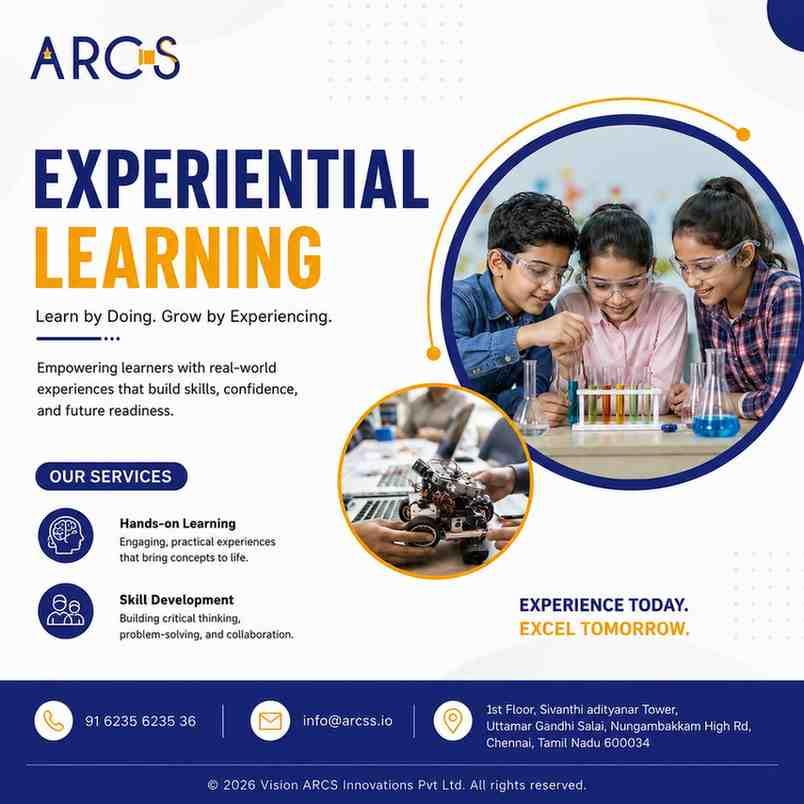
Experiential Learning: Transforming Knowledge Through Real-World Experience
In an era where information is abundant but true understanding remains elusive, traditional education models are being fundamentally reimagined. The shift from passive consumption to active engagement has given rise to experiential learning—a powerful approach that places learners at the center of their own educational journey. By immersing individuals in hands-on, real-world scenarios, experiential learning bridges the gap between theory and practice, creating lasting competencies that transform how we work, innovate, and solve problems.
Why Experiential Learning Matters Today
The limitations of traditional training methods have become increasingly apparent in our rapidly evolving world:
-
Low Retention Rates: Learners typically retain only 10% of what they read and 20% of what they hear—compared to 75% through hands-on experience.
-
Skills Gap Crisis: Industries worldwide report that graduates lack practical competencies despite strong academic credentials.
-
Rapid Technological Change: Skills acquired through conventional training often become obsolete before they can be applied.
-
Disengagement: Passive learning environments fail to motivate modern learners who expect interactivity and relevance.
Experiential learning systematically addresses each of these challenges by making education active, contextual, and emotionally resonant.
Applications Across Industries
Experiential learning is transforming professional development across diverse sectors:
Healthcare: Medical students practice surgeries in virtual operating rooms, diagnose AI-powered virtual patients, and rehearse emergency responses without risking lives. Nurses develop bedside manner and clinical judgment through simulated patient interactions.
Aviation and Defense: Pilots navigate emergency scenarios in flight simulators, while military personnel train for combat situations in hyper-realistic virtual environments—building muscle memory and decision-making instincts that save lives.
Corporate Leadership: Executives navigate complex business scenarios, practice difficult conversations, and experiment with strategic decisions in safe, simulated environments that mirror real organizational dynamics.
Engineering and Manufacturing: Workers master equipment operation, troubleshoot failures, and optimize processes through digital twins and virtual simulations before touching physical machinery.
Education: Students explore historical events, conduct virtual science experiments, and immerse themselves in foreign language environments—making abstract concepts tangible and unforgettable.
The Science Behind Experiential Learning
Research in neuroscience and cognitive psychology consistently demonstrates why experiential learning outperforms traditional methods. When learners physically engage with content—manipulating objects, making decisions, experiencing consequences—multiple brain regions activate simultaneously. This multi-sensory engagement creates stronger neural connections, deeper emotional imprinting, and significantly improved long-term retention.
Furthermore, the safe failure environment inherent in experiential learning reduces anxiety and encourages risk-taking—essential behaviors for innovation and growth. Learners who can experiment without real-world consequences develop confidence, resilience, and adaptive thinking that transfer directly to professional challenges.
The Future of Learning
As artificial intelligence, virtual reality, and haptic technologies mature, experiential learning will become increasingly sophisticated and accessible. AI-driven personalization will adapt scenarios to individual learning styles and pace. Collaborative virtual spaces will enable teams to learn together across geographical boundaries. The convergence of physical and digital experiences will dissolve the boundaries between classroom and workplace entirely.
Conclusion
Experiential learning represents far more than an educational trend—it is a fundamental reimagining of how humans develop knowledge, skills, and capabilities. By placing learners inside real-world experiences rather than in front of passive content, this approach unlocks potential that traditional methods simply cannot reach.
For organizations seeking to implement transformative experiential learning solutions, visit ARCSS. Their expert team designs and delivers immersive programs that bridge the gap between current capabilities and future ambitions.

 English
 Arabic
 Español
 Português
 Deutsch
 Türkçe
 Dutch
Dutch
 Italiano
 Russian
 Romaian