


Why AI Consulting Has Become the First Step for Successful AI Projects
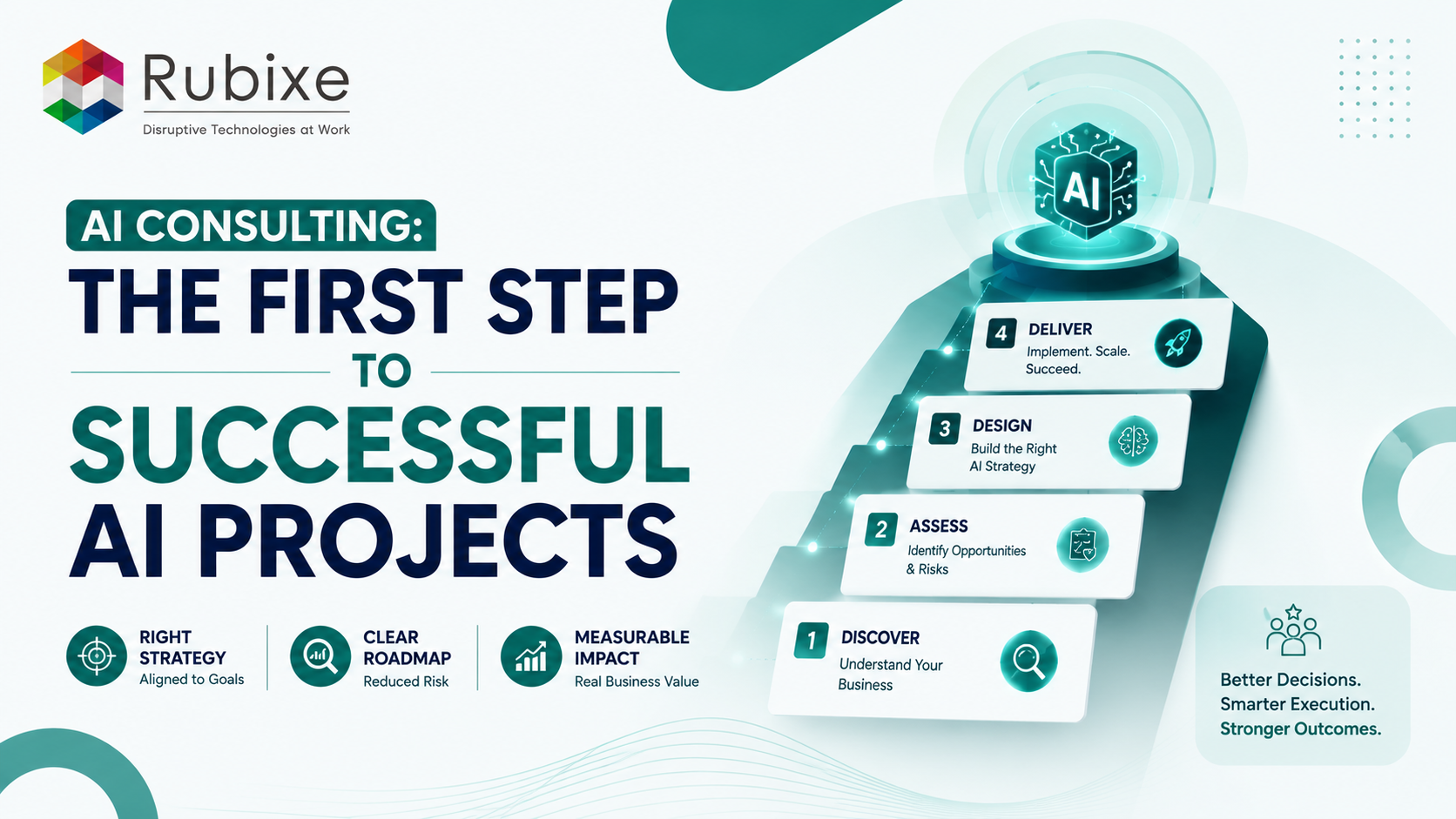
Artificial intelligence is no longer limited to large technology companies. Businesses across manufacturing, healthcare, finance, retail, logistics, and education are investing in AI to improve operations and support better decision-making. Many organizations begin these initiatives by selecting tools or experimenting with new technologies. Quite often, they realize that technology alone does not determine project success. Clear planning, realistic goals, and business alignment make a much bigger difference.
This is why AI consulting has become the starting point for many successful AI projects. Before investing in platforms or building AI applications, businesses work with specialists who evaluate their current processes, identify suitable use cases, and develop practical implementation plans. A structured consulting approach helps organizations make informed decisions while reducing unnecessary risks.
Why Businesses Need a Clear AI Strategy
Many AI projects begin with enthusiasm but lack direction. Teams may know they want to adopt artificial intelligence but remain uncertain about where it should be applied or what outcomes they expect.
Without a clear strategy, businesses often face challenges such as:
-
Selecting unsuitable AI tools.
-
Investing in low-value projects.
-
Working with incomplete data.
-
Delaying implementation.
-
Increasing project costs.
A well-defined strategy provides clarity before technical work begins, helping organizations focus on projects that support measurable business objectives.
Planning Before Technology Creates Better Results
Successful AI adoption starts with understanding business needs rather than choosing software.
During the planning stage, organizations typically review:
-
Existing business processes.
-
Data availability.
-
Operational challenges.
-
Customer expectations.
-
Long-term business goals.
This information helps decision-makers prioritize AI initiatives that produce practical value instead of following short-term trends.
AI Projects Without Consulting vs With Consulting
|
Without Consulting |
With Consulting |
|
Unclear project scope |
Clearly defined objectives |
|
Technology chosen first |
Business needs evaluated first |
|
Limited risk assessment |
Structured planning process |
|
Higher implementation delays |
Better project coordination |
|
Difficulty measuring success |
Measurable business outcomes |
Businesses that invest time in planning often experience smoother implementation and stronger long-term performance.
Understanding Business Readiness
Every organization has different levels of AI readiness.
Before implementation begins, businesses should understand:
-
Current technology infrastructure.
-
Data quality.
-
Employee capabilities.
-
Compliance requirements.
-
Existing operational workflows.
This assessment helps determine whether the organization is prepared for AI adoption or whether foundational improvements should come first.
Experienced AI consultants help businesses evaluate these factors objectively and recommend practical next steps based on organizational priorities.
Identifying the Right AI Use Cases
One of the most valuable outcomes of consulting is identifying where AI can create meaningful business value.
Instead of applying AI across every department, organizations often begin with areas where measurable improvements are most likely.
Examples include:
-
Customer support automation.
-
Business reporting.
-
Document processing.
-
Demand forecasting.
-
Quality inspection.
-
Internal knowledge management.
Starting with carefully selected use cases allows businesses to gain experience before expanding AI adoption across the organization.
Data Quality Plays a Major Role
Artificial intelligence depends on reliable business data.
Many organizations discover that their existing data contains duplicate records, inconsistent formatting, missing information, or outdated content. These issues reduce AI performance regardless of how advanced the technology may be.
Consulting teams usually evaluate data readiness before recommending implementation. Addressing data quality early helps reduce delays during later project stages.
Many businesses also choose AI consulting services to establish governance policies that define how business data should be collected, managed, and protected throughout the AI lifecycle.
Managing Risk From the Beginning
Every AI project introduces business, operational, and compliance considerations.
Early planning helps organizations review:
-
Security requirements.
-
Privacy obligations.
-
Regulatory expectations.
-
System integration.
-
User access controls.
Managing these areas during project planning reduces the likelihood of unexpected challenges after deployment.
This structured approach allows organizations to move forward with greater confidence while maintaining business continuity.
Building Collaboration Across Departments
AI projects rarely succeed through technical teams alone.
Business leaders, operations managers, IT teams, finance departments, legal specialists, and customer service teams often contribute valuable insights during planning.
Cross-functional collaboration helps organizations identify practical business opportunities while creating realistic implementation timelines.
Many organizations beginning gen AI consulting initiatives involve multiple departments from the earliest planning stages to improve communication throughout the project.
AI Consulting Supports Long-Term Growth
Artificial intelligence should continue delivering value after the first deployment.
Businesses that plan carefully are often better prepared to:
-
Expand successful AI projects.
-
Improve employee adoption.
-
Maintain governance standards.
-
Measure business outcomes.
-
Scale AI across different departments.
A structured AI consulting approach provides a stronger foundation for these long-term improvements instead of focusing only on initial implementation.
Turning Strategy Into Implementation
A strong consulting strategy creates a clear path for implementation. Once priorities are defined, businesses can move forward with greater confidence instead of making decisions through trial and error.
An implementation plan usually includes timelines, resource allocation, governance policies, success metrics, and team responsibilities. Breaking the project into smaller phases makes progress easier to measure and reduces operational disruption.
Organizations that begin with gen AI consulting often start with pilot projects before expanding AI across additional business functions. This phased approach provides valuable insights while allowing teams to refine processes based on practical experience.
Measuring AI Success
Many businesses evaluate AI projects only by whether they are completed. A better approach is to measure business outcomes throughout the project lifecycle.
Common performance indicators include:
|
Performance Metric |
Business Value |
|
Process completion time |
Faster operations |
|
Employee productivity |
Better resource utilization |
|
Customer satisfaction |
Improved service quality |
|
Cost optimization |
Better operational efficiency |
|
User adoption |
Successful implementation |
|
Business accuracy |
More informed decision-making |
These measurements help leadership understand whether AI investments are delivering meaningful business value.
The Importance of Change Management
Technology adoption often depends on employee confidence.
Businesses should communicate:
-
Why AI is being introduced.
-
Which teams will benefit.
-
How existing workflows will change.
-
What training employees will receive.
Open communication reduces uncertainty and encourages employees to participate in the transition. Organizations that prepare their workforce early usually experience smoother adoption across departments.
Choosing the Right Consulting Partner
Every organization has different business objectives, making consulting expertise an important factor in project success.
Before selecting a consulting partner, businesses should evaluate:
-
Industry experience.
-
Technical capability.
-
Business understanding.
-
Governance knowledge.
-
Long-term support.
Experienced AI consultants work closely with business teams to recommend practical solutions instead of promoting unnecessary technology. Their role is to help organizations make informed decisions that align with long-term business goals.
Why Long-Term Support Matters
AI projects continue evolving after deployment. Business priorities change, customer expectations grow, and new opportunities emerge over time.
Professional AI consulting services often extend beyond implementation by supporting:
-
Performance reviews.
-
Governance updates.
-
Process improvements.
-
AI expansion planning.
-
Continuous optimization.
Companies such as Rubixe help organizations build AI roadmaps that combine business strategy with practical implementation, supporting sustainable growth rather than one-time deployments.
Preparing for Future AI Initiatives
Businesses that establish a strong consulting foundation are better positioned to expand AI across multiple departments.
Future priorities often include:
-
Responsible AI governance.
-
Better data management.
-
Workforce readiness.
-
Scalable AI architecture.
-
Continuous performance evaluation.
Organizations that invest time in planning before implementation usually adapt more effectively as AI technologies continue evolving.
Frequently Asked Questions
1. Why is AI consulting important before starting an AI project?
AI consulting helps businesses define objectives, assess readiness, identify suitable use cases, evaluate data quality, and develop a structured implementation roadmap before investing in AI technologies.
2. What do AI consulting services include?
AI consulting services typically include AI strategy, business assessments, use case identification, governance planning, implementation guidance, technology evaluation, and performance measurement.
3. What is gen AI consulting?
Gen AI consulting focuses on helping businesses plan, deploy, and manage generative AI applications such as intelligent assistants, content generation, document processing, and workflow automation.
4. How do AI consultants support business growth?
AI consultants evaluate business challenges, recommend suitable AI opportunities, reduce implementation risks, and create roadmaps that align AI investments with long-term organizational goals.
5. What should businesses evaluate before adopting AI?
Organizations should review business objectives, data quality, existing technology, workforce readiness, security requirements, compliance obligations, governance policies, and expected business outcomes before beginning AI implementation.
Successful AI projects begin with understanding business needs before selecting technology. Organizations that define clear objectives, assess data readiness, identify suitable use cases, and establish governance early are more likely to achieve measurable outcomes. Careful planning reduces unnecessary risks while creating a stronger foundation for long-term AI adoption.
A structured AI consulting approach, supported by experienced AI consultants, reliable AI consulting services, and practical gen AI consulting, helps businesses make confident decisions from the very beginning. Starting with consulting allows organizations to build AI initiatives that support business growth while remaining flexible enough to meet future challenges.
 Deutsch
 English
 Arabic
 Français
 Español
 Português
 Türkçe
 Dutch
Dutch
 Italiano
 Russian
 Romaian