


How Generative AI Is Moving Beyond Text Generation
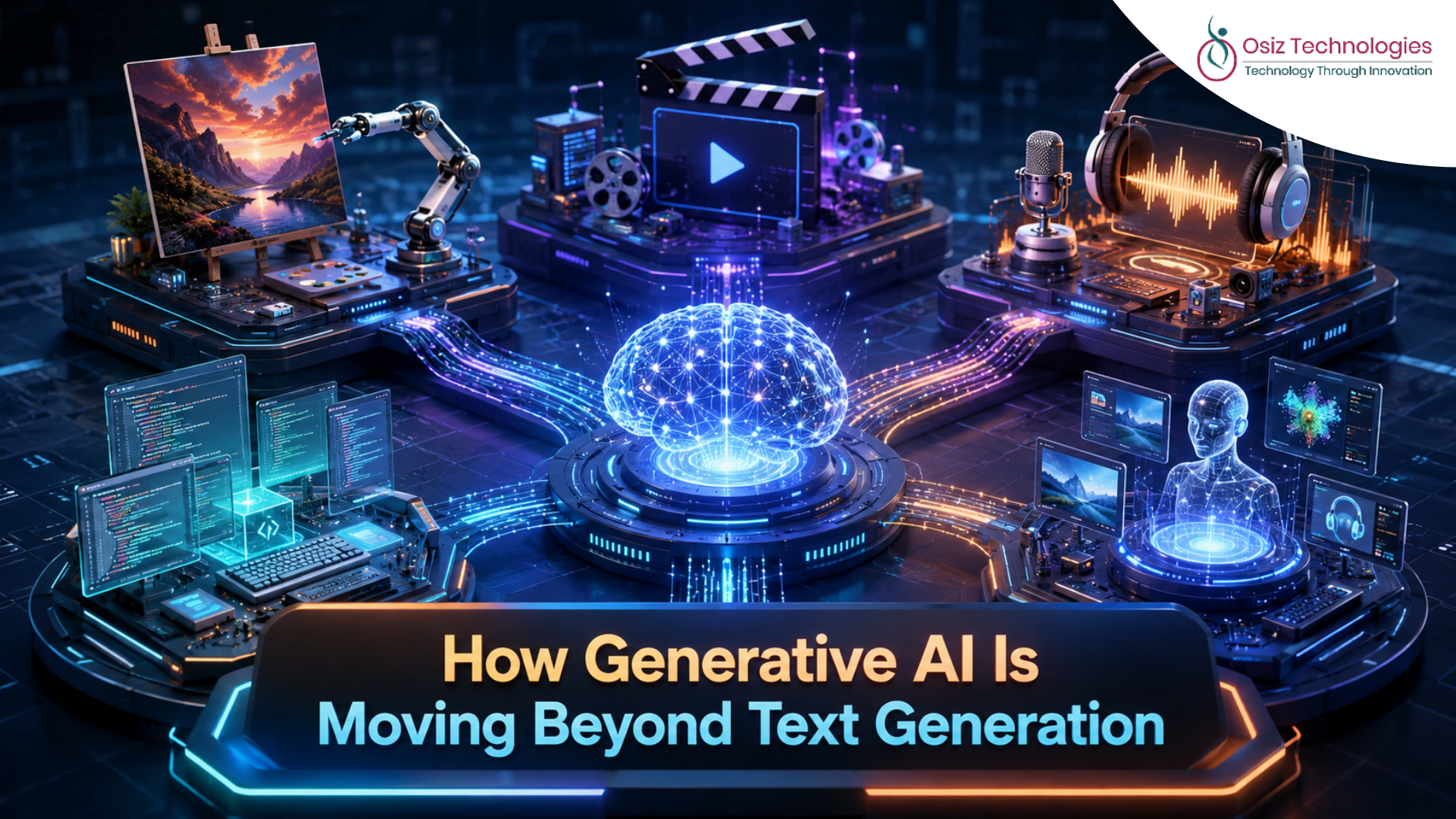
Generative AI has rapidly evolved from being a tool that primarily generates text into a technology capable of creating images, videos, audio, code, and other digital content. This transformation is reshaping how businesses, developers, and organizations approach automation, creativity, and problem-solving. As AI models become more advanced, they are no longer limited to responding with written content but can understand and generate information across multiple formats.
Generative AI Development has played a significant role in driving this evolution by enabling organizations to build intelligent solutions that deliver richer and more interactive user experiences. From content creation to software development and multimedia production, generative AI is expanding its capabilities and opening new possibilities across industries.
The Evolution of Generative AI
The journey of generative AI began with models designed to predict and generate text based on patterns learned from vast datasets. Early AI systems were effective at answering questions, drafting documents, and assisting with written communication. While these capabilities significantly improved productivity, they represented only the beginning of what generative AI could achieve.
Recent advancements in computing power, deep learning, and large language models have enabled AI systems to process multiple forms of data simultaneously. Modern generative AI models can understand relationships between text, images, audio, and video, allowing them to perform more complex tasks than ever before. This evolution has transformed AI from a text-generation tool into a comprehensive platform capable of supporting a wide range of creative and business applications.
Why Text Generation Is No Longer Enough
As digital experiences become more interactive, users expect AI systems to do much more than generate written responses. Businesses increasingly require AI solutions that can create visual content, produce multimedia assets, analyze different data formats, and support complex workflows.
For example, marketing teams often need AI-generated images and promotional videos alongside written campaigns. Software developers benefit from AI that not only explains programming concepts but also generates functional code. Customer service platforms require voice-enabled AI assistants that can communicate naturally with users. These growing expectations have pushed generative AI beyond traditional text generation toward more intelligent, multimodal capabilities that provide greater business value.
Beyond Text: The New Capabilities of Generative AI
Image Generation
Generative AI can now create realistic images from simple text prompts, making it easier for businesses to develop marketing visuals, product concepts, illustrations, and creative assets. These capabilities accelerate content production while reducing the time and effort required for manual design.
Video Generation
AI-powered video generation enables users to produce promotional videos, training materials, animations, and visual presentations from text descriptions or existing media. This capability is helping organizations create engaging video content faster while improving creative workflows.
Audio and Voice Generation
Generative AI has made significant progress in producing natural-sounding speech, voiceovers, and audio content. It supports applications such as virtual assistants, multilingual voice translation, podcast creation, customer service automation, and accessibility solutions that improve user engagement.
Code Generation
Software development has also been transformed by generative AI. Modern AI models assist developers by generating code, identifying bugs, explaining programming concepts, and suggesting improvements. This helps accelerate development cycles, reduce repetitive coding tasks, and improve overall productivity without replacing human expertise.
Multimodal AI
One of the most significant advancements in generative AI is the emergence of multimodal AI, which combines text, images, audio, and video within a single system. Instead of processing one type of input at a time, multimodal AI can understand different forms of information together, enabling more intelligent interactions and context-aware responses. This capability supports advanced applications such as AI assistants, healthcare diagnostics, intelligent search, and enterprise automation.
What's Next for Generative AI?
The future of generative AI extends far beyond today's capabilities. Emerging AI models are becoming more accurate, context-aware, and capable of handling increasingly complex tasks. Future developments are expected to improve reasoning abilities, long-term memory, real-time collaboration, and autonomous decision-making while integrating seamlessly with business applications.
Advancements in multimodal intelligence will continue to drive innovation, enabling AI systems to understand and generate multiple forms of content simultaneously. As organizations adopt these technologies, generative AI will become an essential component of digital transformation, supporting smarter workflows, personalized user experiences, and more efficient business operations.
Conclusion
Generative AI is no longer limited to producing text. Its ability to generate images, videos, audio, code, and multimodal experiences demonstrates how rapidly the technology is evolving to meet modern business and user demands. These expanding capabilities are enabling organizations to improve productivity, accelerate innovation, and create more engaging digital experiences across a wide range of applications.
As generative AI continues to advance, businesses looking to build scalable and future-ready AI solutions can benefit from partnering with an experienced Generative AI Development Company that understands the latest technologies and can deliver solutions tailored to their unique goals.

 English
 Arabic
 Français
 Português
 Deutsch
 Türkçe
 Dutch
Dutch
 Italiano
 Russian
 Romaian