


What Makes an Insurance App Convenient for Customers
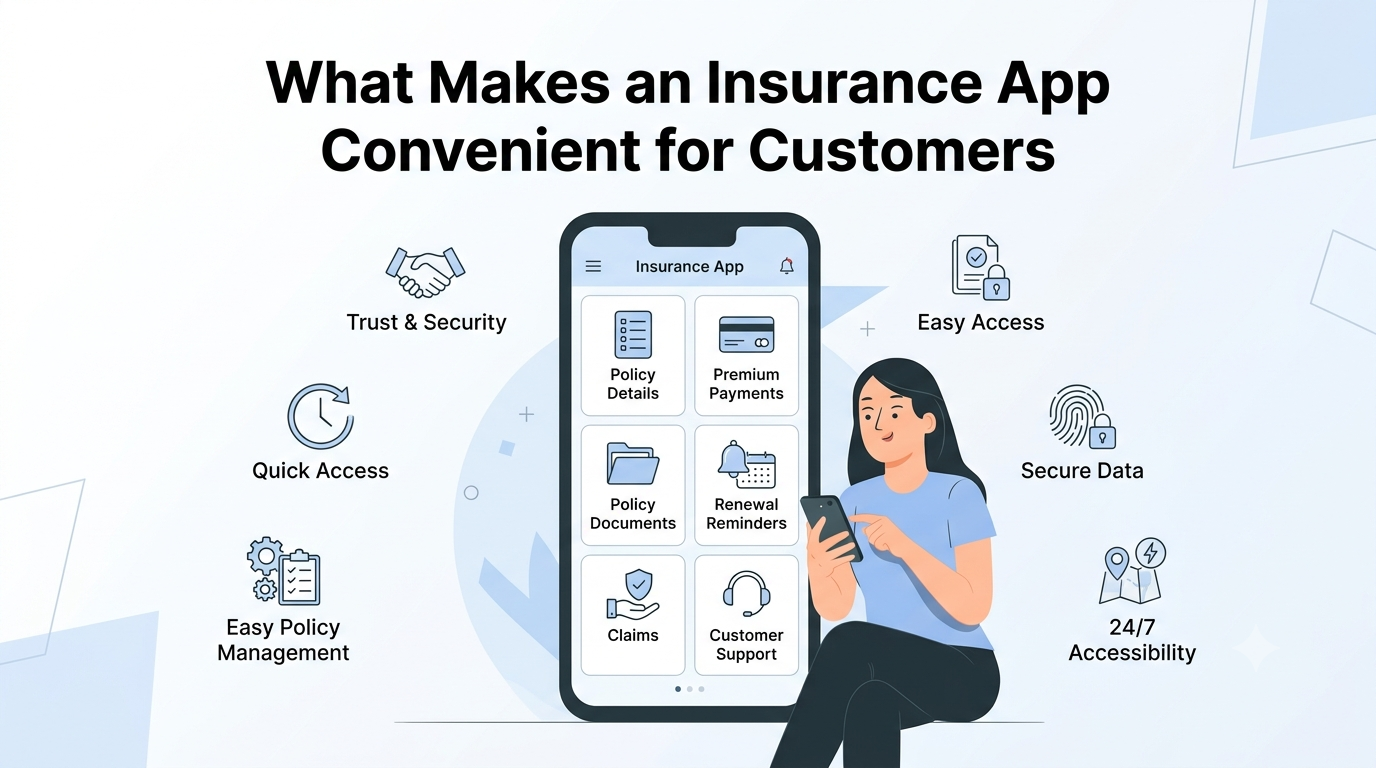
The insurance industry has changed significantly with the growth of digital services. Customers no longer have to depend entirely on branch visits, lengthy paperwork, or repeated phone calls to manage their policies. An insurance app brings several insurance-related activities together on a smartphone, making policy management more accessible and convenient.
From checking policy details and renewing coverage to accessing documents and requesting support, a well-designed app can simplify many routine tasks. However, convenience is not simply about having an app. The real value comes from features that make insurance services easier to understand, access, and manage.
What Is an Insurance App?
An insurance app is a mobile application designed to help customers perform insurance-related activities digitally. Depending on the provider and available services, customers may be able to view policy information, access documents, make payments, check renewal dates, initiate service requests, and communicate with customer support.
The best apps focus on reducing unnecessary steps. Instead of searching through physical documents or contacting a service centre for basic information, customers can access relevant policy details from their smartphones.
Why Are Insurance Apps Becoming Convenient for Customers?
Customers increasingly expect financial services to be fast, accessible, and easy to use. Insurance is no exception. An app can provide a centralised platform where customers can manage important policy-related activities without depending on traditional processes.
Convenience can be particularly valuable when a customer needs information quickly, such as checking policy coverage, downloading a document, or confirming a renewal date.
Here are some important factors that make an insurance app convenient.
1. Easy Access to Policy Information
One of the biggest advantages of an insurance app is quick access to policy details. Customers can potentially view information such as:
· Policy number
· Coverage details
· Policy period
· Premium information
· Insured details
· Renewal date
· Policy documents
Having this information available digitally can make policy management more organised and reduce dependence on physical paperwork.
2. Simple Policy Document Access
Insurance documents are important for understanding coverage and completing various insurance-related requirements. Searching for a physical policy document can sometimes be inconvenient.
A well-developed app can allow customers to access or download their documents digitally. This can be useful when a policyholder needs a document while travelling or when submitting information for a service request.
3. Convenient Premium Payments
Payment functionality can make an insurance app significantly more useful. Depending on the services offered, customers may be able to pay premiums digitally using available payment methods.
A straightforward payment process can reduce unnecessary steps and help customers complete transactions from their smartphones.
Customers should still verify payment confirmation and retain transaction records for future reference.
4. Renewal Reminders and Notifications
Missing an insurance renewal date can create unnecessary complications. An app can help customers stay informed through notifications or reminders about upcoming renewals and other important policy events.
Timely notifications can encourage customers to review their coverage before the policy expires rather than waiting until the last moment.
A useful app should make such alerts clear without overwhelming users with unnecessary notifications.
5. Faster Access to Policy Services
Customers may need different types of policy services during the policy period. Depending on the insurance product and provider, these could include updating information, requesting documents, raising service requests, or checking the status of an existing request.
An app can bring these options into one digital interface, allowing customers to identify the required service and follow the relevant process more easily.
6. Claim-Related Assistance
Claims can be one of the most important moments in the insurance journey. Customers may need information about the claim process, required documents, claim status, or support channels.
An insurance app can improve convenience by providing claim-related information in an organised manner. Some apps may also allow users to initiate or track certain claim-related activities digitally.
However, customers should always carefully review the applicable claim requirements, policy terms, exclusions, and documentation.
7. User-Friendly Interface
A feature-rich app is not necessarily convenient if customers struggle to understand or navigate it.
A good insurance app should have a simple interface with clearly labelled sections. Important functions such as policies, payments, documents, claims, renewals, and support should be easy to locate.
Simple navigation can make the experience more accessible for customers with different levels of digital familiarity.
8. Secure Login and Data Protection
Insurance apps handle important personal and policy-related information. Therefore, security is an essential part of convenience.
Features such as secure authentication, protected transactions, session controls, and appropriate data-security measures can help protect customer information.
Customers should also follow basic security practices, such as using strong passwords, avoiding sharing login credentials, and keeping their smartphones and applications updated.
Convenience should never come at the expense of security.
9. Customer Support Within the App
Digital convenience becomes more meaningful when customers can obtain help when they need it.
An insurance app may provide customer support through features such as:
· Help sections
· Service request options
· Chat or assistance features
· Contact information
· Frequently Asked Questions
· Request tracking
Clear support options can help customers understand what to do when they encounter an issue.
10. Real-Time Policy Updates
Customers benefit when important policy information is updated promptly within the app. For example, after a transaction or service request, the application may display relevant updates or confirmations.
Keeping information organised and current can help customers avoid confusion and make better decisions regarding their insurance coverage.
11. Reduced Dependence on Paperwork
Digital policy management can reduce the need to maintain multiple physical documents. Customers can potentially store or access important policy information through their mobile devices.
This does not mean customers should ignore document retention requirements. Important policy documents, receipts, and communications should still be saved appropriately according to their needs.
12. Convenience Across Different Insurance Needs
A modern insurance app can potentially support different types of insurance-related requirements from one platform. Depending on the application, users may be able to manage motor, health, travel, or other insurance services.
Having multiple functions within a single platform can make the overall insurance experience more organised.
How to Choose a Convenient Insurance App
Before using an insurance app, customers should evaluate more than its appearance. Consider the following factors:
· Easy registration and login process
· Simple navigation
· Clear policy information
· Secure payment facilities
· Document access
· Renewal notifications
· Claim-related support
· Customer service availability
· Transparent communication
· Regular application updates
· Strong privacy and security practices
Customers should also check whether the app provides the specific insurance services they actually need.
The Role of Convenience in Modern Insurance
Convenience can influence how customers interact with insurance throughout the policy lifecycle. Instead of treating insurance as a one-time purchase, digital tools can encourage policyholders to stay more engaged with their coverage.
An effective app should therefore do more than display information. It should help customers understand their policies, complete routine tasks, access support, and keep track of important dates with minimal effort.
At the same time, customers should remember that an app is only a digital interface. The actual coverage depends on the applicable policy terms, conditions, exclusions, limits, and other contractual provisions.
Conclusion
An insurance app can make insurance management more convenient by bringing policy information, documents, payments, renewals, service requests, and support into a single digital platform. Features such as simple navigation, secure access, timely notifications, and easy document retrieval can improve the customer experience and reduce the effort involved in routine insurance activities.
As digital insurance services continue to evolve, customers should choose platforms that combine convenience with security, transparency, and reliable support. Square Insurance focuses on making insurance-related activities more accessible through digital solutions, helping customers and insurance professionals manage their insurance journey more efficiently.
Frequently Asked Question (FAQs)
Q1. What is an insurance app?
An insurance app is a mobile application that allows users to perform various insurance-related activities digitally, such as viewing policy information, accessing documents, making payments, checking renewals, and seeking support.
Q2. How does an insurance app make policy management easier?
An insurance app can provide quick access to policy details, documents, payment options, renewal reminders, service requests, and support from a smartphone.
Q3. Can I access insurance documents through an app?
Many insurance apps provide digital access to policy documents and related records. The availability of specific documents depends on the application and services offered.
Q4. Are insurance apps secure to use?
Reputable insurance applications generally incorporate security measures to protect user information and transactions. Customers should also use strong credentials, avoid sharing login details, and keep their apps updated.
Q5. Can an insurance app help with policy renewal?
Yes, depending on the app, customers may receive renewal reminders and may also be able to complete certain renewal-related activities digitally.
Q6. Can I track a claim through an insurance app?
Some insurance apps provide claim-related tracking and support features. The exact functionality varies depending on the insurance provider and policy type.
Q7. What should I check before choosing an insurance app?
Look for ease of use, policy access, document availability, secure transactions, renewal reminders, customer support, claim assistance, privacy features, and regular updates.
Q8. Does an insurance app replace customer support?
Not necessarily. An app can provide self-service options and digital assistance, but customers may still need customer support for complex queries or specific policy-related situations.

 Arabic
 Français
 Español
 Português
 Deutsch
 Türkçe
 Dutch
Dutch
 Italiano
 Russian
 Romaian