


CAM Rotary Indexer Explained: How It Works, Benefits & Buying Guide (2026)
CAM Rotary Indexer: The Complete Guide for Manufacturers
Introduction
If you run a production line, you already know one thing — timing is everything.
A part that arrives a second late can throw off an entire assembly cycle. This is exactly where a CAM rotary indexer earns its place on the shop floor.
I've spent years around automation equipment, and I can tell you this: most people don't think about indexers until something breaks. Then suddenly, everyone wants to understand how they work.
This guide breaks it down in plain language. No jargon overload. Just what a CAM rotary indexer is, how it functions, where it helps, and what to watch out for before you buy one.
By the end, you'll know exactly why a rotary indexing table matters and how to pick the right cam indexing drive for your setup.
What is a CAM Rotary Indexer?
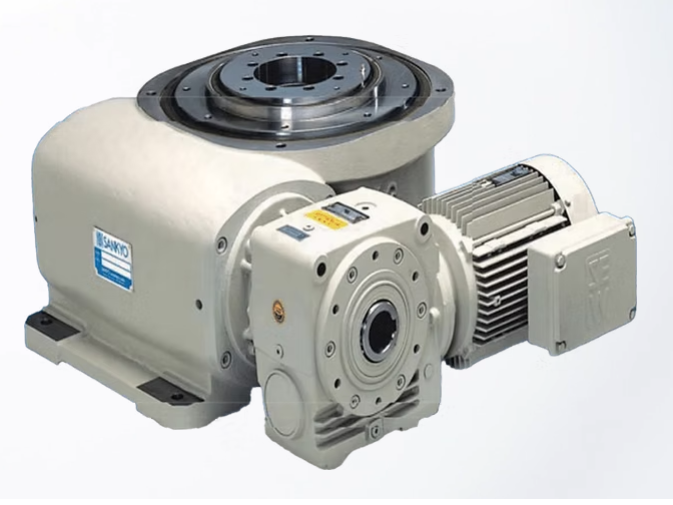
A CAM rotary indexer is a mechanical device that rotates a table or shaft in fixed, precise steps using a cam-driven mechanism instead of electronic controls.
Think of it like a clock's second hand — except instead of ticking every second, it "ticks" every time a part needs to move to the next station.
In simple words, it turns continuous rotary motion into stop-and-go motion, so each stop lines up perfectly with a machining, assembly, or inspection station.
Here's why that matters. Many assembly lines need parts to stop at exact positions—for welding, packaging, drilling, or inspection. A CAM rotary indexer handles this without needing a computer to tell it what to do every time. The cam profile itself defines the motion.
That's mechanical intelligence, built right into the hardware.
Benefits of a CAM Rotary Indexer
Let's talk about why manufacturers still trust cam-based indexing even in an era of servo motors and PLCs.
Key benefits:
- High repeatability — the cam profile guarantees the same motion, cycle after cycle, without drift
- Low maintenance — fewer electronic parts mean fewer things that can fail
- Smooth motion control — reduces shock and vibration during start-stop cycles
- Long service life — hardened cam surfaces are built for years of continuous use
- Cost efficiency — no need for complex programming or motion controllers
- Consistent cycle times — ideal for high-volume, repetitive production
A production manager I once spoke with put it simply: "We switched to a rotary indexing table and cut our downtime complaints by half." That's the real-world value of mechanical precision.
How Does a CAM Rotary Indexer Work?
Here's the short answer for anyone in a hurry:
A CAM rotary indexer works by using a rotating cam with a specially shaped groove or profile. A follower (roller) rides along this profile, and as the cam turns, it pushes the output table forward in fixed steps, then holds it perfectly still during the "dwell" period.
Let's slow that down.
- Input shaft rotates continuously, usually driven by a motor
- The cam profile is engineered with rise, dwell, and return sections
- A follower roller tracks the cam's groove or edge
- During the "rise" phase, the output table indexes (rotates) to the next position
- During the "dwell" phase, the table stays completely still—this is when work happens (drilling, welding, inspecting)
- The cycle repeats, driven purely by the cam's shape
This is the core idea behind every cam indexing drive — mechanical timing that doesn't need software to stay accurate.
For high-speed applications, engineers design the cam curve carefully to avoid sudden jerks. That's what separates a well-built high-speed rotary indexer from a rough, unreliable one.
Why Choose Deceler?
There are plenty of indexer manufacturers out there. So why does Deceler come up again and again in conversations with plant engineers?
A few honest reasons:
- Precision-engineered cam profiles designed to reduce vibration even at high speeds
- Custom rotary indexing tables built around your actual station layout, not a generic template
- Field-tested durability — Deceler indexers are built to run in real factory conditions, not just lab tests
- Responsive technical support — someone who actually understands cam mechanics picks up the phone
- Proven track record across packaging, automotive, and electronics assembly lines
Deceler doesn't just sell hardware. The team helps you match the right cam indexing drive to your cycle time, load, and station count — which is often where buyers go wrong on their own.
Common Mistakes to Avoid
Even experienced buyers slip up here. Watch for these:
- Ignoring dwell time requirements — if your process needs 3 seconds of stillness and you pick an indexer with too short a dwell, quality suffers
- Underestimating load — an undersized indexer wears out fast under heavy tooling
- Skipping speed-torque calculations — a high-speed rotary indexer needs proper torque matching, not just RPM specs
- Poor lubrication schedules — cam surfaces need regular maintenance, even though they're low-maintenance overall
- Choosing a generic table size — mismatched table diameter creates alignment issues down the line
A little planning upfront saves months of headaches later.
Frequently Asked Questions
Q1: What is the main difference between a CAM rotary indexer and a servo indexer?
A CAM rotary indexer uses a fixed mechanical cam profile for motion, while a servo indexer relies on programmable electronic control. Cam indexers are simpler, more durable, and cost-effective for fixed-cycle applications.
Q2: How accurate is a rotary indexing table?
Most industrial rotary indexing tables achieve repeatability within a few arc-minutes, making them suitable for precision assembly, drilling, and inspection tasks.
Q3: What industries use cam indexing drives the most?
Packaging, automotive parts assembly, electronics manufacturing, and pharmaceutical production rely heavily on cam indexing drives for consistent, high-speed cycles.
Q4: Can a CAM rotary indexer handle high-speed production?
Yes. A well-designed high-speed rotary indexer can run hundreds of cycles per minute when the cam curve is engineered to minimize shock and vibration.
Q5: How long does a CAM rotary indexer typically last?
With proper lubrication and load management, industrial-grade indexers commonly run for 10+ years in continuous production environments.
Q6: Do CAM rotary indexers need programming?
No. That's their biggest advantage — the motion pattern is built into the cam shape itself, so no software or PLC programming is required for the indexing motion.
Q7: What is "dwell time" in a rotary indexer?
Dwell time is the period during each cycle when the output table remains completely stationary, allowing operations like welding or drilling to happen accurately.
Conclusion
A CAM rotary indexer isn't flashy technology — it's dependable, mechanical precision that keeps production lines running smoothly, cycle after cycle.
Whether you're setting up a new assembly line or replacing an aging rotary indexing table, understanding how the cam indexing drive works helps you make a smarter buying decision.
And if you want a partner who actually understands the mechanics behind the motion, Deceler is worth a conversation. Getting the right CAM rotary indexer isn't about picking the cheapest option — it's about picking the one built to run reliably, day after day, year after year.

 Arabic
 Français
 Español
 Português
 Deutsch
 Türkçe
 Dutch
Dutch
 Italiano
 Russian
 Romaian