


Advanced Color Removal Processes for Cane Sugar Refining
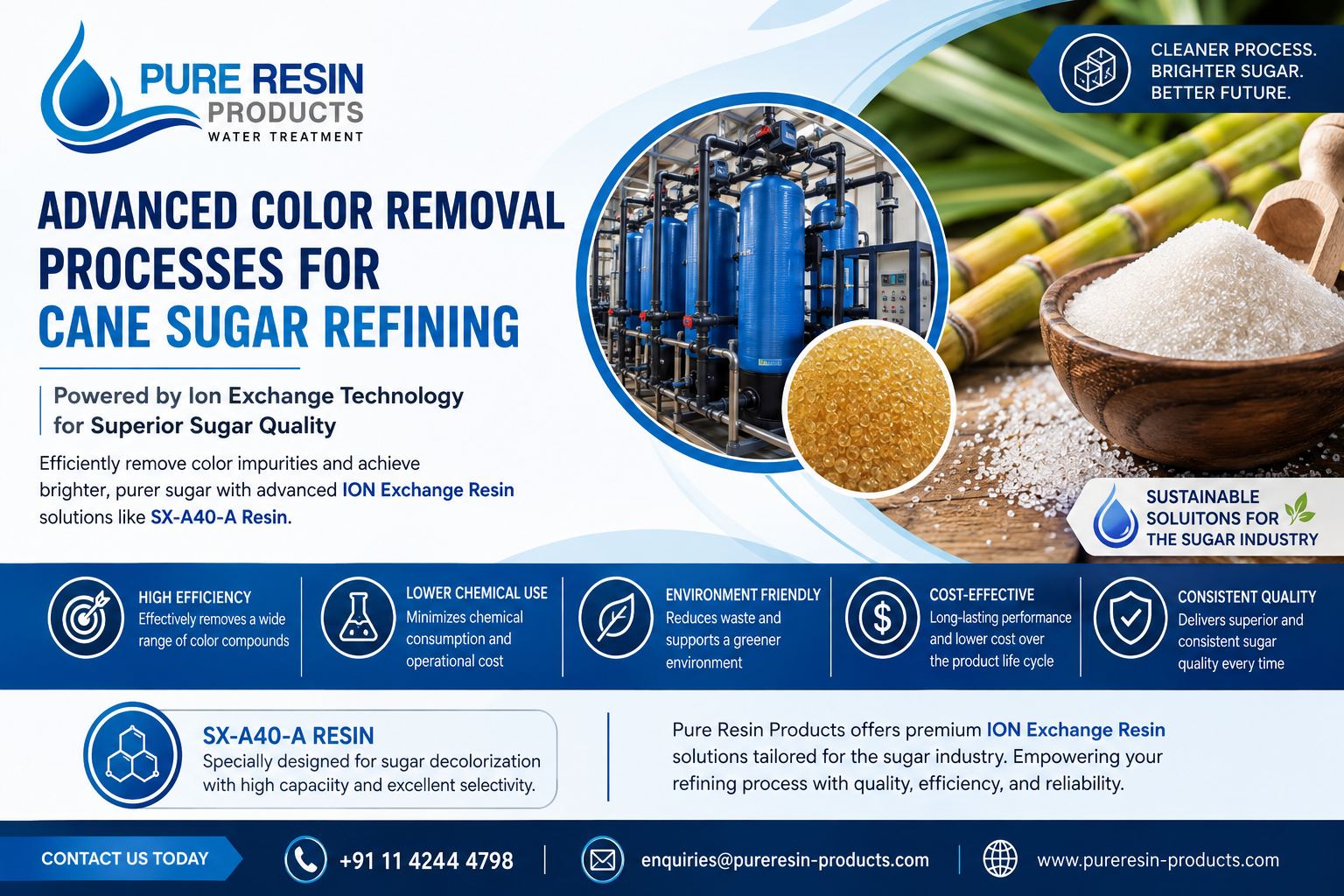
When you think about sugar, you probably imagine sparkling white crystals sitting neatly in a bowl. But have you ever wondered how raw brown sugar transforms into that refined, pure white form? The answer lies in advanced color removal processes, a crucial stage in the sugar industry. Removing color from cane sugar isn’t just about aesthetics—it directly impacts quality, taste, and market value.
Color in sugar mainly comes from natural plant pigments, degradation products, and impurities introduced during processing. If not properly removed, these compounds can affect the final product’s purity and stability. That’s why industries invest heavily in efficient Water Treatment Solution technologies that ensure consistent quality.
Why Color Removal is Critical
Color removal ensures that sugar meets international quality standards. Consumers expect white, clean-looking sugar, especially in food and beverage applications. Beyond appearance, color compounds can interfere with taste and shelf life, making their removal essential.
Challenges Faced in Sugar Decolorization
The biggest challenge lies in the complexity of color compounds. They vary in size, charge, and chemical composition, making them difficult to remove using a single method. Additionally, maintaining cost efficiency while achieving high purity is a constant balancing act.
Understanding Color Compounds in Cane Sugar
Before diving into removal processes, it’s important to understand where these colors come from.
Sources of Color Formation
Color compounds originate from multiple stages, including harvesting, juice extraction, and heating. Natural plant pigments like chlorophyll and polyphenols contribute to the initial color, while processing steps introduce caramelization and Maillard reaction products.
Types of Color Impurities
Color impurities can be broadly classified into:
- High molecular weight compounds (melanoidins)
- Low molecular weight organic acids
- Phenolic compounds
Each type behaves differently during treatment, which is why advanced methods like ion exchange are becoming increasingly popular.
Traditional Color Removal Methods
Carbonation Process
This method uses lime and carbon dioxide to precipitate impurities. While effective for certain contaminants, it struggles with complex organic color compounds.
Sulphitation Process
Sulphitation involves adding sulfur dioxide to bleach the sugar. Although it improves color, it raises concerns about chemical residues and environmental impact.
Modern Ion Exchange Technology in Sugar Refining
What is Ion Exchange?
Ion exchange is a process where undesirable ions are replaced with more desirable ones using specialized resins. Think of it like a molecular swap system—unwanted color molecules are trapped, while clean sugar solution passes through.
Role of Ion Exchange Resin
ION Exchange Resin plays a central role in modern sugar refining. These resins are engineered to selectively remove color compounds without affecting sucrose.
Benefits of Ion Exchange in Sugar Industry
- High efficiency in removing complex color compounds
- Improved product consistency
- Reduced chemical usage
- Lower environmental impact
SX-A40-A Resin: A Game-Changer
Features of SX-A40-A Resin
The SX-A40-A Resin is specifically designed for sugar decolorization. It offers high capacity, excellent selectivity, and long operational life. Its unique structure allows it to target both high and low molecular weight color compounds effectively.
Applications in Sugar Decolorization
In the sugar industry, SX-A40-A Resin is widely used in refining plants to achieve superior color removal. It ensures that the final product meets strict quality standards while maintaining efficiency.
Process Flow of Color Removal Using Ion Exchange
Pre-Treatment Stage
Before ion exchange, the sugar solution undergoes filtration and clarification to remove suspended solids. This step ensures optimal resin performance.
Resin Treatment Stage
The clarified solution passes through columns filled with ION Exchange Resin. Here, color compounds are selectively removed, resulting in a clear, purified solution.
Regeneration and Maintenance
Over time, resins become saturated and require regeneration using specific chemicals. Proper maintenance ensures long-term efficiency and cost-effectiveness.
Role of Pure Resin Products in Water Treatment Solutions
Companies like Pure Resin Products are leading providers of advanced Water Treatment Solution technologies. They supply high-quality ION Exchange Resin tailored for industrial applications, including sugar refining. Their expertise ensures optimal performance, helping industries achieve better efficiency and product quality.
Environmental and Economic Benefits
Switching to ion exchange technology offers significant advantages. Reduced chemical usage means less environmental pollution. Additionally, improved efficiency translates into lower operational costs. Over time, industries benefit from both sustainability and profitability.
Future Trends in Sugar Refining Technology
The future of sugar refining is moving toward smarter, more sustainable solutions. Innovations in ION Exchange Resin technology are making processes more efficient and environmentally friendly. Automation and real-time monitoring are also becoming standard, ensuring consistent quality with minimal human intervention.
Conclusion
Color removal is a critical step in cane sugar refining, directly influencing product quality and market value. While traditional methods have served the industry for years, modern solutions like ion exchange are redefining efficiency and sustainability. With advanced materials like SX-A40-A Resin and reliable suppliers such as Pure Resin Products, the sugar industry is well-equipped to meet future demands. Adopting these technologies not only improves product quality but also supports environmentally responsible practices.
FAQs
1. What is the main purpose of color removal in sugar refining?
It ensures high-quality, visually appealing sugar while improving taste and shelf life.
2. How does ion exchange work in sugar refining?
It removes unwanted color compounds by exchanging ions using specialized resins.
3. What makes SX-A40-A Resin effective?
Its high selectivity and capacity allow it to remove a wide range of color impurities efficiently.
4. Is ion exchange environmentally friendly?
Yes, it reduces chemical usage and minimizes waste, making it more sustainable than traditional methods.
5. Why choose Pure Resin Products for water treatment solutions?
They provide high-quality resins and expertise tailored for industrial applications, ensuring optimal performance.

 English
 Arabic
 Français
 Español
 Português
 Deutsch
 Türkçe
 Dutch
Dutch
 Italiano
 Russian