


Jewelry Insurance Coverage: Protect Your Most Valuable Possessions
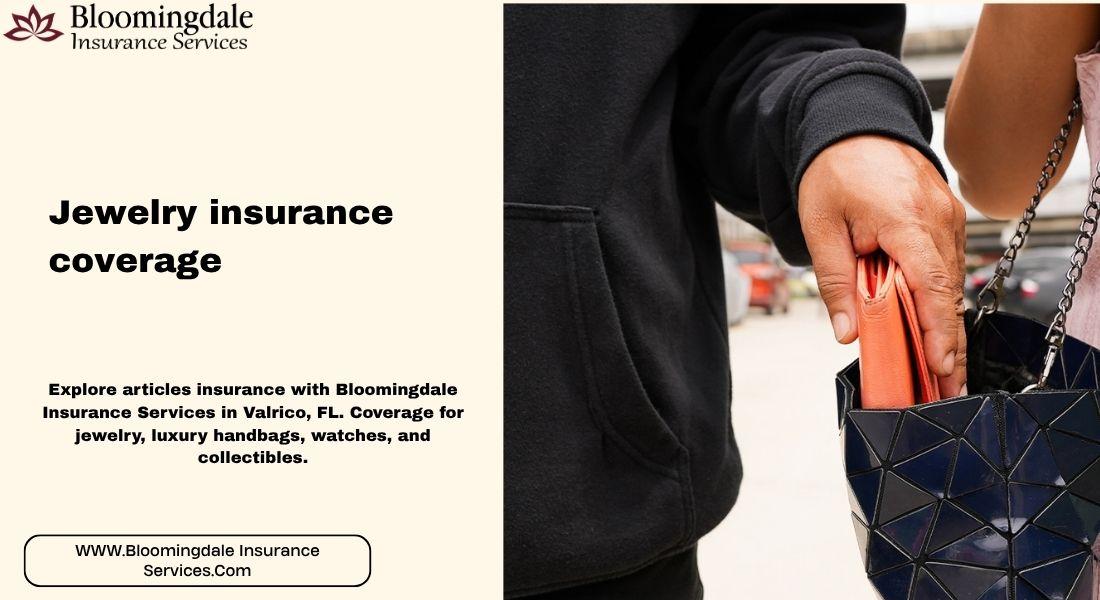
Why Jewelry Insurance Coverage Matters
Your favorite jewelry can carry much more than a price tag. A wedding ring may represent a lifelong commitment. A family necklace may connect generations. A luxury watch may mark an important achievement. Because these possessions often carry both financial and emotional value, standard property insurance may not always provide the level of protection you expect.
Jewelry insurance coverage can provide specialized protection for qualifying valuable pieces. Bloomingdale Insurance Services helps homeowners and renters understand options for protecting jewelry and other high-value possessions through suitable Articles insurance.
Specialized coverage may address risks such as theft, accidental loss, and certain types of damage, depending on the policy. It can also help homeowners identify coverage gaps that may exist under a standard policy.
What Is Articles Insurance?
Specialized protection for valuable possessions
Articles insurance is designed for valuable personal possessions that may need more protection than a standard homeowners or renters policy provides.
Depending on the policy, covered items can include:
- Fine jewelry
- Luxury handbags
- Watches
- Fine art
- Antique furniture
- Collectibles
- Rare items
- Other valuable possessions
The coverage terms vary by insurer and policy. Some items may require an appraisal, receipt, valuation, or other documentation before coverage begins.
Why standard coverage may not be enough
A standard property policy can include personal property coverage, but valuable items may have specific limits or conditions.
For example, a policy may provide personal property protection but impose a lower limit on certain categories of valuables.
Jewelry insurance coverage can help address this concern by providing more specific protection for eligible pieces.
Key Benefits of Jewelry Insurance Coverage
Protection against theft
Jewelry can attract unwanted attention because of its value and portability.
Specialized coverage may protect qualifying jewelry after theft, subject to the policy terms, limits, exclusions, and deductible.
Keeping photographs, receipts, appraisals, and other documentation can help establish ownership and value.
Protection against accidental loss
Jewelry can disappear in unexpected ways. A ring can slip off while traveling. An earring can become lost during an event. A necklace can go missing without an obvious explanation.
Depending on the policy, jewelry insurance coverage may provide protection for qualifying accidental loss.
Always review the policy wording to understand exactly what situations qualify.
Protection against qualifying damage
Jewelry can suffer accidental damage during everyday activities.
A specialized policy may provide coverage for qualifying damage, depending on its terms.
This can provide additional financial support when an insured piece needs repair or replacement.
Coverage that can adapt to your collection
Valuable collections can change over time.
You may purchase a new engagement ring, inherit a family heirloom, or add another luxury piece to your collection.
Regular policy reviews can help keep your coverage aligned with the current value of your possessions.
How to Protect Jewelry Before You Need Insurance
Keep proof of ownership
Save receipts and purchase records whenever possible.
For inherited jewelry, keep any available family records, estate documents, or professional valuations.
These records can help demonstrate ownership and value.
Get professional appraisals
A professional appraisal can help establish the value of an expensive piece.
Appraisals can become particularly useful for rare, antique, or high-value jewelry.
Values can change over time, so homeowners should ask when an appraisal should be updated.
Photograph valuable pieces
Take clear photographs from several angles.
For unique jewelry, photographs can capture details such as gemstones, settings, engravings, and identifying characteristics.
Store copies securely outside your home.
Luxury Handbag Insurance for Designer Collections
Handbags can represent significant investments
Luxury handbags have become valuable possessions for many collectors.
Limited editions, discontinued designs, rare colors, and special collaborations can command substantial prices.
Luxury handbag insurance can provide specialized protection for qualifying handbags, depending on the policy.
Document each handbag
Keep purchase receipts, authentication records, photographs, and other documentation.
For collectible handbags, records of condition and provenance can also be useful.
If the value of a handbag changes significantly, review your coverage.
Why collection value matters
A collection may be worth considerably more than the owner's initial purchase cost.
Market prices can change over time. A policy review can help determine whether current coverage remains appropriate.
Understanding Watch Insurance Quotes
Why watches may need specialized protection
Luxury watches can combine precious metals, gemstones, craftsmanship, and collectible value.
Their prices can also vary significantly depending on brand, model, condition, rarity, and market demand.
When comparing Watch insurance quotes, homeowners should look beyond the premium.
Consider the coverage limit, deductible, exclusions, valuation requirements, loss protection, and applicable geographic restrictions.
Keep watch documentation
Keep the original receipt when available.
Also save the model number, serial number, photographs, appraisal, service records, and authentication documents.
These records can help establish ownership and value.
Review your watch collection regularly
A watch purchased several years ago may have a different market value today.
Regular reviews can help determine whether your existing protection still reflects the item's current value.
Art and Collectibles Insurance
Protecting valuable collections
Art and collectibles can include paintings, sculptures, antiques, rare books, coins, stamps, sports memorabilia, and other unique possessions.
Art and collectibles insurance can provide specialized protection for qualifying items.
Coverage depends on the policy, so collectors should carefully review eligible causes of loss and valuation provisions.
Proper documentation is important
Collectors should maintain:
- Purchase receipts
- Appraisals
- Certificates of authenticity
- Provenance records
- Professional photographs
- Restoration records
- Inventory lists
These records can make it easier to establish the identity and value of a collection.
Consider changing market values
The value of collectible property can change significantly.
An item purchased years ago may now be worth considerably more.
Regular valuation reviews can help determine whether the current policy remains suitable.
Comparing Coverage for Valuable Possessions
| Valuable Item | Common Concern | Important Documentation | Coverage Consideration |
|---|---|---|---|
| Jewelry | Theft or accidental loss | Receipt, appraisal, photos | Jewelry insurance coverage |
| Luxury handbags | Theft, loss, damage | Receipt, authentication, photos | Luxury handbag insurance |
| Watches | Theft, loss, damage | Serial number, receipt, appraisal | Watch insurance quotes |
| Fine art | Damage or loss | Appraisal, provenance, photos | Art and collectibles insurance |
| Collectibles | Theft, damage, changing value | Receipts, valuation, inventory | Articles insurance |
Benefits of Specialized Articles Insurance
More focused protection
Articles insurance focuses on individual valuable possessions instead of treating every belonging the same way.
This can make it useful for homeowners with expensive or unique items.
Potential worldwide protection
Some policies can provide coverage beyond the home, including qualifying losses while traveling.
This can be particularly helpful for people who regularly take valuable jewelry, watches, handbags, or collectibles outside the home.
The exact geographic scope depends on the policy.
Flexible coverage options
Specialized coverage may allow eligible items to receive individual limits.
This can be useful when one possession represents a significant portion of your collection's value.
Greater awareness of coverage gaps
Reviewing individual valuables can help homeowners identify areas where their existing property policy may not provide sufficient protection.
How to Choose the Right Jewelry Insurance Coverage
Start with an inventory
Make a list of your valuable possessions.
Include jewelry, watches, handbags, artwork, collectibles, and other items that may require special consideration.
Determine current values
Use receipts, professional appraisals, and other reliable documentation to establish value.
Avoid relying only on old purchase prices when an item's market value may have changed.
Review policy exclusions
Read the exclusions carefully.
Ask questions about wear and tear, mysterious disappearance, unattended property, maintenance, and other limitations that may apply.
Understand deductibles
A deductible represents the amount you may need to pay toward a covered loss.
Compare deductible structures when evaluating different policies.
Review your policy annually
A yearly review can help you account for new purchases, gifts, inheritances, updated valuations, and changes in your collection.
Protecting Jewelry While Traveling
Travel can increase exposure
Taking expensive jewelry on vacation can create additional risks.
Keep valuable pieces secure and avoid unnecessary exposure.
When traveling, understand whether your jewelry insurance coverage applies outside your home and whether any special conditions apply.
Keep important records accessible
Digital copies of receipts, appraisals, photographs, and policy documents can be helpful while traveling.
Keep sensitive documents stored securely.
Home Security and Valuable Possessions
Use appropriate security measures
A home security system, safe, monitored alarm, and other protective measures can help reduce risks.
However, security features do not replace insurance.
They should work alongside appropriate coverage and responsible storage.
Store valuables carefully
Jewelry and watches should receive suitable storage when not in use.
High-value collectibles may require specialized environmental conditions to help preserve their condition.
When Should You Update Your Coverage?
After buying a valuable item
A new ring, watch, handbag, painting, or collectible may increase your insurance needs.
Review coverage soon after the purchase.
After receiving an inheritance
Inherited jewelry and collectibles can carry substantial financial and emotional value.
Consider obtaining an appraisal and discussing coverage before assuming your existing policy provides sufficient protection.
After a professional valuation
If an item's value changes, your coverage may need adjustment.
After selling or giving away an item
Remove possessions that no longer belong to you when updating your policy.
Keeping your inventory accurate can make future reviews easier.
Why Bloomingdale Insurance Services Can Help
Simple guidance for valuable possessions
Insurance terminology can feel complicated when you are protecting expensive personal property.
Bloomingdale Insurance Services can help homeowners understand important coverage considerations and identify questions to ask when reviewing valuable possessions.
Coverage for different types of valuables
A collection may contain several types of property.
You may own jewelry, luxury handbags, watches, artwork, and collectibles at the same time.
Articles insurance can help organize specialized protection for qualifying items.
A practical approach to insurance
The right policy should reflect your actual possessions, their value, and your personal circumstances.
Rather than focusing only on the lowest premium, consider the protection provided and the potential financial impact of an uncovered loss.
Conclusion
Protecting valuable possessions requires thoughtful planning. Jewelry can carry emotional meaning as well as financial value, while luxury handbags, watches, artwork, and collectibles can represent significant investments.
Jewelry insurance coverage can provide specialized protection for qualifying pieces against covered risks such as theft, accidental loss, and damage. Articles insurance can also help address the needs of people who own several categories of valuable possessions.
Whether you are researching Luxury handbag insurance, comparing Watch insurance quotes, or considering Art and collectibles insurance, documentation and regular policy reviews remain important. Receipts, appraisals, photographs, authentication records, and updated inventories can all help you maintain accurate information about your collection.
For homeowners and renters seeking practical guidance on valuable possessions, Bloomingdale Insurance Services can help you understand your options and review suitable protection for your individual circumstances.
Frequently Asked Questions
What does jewelry insurance coverage usually protect?
Jewelry insurance coverage can protect eligible jewelry against certain covered risks, which may include theft, accidental loss, and damage. Exact protection depends on the policy, including its limits, exclusions, deductible, and conditions.
Is Articles insurance different from standard homeowners insurance?
Yes. Articles insurance can provide specialized protection for qualifying high-value possessions. Standard homeowners insurance may include personal property coverage, but certain valuable items can have specific limits or restrictions.
Is Luxury handbag insurance useful for expensive designer bags?
Luxury handbag insurance may be useful when a handbag has significant financial value. Coverage can vary, so owners should review protection for theft, accidental loss, damage, valuation, and applicable geographic limitations.
How should I compare Watch insurance quotes?
When comparing Watch insurance quotes, look beyond the premium. Review coverage limits, deductibles, valuation requirements, exclusions, accidental loss provisions, theft protection, and whether coverage applies while traveling.
What does Art and collectibles insurance cover?
Art and collectibles insurance can provide specialized protection for qualifying artwork and collectible possessions. The exact risks covered depend on the policy. Collectors should maintain appraisals, receipts, provenance documents, photographs, and other valuation records.

 Arabic
 Français
 Español
 Português
 Deutsch
 Türkçe
 Dutch
Dutch
 Italiano
 Russian
 Romaian