


Aerospace Testing Market Expands as Advanced Aerospace Systems Demand Rigorous Validation
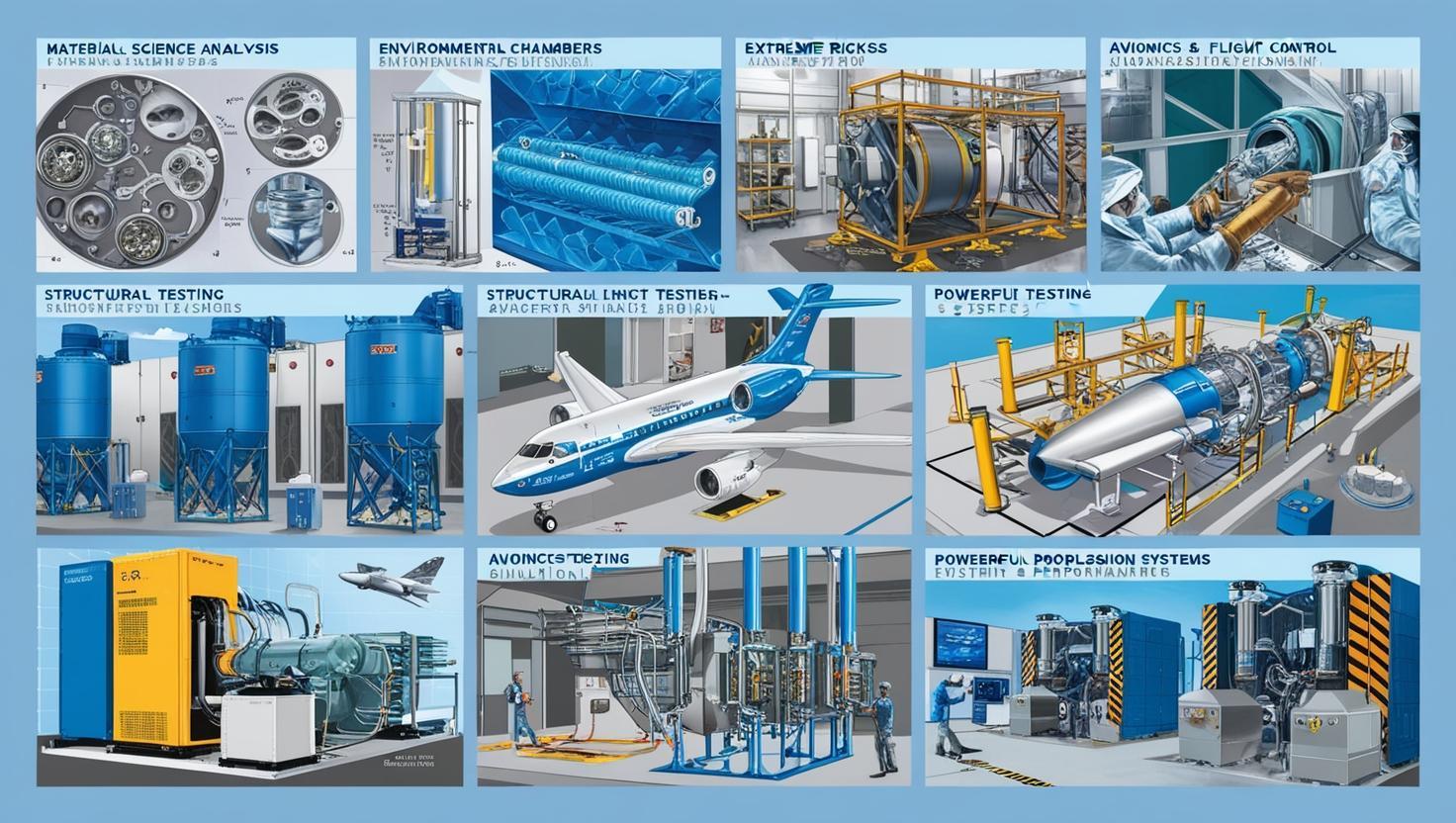
The Aerospace Testing Market is undergoing significant transformation as aerospace manufacturers, defense organizations, and technology companies accelerate the development of autonomous aircraft, unmanned aerial vehicles (UAVs), advanced avionics, electric propulsion, and next-generation aerospace systems. As these technologies become more sophisticated, comprehensive testing is increasingly essential to validate performance, reliability, safety, cybersecurity, and regulatory compliance.
Autonomous aircraft and UAVs are particularly important growth catalysts. These platforms combine sensors, artificial intelligence (AI), navigation systems, communication technologies, propulsion systems, and autonomous flight software. Testing providers must therefore evaluate not only individual components but also the interaction between hardware, software, and autonomous decision-making systems.
Autonomous Aircraft Create New Testing Requirements
The development of autonomous aircraft is changing conventional aerospace testing methodologies.
Traditional aircraft testing focuses heavily on mechanical performance, flight characteristics, propulsion, avionics, and structural integrity. Autonomous aircraft add another layer of complexity because flight decisions can increasingly be made by onboard software and AI systems.
Testing must therefore assess:
Autonomous navigation
Sensor accuracy
Obstacle detection
Collision avoidance
Communication reliability
Flight-control algorithms
AI decision-making
Software performance
Cybersecurity
Fail-safe mechanisms
This expansion of testing requirements creates opportunities for companies offering advanced simulation, hardware-in-the-loop testing, software validation, flight testing, and automated test systems.
UAV Adoption Expands the Addressable Market
UAVs are being deployed across a growing range of applications, including defense, surveillance, agriculture, infrastructure inspection, logistics, mapping, disaster management, and environmental monitoring.
The increasing diversity of UAV applications is generating demand for testing solutions tailored to different operational requirements.
For example, defense UAVs may require testing under extreme environmental and communication conditions, while commercial drones used for logistics require reliable navigation, collision avoidance, and autonomous flight capabilities.
As UAV platforms evolve from remotely controlled systems toward increasingly autonomous aircraft, testing will become more comprehensive and software-intensive.
Download PDF Brochure @ https://www.marketsandmarkets.com/pdfdownloadNew.asp?id=32924426
AI Becomes Central to Aerospace Testing
Artificial intelligence is playing an increasingly important role in both aerospace systems and their testing processes.
AI-powered testing can analyze large volumes of flight and sensor data to identify anomalies, detect patterns, and predict potential failures. Machine learning can also support automated inspection and predictive maintenance.
Potential applications include:
Automated defect detection
Predictive maintenance
Flight-data analysis
Anomaly detection
Test optimization
Failure prediction
Automated inspection
Performance modeling
The integration of AI into testing can help aerospace companies improve efficiency while reducing the time required to analyze complex test results.
Simulation and Digital Twins Accelerate Testing
Digital twins and advanced simulation are becoming increasingly important for autonomous aircraft and UAV development.
A digital twin can represent an aircraft, component, propulsion system, or other aerospace asset in a virtual environment. Engineers can use the model to simulate different operating scenarios before conducting physical tests.
For autonomous aircraft, simulation is particularly valuable because developers can test thousands of flight conditions, sensor combinations, and potential failure scenarios that would be difficult or expensive to reproduce in real-world environments.
Digital testing can complement physical flight testing by helping identify design and software problems earlier in the development cycle.
Hardware-in-the-Loop Testing Gains Importance
Autonomous aerospace systems require close integration between physical hardware and software.
Hardware-in-the-loop (HIL) testing allows engineers to connect actual aircraft hardware to simulated environments. This enables developers to evaluate how flight-control computers, sensors, actuators, and communication systems respond to simulated conditions.
HIL testing can help identify problems before full-scale flight testing, reducing risk and potentially lowering development costs.
As autonomous aircraft become more software-defined, demand for HIL, software-in-the-loop, and system-level testing solutions is expected to increase.
Sensor Testing Becomes Critical
Autonomous flight depends heavily on sensors.
Cameras, radar, LiDAR, inertial measurement units, GPS/GNSS receivers, and other sensors provide the information required for navigation and situational awareness.
Testing these sensors under different environmental and operational conditions is essential.
Testing scenarios may include:
Low visibility
Extreme temperatures
Strong winds
Electromagnetic interference
GPS-denied environments
High-speed flight
Obstacle-rich environments
Night operations
Sensor-fusion testing is also becoming increasingly important because autonomous aircraft often combine data from multiple sensors to make flight decisions.
Communication Reliability Drives Testing Demand
UAVs and autonomous aircraft frequently depend on wireless communication systems for command, control, data transmission, and coordination.
Communication failures can create significant operational and safety risks.
Testing therefore needs to evaluate communication performance under conditions such as signal interference, network congestion, long-range operation, and communication loss.
Advanced testing systems can simulate communication disruptions to determine whether autonomous aircraft can safely respond to unexpected conditions.
Cybersecurity Testing Becomes Essential
The growing connectivity of autonomous aircraft creates new cybersecurity risks.
UAVs can include wireless links, cloud connectivity, navigation systems, onboard computing, and remote-control infrastructure. These connected systems can potentially become targets for cyberattacks.
Aerospace testing is consequently expanding beyond physical performance to include cybersecurity validation.
Testing can evaluate vulnerabilities in:
Communication networks
Flight-control systems
Ground-control stations
Navigation systems
Software
Data links
Connected maintenance systems
As autonomous capabilities increase, cybersecurity will become an increasingly important part of aerospace testing and certification.
Defense Modernization Supports Market Growth
Defense applications represent a major opportunity for autonomous aircraft and UAV testing.
Military organizations are investing in unmanned platforms for intelligence, surveillance, reconnaissance, logistics, combat support, and other missions.
Next-generation defense platforms are incorporating AI, autonomous navigation, advanced sensors, electronic warfare systems, and sophisticated communications.
These technologies require extensive validation before deployment, creating demand for specialized aerospace testing infrastructure.
Testing providers with capabilities in environmental testing, flight simulation, electronic systems testing, cybersecurity, and autonomous-system validation can benefit from rising defense investments.
Electric Propulsion Adds New Testing Challenges
The development of electric and hybrid-electric aircraft is creating another important testing opportunity.
Electric aircraft require specialized testing for:
Batteries
Electric motors
Power electronics
Thermal management
High-voltage systems
Charging infrastructure
Energy-management systems
Battery safety is particularly important because thermal runaway, overheating, and energy-storage failures can create serious risks.
As aerospace manufacturers pursue lower-emission propulsion technologies, specialized testing capabilities will become increasingly important.
Regulatory Certification Creates Sustained Demand
Aerospace is a highly regulated industry, and autonomous aircraft must meet stringent requirements before commercial deployment.
Testing plays a central role in demonstrating that aircraft systems operate safely and reliably.
For autonomous platforms, certification can be especially complex because regulators must assess not only physical aircraft performance but also software, AI behavior, human-machine interaction, communication systems, and fail-safe mechanisms.
This creates long-term demand for testing, validation, verification, and certification services.
Commercial Drone Applications Expand Opportunities
Commercial UAV adoption is creating additional opportunities beyond defense.
Industries increasingly use drones for:
Infrastructure inspection
Power-line monitoring
Oil and gas inspection
Agriculture
Construction
Mining
Delivery
Surveying
Emergency response
As commercial drone operations become more widespread, reliability and safety requirements are also increasing.
Testing providers can support manufacturers and operators by validating UAV performance, autonomous navigation, communication systems, sensors, batteries, and environmental durability.
Automation Transforms Aerospace Testing
Testing facilities themselves are becoming increasingly automated.
Robotics, automated inspection, machine vision, advanced data acquisition, and AI-based analytics can improve testing consistency and reduce manual intervention.
Automated systems can also help aerospace manufacturers process large quantities of test data more efficiently.
For UAV and autonomous aircraft developers, automated testing can accelerate software and hardware validation by allowing repeated simulations and test scenarios with minimal human intervention.
Key Challenges
Despite strong growth opportunities, several challenges could affect the development of the Aerospace Testing Market.
High Testing Costs
Advanced testing infrastructure can require significant capital investment. Specialized wind tunnels, flight-test facilities, environmental chambers, simulation platforms, and data-acquisition systems can be expensive to establish and maintain.
Complex Certification
Autonomous aircraft introduce new regulatory questions surrounding AI decision-making, software reliability, human oversight, and system failures.
Technology Integration
Autonomous platforms combine hardware, software, sensors, communications, and AI. Testing these systems as an integrated platform is significantly more complex than testing individual components.
Skilled Workforce
The industry requires professionals with expertise in aerospace engineering, software, AI, cybersecurity, electronics, robotics, and data analytics.
Data Management
Autonomous aircraft generate large volumes of sensor and flight data. Managing, analyzing, and securing this data can become a significant challenge.
Future Outlook
The future of the Aerospace Testing Market will increasingly depend on the development of autonomous and software-defined aircraft.
The combination of AI, digital twins, simulation, HIL testing, advanced sensors, cybersecurity, electric propulsion, and automated testing is expected to transform aerospace validation.
Testing providers will increasingly move toward integrated platforms capable of evaluating complete aerospace systems rather than isolated components.
The ability to test autonomous decision-making, sensor fusion, communication resilience, and software performance will become a major competitive differentiator.
The Aerospace Testing Market is being reshaped by rapid innovation in autonomous aircraft and UAV technologies. As aircraft become more intelligent, connected, and software-driven, traditional testing approaches are evolving to address new performance, safety, cybersecurity, and certification requirements.
The growth of UAV applications across defense, commercial, industrial, and public-sector markets is creating a broader customer base for aerospace testing solutions. At the same time, electric propulsion, AI, digital twins, advanced sensors, and autonomous navigation are opening new testing requirements.
Ultimately, testing will remain a critical enabler of autonomous aviation. Companies capable of combining physical testing with simulation, AI-driven analytics, cybersecurity validation, and automated verification will be well positioned to capitalize on the next generation of aerospace innovation.
About MarketsandMarkets™
MarketsandMarkets™ has been recognized as one of America's Best Management Consulting Firms by Forbes, as per their recent report.
MarketsandMarkets™ is a blue ocean alternative in growth consulting and program management, leveraging a man-machine offering to drive supernormal growth for progressive organizations in the B2B space. With the widest lens on emerging technologies, we are proficient in co-creating supernormal growth for clients across the globe.
Today, 80% of Fortune 2000 companies rely on MarketsandMarkets, and 90 of the top 100 companies in each sector trust us to accelerate their revenue growth. With a global clientele of over 13,000 organizations, we help businesses thrive in a disruptive ecosystem.
The B2B economy is witnessing the emergence of $25 trillion in new revenue streams that are replacing existing ones within this decade. We work with clients on growth programs, helping them monetize this $25 trillion opportunity through our service lines – TAM Expansion, Go-to-Market (GTM) Strategy to Execution, Market Share Gain, Account Enablement, and Thought Leadership Marketing.
Built on the 'GIVE Growth' principle, we collaborate with several Forbes Global 2000 B2B companies to keep them future-ready. Our insights and strategies are powered by industry experts, cutting-edge AI, and our Market Intelligence Cloud, KnowledgeStore™, which integrates research and provides ecosystem-wide visibility into revenue shifts.
To find out more, visit www.MarketsandMarkets™.com or follow us on Twitter , LinkedIn and Facebook .
Contact:
Mr. Rohan Salgarkar
MarketsandMarkets™ INC.
1615 South Congress Ave.
Suite 103, Delray Beach, FL 33445
USA: +1-888-600-6441
 Deutsch
 English
 Arabic
 Français
 Español
 Português
 Türkçe
 Dutch
Dutch
 Italiano
 Russian
 Romaian