


How The Refrigerator Structure Works
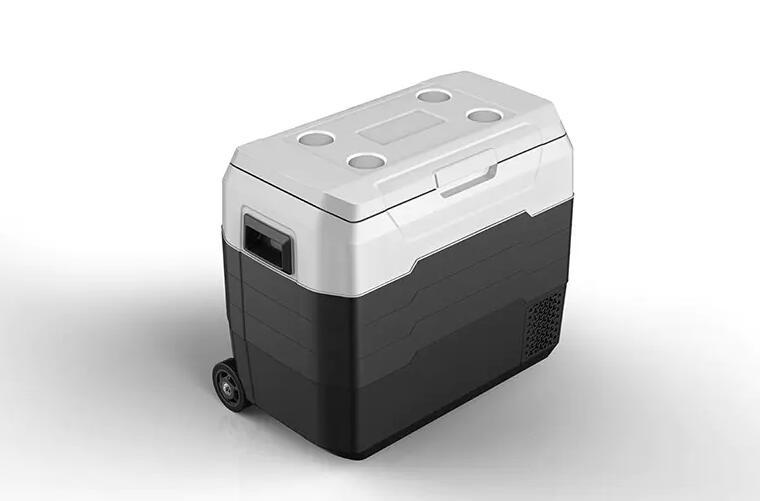
Today’s refrigerators, whether they’re a home refrigerator or a car freezer like a mobile car freezer, need these things: the liner, the insulation inserted between the two, the cooling system, the refrigerant, and the fixtures. Large refrigerator cabinets and doors are made of aluminum or steel, and are sometimes pre-painted. Metal is usually purchased in coil form and fed directly into the manufacturing process or cut to size and fed piece by piece. The inner cabinet is made of sheet metal, like the outer cabinet, or is made of plastic. The insulating material that fills the gap between the inner and outer cabinets consists of fiberglass or foam. The components of the cooling system (compressors, condensers, coils, fins) are made of aluminum, copper or alloys. The tube is usually copper because of the ductility of this metal - it can bend without breaking. Freon remains the most commonly used refrigerant, and nearly all large interior fixtures (doors and cabinet liners) are made of vacuum-formed plastic; smaller fixtures (butter compartments, egg trays, salad crispers) are Purchased as small plastic blanks or prefabs.
Contemporary refrigerators are based on two fundamental laws of physics: first, heat flows from warmer materials to cooler materials, not the other way around; second, lowering the pressure of gas also lowers its temperature. Although improvements have been made since Carre introduced his model in the late 19th century, these basic principles are still visible in refrigerators today.
A refrigerator works by removing heat from the air in the interior compartment and transferring it to the air outside. The coolant (Freon) completes this transfer as it passes through the loop, moving from the evaporator to the condenser. Starting from the evaporator located in an insulated cabinet, the freon is heated. Because it's already boiled, the freon absorbs heat from the air in the refrigerator. After absorbing this heat, Freon is then sent to the condenser. In this set of copper coils (usually installed on the back or bottom of a refrigerator), the freon condenses (returns to a liquid state) while transferring heat to the outside air. After cooling, the freon is returned to the evaporator, where it is heated again and begins to absorb heat from the food stored in the refrigerator. Sometimes, to increase their surface area (and thus facilitate heat transfer), evaporators and condensers are equipped with metal fins.
To defrost, wrap a coil around the freezer. When the timer hits defrost, the refrigerant passes through this coil while it's hot to raise the temperature and melt the ice. Coils are usually placed away from any ice maker to prevent ice cubes from melting and freezing together.
Zhejiang Yunge Electric Co., Ltd. is China-based car fridge freezer manufacturers, selling car electronic refrigerator, camping car freezers,s and other car refrigerators series all year round.

 English
 Arabic
 Français
 Português
 Deutsch
 Türkçe
 Dutch
Dutch
 Italiano
 Russian
 Romaian