


Additive Manufacturing Process
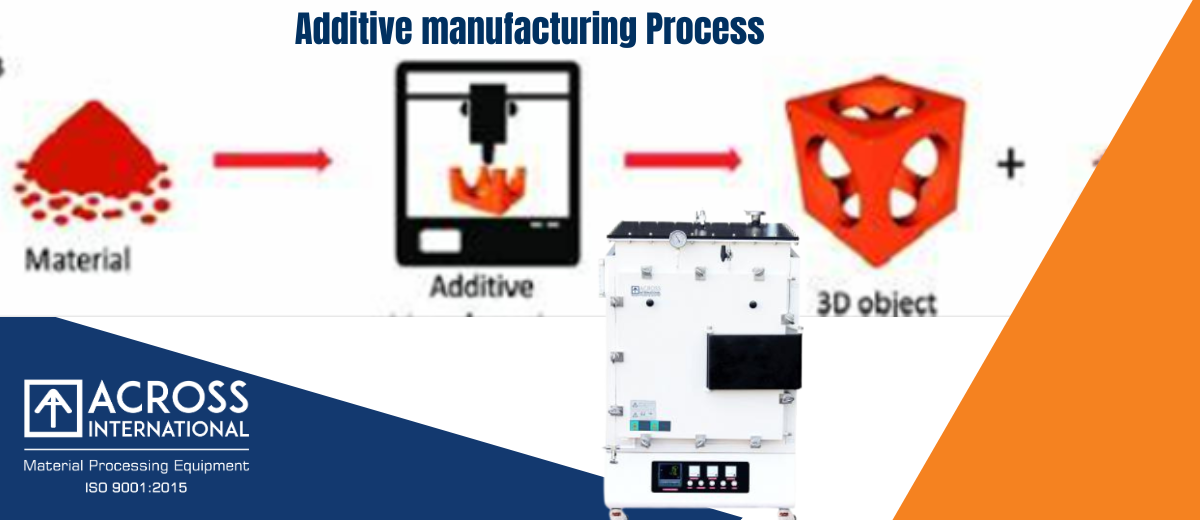
Additive manufacturing (AM), also commonly known as 3D printing, is a revolutionary process that creates objects layer by layer from a digital model. Unlike traditional subtractive manufacturing methods that remove material from a block, AM builds parts by adding material precisely where it's needed. This opens up a world of possibilities for creating complex geometries, lightweight structures, and customized designs.
There are two main approaches to achieving this: direct and indirect.
Direct Additive Manufacturing:
Builds the final object directly from the material, without the need for additional molds or tools.
Offers faster turnaround times and greater design freedom.
Examples include:
Powder Bed Fusion (PBF): Uses lasers or electron beams to melt and fuse powder particles into solid layers. Ideal for high-precision metal parts.
Common PBF techniques include:
Selective laser melting (SLM): Used for metals and some polymers.
Selective laser sintering (SLS): Used for polymers and some metals.
Electron beam melting (EBM): Used for metals with high melting points.
Directed Energy Deposition (DED): Melts and deposits material directly onto a substrate, suitable for large-scale metal structures and repairs.
Material Extrusion (MEX): Material extrusion, also known as fused deposition modeling (FDM), uses a heated nozzle to melt and deposit a filament of thermoplastic material. This process is widely used for desktop 3D printing due to its affordability and ease of use.
Melts and extrudes plastic filament to build objects layer by layer, popular for desktop 3D printing.
Vat Photopolymerization (VP): Cures liquid photopolymer resin layer by layer using a laser or projector, known for high accuracy and surface finish.
Indirect Additive Manufacturing:
Creates a mold using additive manufacturing first, then uses traditional casting or injection molding techniques to produce the final object.
Offers advantages like high production rates and compatibility with a wider range of materials.
Examples include:
Binder Jetting: Binder jetting uses a liquid binder to selectively bind powder particles together layer by layer. This process is relatively fast and cost-effective, but the parts may require post-processing for full strength.
Binds powder particles together with a liquid binder, then removes unbound powder. The printed mold is then used for casting or injection molding.
Sheet Lamination: Sheet lamination uses an adhesive to bond thin sheets of material together to create a 3D object. This process is primarily used for prototyping and low-volume production.
Cuts and bonds thin sheets of material layer by layer to create a mold. Ideal for low-cost prototyping and educational applications.
Read here more about Additive Manufacturing Process

 English
 Arabic
 Français
 Español
 Português
 Deutsch
 Türkçe
 Dutch
Dutch
 Italiano
 Russian