


Optimizing Matching Algorithm Efficiency: A Comprehensive Guide
Introduction
matching algorithm efficiency play a critical role in solving problems where pairing or assigning items is required. From finding the best ride on Uber to matching job applicants with roles, these algorithms influence various aspects of our daily lives. But the key to their effectiveness lies in their efficiency. Why? Because no one likes waiting for an app to load or for results to appear in critical scenarios.
In this article, we’ll explore what makes a matching algorithm efficient, the factors that influence its performance, and techniques to improve its functionality.
Basics of Matching Algorithms
What is a Matching Algorithm?
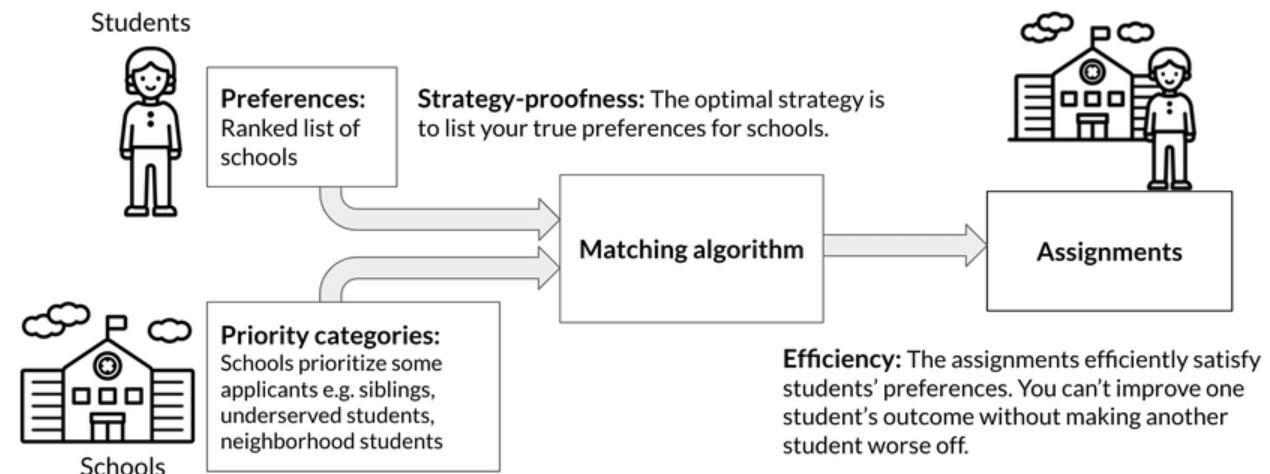
A matching algorithm is a computational method used to pair elements from two sets based on specific criteria. Examples include assigning tasks to workers, pairing buyers with sellers, or matching students to colleges.
Common Use Cases
-
E-commerce: Recommending products to users
-
Healthcare: Assigning patients to available doctors
-
Social Media: Suggesting connections or friends
Measuring Algorithm Efficiency
What is Algorithm Efficiency?
Efficiency refers to how well an algorithm performs, particularly in terms of speed (time complexity) and resource usage (space complexity).
Key Metrics
-
Time Complexity: How the processing time increases with input size.
-
Space Complexity: How much memory the algorithm requires during execution.
Factors Affecting Matching Algorithm Efficiency
Data Size and Structure
Large datasets or poorly structured data can slow down algorithms significantly.
Matching Criteria Complexity
Simple rules are faster to process, while complex, multi-criteria matching takes more resources.
Resource Availability
Hardware limitations can bottleneck even the most optimized algorithms.
Types of Matching Algorithms
Greedy Algorithms
These algorithms make the best possible decision at each step without revisiting earlier choices.
-
Use Case: Minimal cost pairings.
-
Pros: Fast and simple.
-
Cons: May not find the global optimum.
Dynamic Programming Algorithms
Dynamic programming breaks problems into smaller subproblems, solving each one only once.
-
Use Case: Optimal matching scenarios like the stable marriage problem.
-
Pros: Finds the best solution.
-
Cons: Can be resource-intensive.
Graph-Based Algorithms
Often used for complex matching scenarios like bipartite matching.
-
Use Case: Task assignment problems in logistics.
-
Pros: Handles complex relationships.
-
Cons: Computationally expensive for very large graphs.
Techniques to Improve Efficiency
Optimizing Data Structures
Using hash tables or balanced trees can speed up lookups and comparisons.
Preprocessing Input Data
Cleaning and organizing data before running the algorithm reduces processing time.
Parallel Processing
Distributing tasks across multiple processors can drastically cut down execution time.
Tools and Technologies
-
Optimization Software: Tools like MATLAB or specialized libraries streamline development.
-
Open-Source Libraries: Frameworks such as TensorFlow and Scikit-learn can assist in developing custom algorithms.
-
AI and Machine Learning: AI models can predict optimal matches, reducing computational overhead.
Real-World Applications of Matching Algorithms
Recommendation Systems
Streaming platforms like Netflix use matching algorithms to suggest content.
Job Applicant Tracking
ATS (Applicant Tracking Systems) match resumes to job descriptions efficiently.
Healthcare Resource Allocation
Matching algorithms optimize the assignment of resources like ICU beds or specialists.
Challenges in Improving Efficiency
Balancing Accuracy and Speed
Highly accurate algorithms may be slower, while faster ones might sacrifice some accuracy.
Handling Large-Scale Datasets
Scaling algorithms to handle millions of data points without losing performance is a common challenge.
Future Trends in Matching Algorithm Optimization
AI-Driven Matching Algorithms
Machine learning is enabling algorithms to adapt and improve over time.
Quantum Computing
Quantum technologies promise to solve complex matching problems exponentially faster than classical methods.
Conclusion
Efficient matching algorithms are the backbone of modern technology, powering everything from search engines to logistics networks. By understanding how to measure and improve their efficiency, businesses and developers can create faster, smarter, and more reliable systems.
FAQs
-
What is a matching algorithm?
It’s a method for pairing or assigning elements based on specific criteria. -
Why is efficiency important in matching algorithms?
Efficiency ensures faster processing, which is critical for user satisfaction and system performance. -
How can you measure the efficiency of an algorithm?
By analyzing its time complexity (speed) and space complexity (memory usage). -
What are common challenges in optimization?
Challenges include handling large datasets and balancing speed with accuracy. -
What role does AI play in improving matching algorithms?
AI enhances adaptability and scalability, enabling algorithms to learn and optimize over time.

 English
 Arabic
 Français
 Español
 Português
 Deutsch
 Türkçe
 Dutch
Dutch
 Italiano
 Romaian