


Understanding Modern Robotics: A Comprehensive Guide
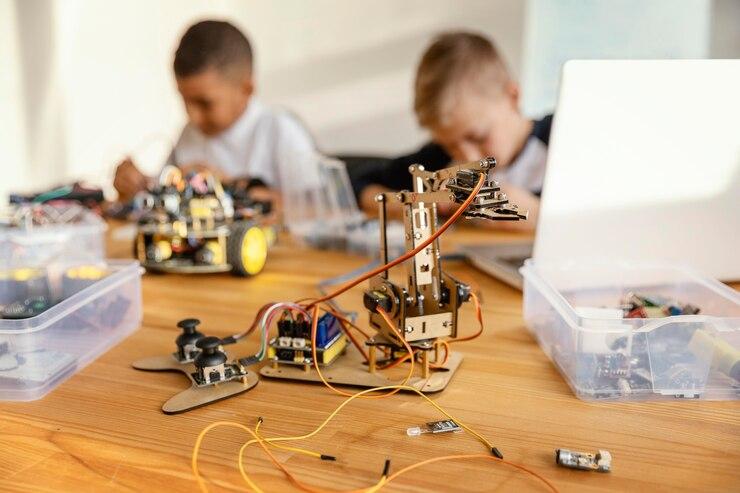
Robotics has emerged as one of the most transformative fields in modern technology, reshaping how we work, live, and interact with machines. This comprehensive guide explores the fascinating world of robotics education and its practical applications in today's rapidly evolving technological landscape. Course of Robotics
The Foundation of Robotics Education
At its core, robotics education combines multiple disciplines, including mechanical engineering, electrical engineering, computer science, and artificial intelligence. Modern robotics courses are designed to provide students with a solid foundation in these interconnected fields, preparing them for careers in automation, manufacturing, research, and development.
Essential Components of a Robotics Course
A comprehensive robotics curriculum typically includes:
Understanding the basic principles of mechanical systems is crucial for anyone entering the field. Students learn about actuators, sensors, and mechanical design principles that form the backbone of robotic systems. This knowledge enables them to design and build robots that can effectively interact with their environment.
The electrical components of robotics involve circuit design, power systems, and signal processing. Students gain hands-on experience working with microcontrollers, motors, and various types of sensors that enable robots to perceive and respond to their environment.
Programming and Control Systems
Robot programming forms a critical component of any robotics course. Students learn various programming languages commonly used in robotics, such as:
Python has become increasingly popular in robotics due to its simplicity and powerful libraries. It's particularly useful for rapid prototyping and implementing complex algorithms. C++ remains essential for low-level control and real-time applications where performance is crucial.
ROS (Robot Operating System) deserves special mention as it has become the de facto standard for robotics software development. Understanding ROS allows students to work with industry-standard tools and frameworks.
Advanced Topics in Modern Robotics
As students progress through their robotics education, they encounter more sophisticated concepts:
Machine Learning and AI Integration
Modern robotics increasingly incorporates artificial intelligence and machine learning algorithms. These technologies enable robots to learn from experience, adapt to new situations, and make intelligent decisions. Students learn about neural networks, reinforcement learning, and computer vision applications in robotics.
Robot Kinematics and Dynamics
Understanding how robots move and interact with their environment requires a strong foundation in kinematics and dynamics. This includes:
- Forward and inverse kinematics
- Path planning algorithms
- Dynamic control systems
- Motion optimization
Sensor Integration and Data Processing
Modern robots rely heavily on various types of sensors to understand and interact with their environment. Students learn about:
- Vision systems and cameras
- Force and torque sensors
- Inertial measurement units (IMUs)
- Distance sensors and LIDAR
Practical Applications and Projects
Hands-on experience is essential in robotics training. Students typically work on projects that might include:
Building autonomous mobile robots that can navigate complex environments teaches students about sensor integration, control systems, and real-world problem-solving. Developing robotic arms for manufacturing applications helps understand industrial automation principles and precision control.
Industry Applications and Career Opportunities
The field of robotics offers diverse career opportunities across multiple industries:
Manufacturing and Industrial Automation
Manufacturing remains one of the largest employers of robotics professionals. Engineers work on designing and maintaining automated production lines, implementing collaborative robots, and optimizing manufacturing processes.
Healthcare and Medical Robotics
The healthcare sector increasingly relies on robotic systems for surgery, rehabilitation, and patient care. This creates opportunities for specialists in medical robotics and healthcare automation.
Research and Development
Many robotics professionals work in R&D, pushing the boundaries of what's possible in areas like:
- Soft robotics
- Biomimetic systems
- Human-robot interaction
- Swarm robotics
Future Trends in Robotics Education
The field of robotics continues to evolve, and education must keep pace. Some emerging trends include:
Virtual and Augmented Reality Training
VR and AR technologies are being integrated into robotics education, allowing students to practice with virtual robots and simulate complex scenarios safely and cost-effectively.
Cloud Robotics and IoT Integration
Understanding how robots can leverage cloud computing and connect with IoT devices is becoming increasingly important. This includes topics like:
- Distributed computing
- Network protocols
- Data security
- Remote operation
Collaborative Robotics
The rise of collaborative robots (cobots) has created new educational requirements. Students must learn about:
- Human-robot interaction
- Safety systems
- Collaborative programming
- Workspace design
Best Practices for Learning Robotics
To succeed in robotics education, consider the following recommendations:
Develop a strong foundation in mathematics and physics, as these fundamentals are crucial for understanding advanced concepts. Start with simple projects and gradually increase complexity as you gain confidence and skills.
Join robotics communities and participate in competitions to gain practical experience and network with other enthusiasts and professionals.
Environmental and Ethical Considerations
Modern robotics education increasingly emphasizes:
- Sustainable design practices
- Energy efficiency
- Ethical considerations in automation
- Social impact of robotics
Conclusion
Course of Robotics continues to evolve as technology advances and new applications emerge. Whether you're a student, professional, or enthusiast, understanding the fundamentals while staying current with emerging trends is crucial for success in this dynamic field. The future of robotics presents endless opportunities for innovation and career growth, making it an exciting time to enter this transformative field.
Remember that successful robotics education combines theoretical knowledge with practical experience, problem-solving skills, and a commitment to lifelong learning. As the field continues to advance, those who maintain their curiosity and adaptability will be best positioned to contribute to the next generation of robotic innovations.

 English
 Arabic
 Français
 Español
 Português
 Deutsch
 Türkçe
 Dutch
Dutch
 Italiano
 Romaian