


Optimizing Pulse Repetition Rates in V-type Acousto-Optic Q-switch Drivers for High-Power Laser Systems
In the realm of high-power laser systems, achieving precise control over pulse repetition rates is critical for applications ranging from material processing to medical procedures. One of the key components enabling this control is the acousto-optic (AO) Q-switch, particularly the V-type configuration, which offers unique advantages in terms of efficiency and stability. Optimizing pulse repetition rates in these systems requires a deep understanding of the interplay between the laser cavity dynamics, the AO modulator, and the driver electronics.
The Role of V-Type AO Q-Switch Drivers
V-type AO Q-switch drivers are designed to modulate the laser cavity's Q-factor, allowing for the generation of high-energy pulses at controlled intervals. The "V-type" configuration refers to the specific arrangement of the acoustic wave and the laser beam, which minimizes insertion losses and maximizes diffraction efficiency. This design is particularly well-suited for high-power systems, where maintaining beam quality and energy efficiency is paramount.
Key Factors in Optimizing Pulse Repetition Rates
Acoustic Wave Frequency and Power: The frequency and power of the acoustic wave generated by the driver directly influence the Q-switch's performance. Higher frequencies enable faster switching times, allowing for higher pulse repetition rates. However, excessive power can lead to thermal effects that degrade the AO crystal, so a balance must be struck.
Laser Cavity Design: The length and gain of the laser cavity determine the natural pulse repetition rate. By matching the Q-switch driver's modulation frequency to the cavity's resonant frequency, optimal synchronization can be achieved, resulting in stable and efficient pulse generation.
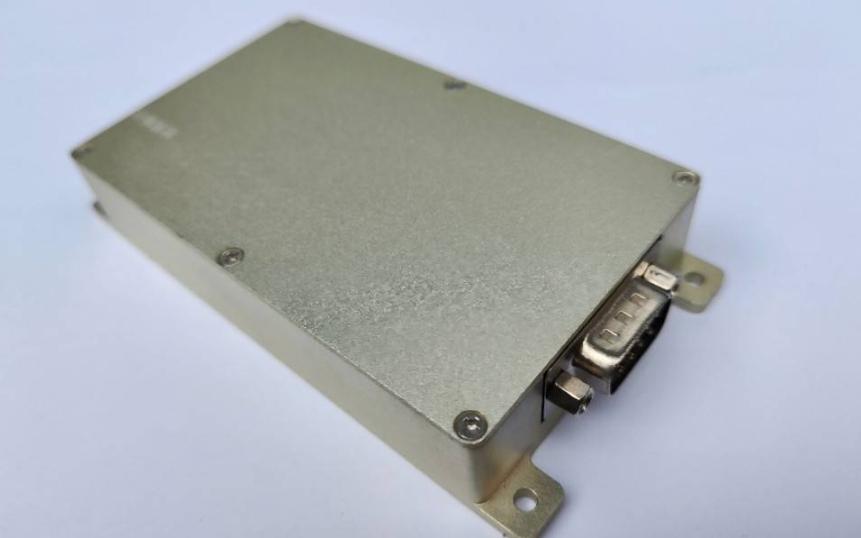
Driver Electronics: The quality of the driver electronics plays a crucial role in achieving precise control over pulse repetition rates. Advanced drivers incorporate feedback mechanisms to adjust the acoustic wave parameters in real-time, compensating for fluctuations in the laser system and maintaining consistent performance.
Thermal Management: High-power laser systems generate significant heat, which can affect the AO crystal's performance. Effective thermal management, including cooling systems and material selection, is essential to maintain optimal pulse repetition rates over extended periods.
Practical Considerations
In practice, optimizing pulse repetition rates involves iterative testing and fine-tuning. Engineers must consider the specific requirements of the application, such as pulse energy, duration, and stability. For example, in industrial cutting applications, high repetition rates with moderate pulse energy may be desired, while in scientific research, lower repetition rates with higher energy pulses might be preferable.
Conclusion
Optimizing pulse repetition rates in V-type AO Q-switch drivers for high-power laser systems is a multifaceted challenge that requires careful consideration of acoustic wave parameters, laser cavity dynamics, and thermal management. By leveraging advanced driver electronics and precise engineering, it is possible to achieve the high levels of control and efficiency needed for cutting-edge applications. As laser technology continues to evolve, the optimization of these systems will remain a key area of innovation, enabling new possibilities in science and industry.

 English
 Arabic
 Français
 Español
 Português
 Deutsch
 Türkçe
 Dutch
Dutch
 Italiano
 Russian