


5 Common Steering Mistakes That Are Ruining Your Lifted Truck's Handling
Lifting a solid-axle Chevy, Jeep, or Dodge is a rite of passage. But too often, we see builders spend thousands on suspension and tires, only to treat their steering as an afterthought. The result? A truck that looks great but drives like a shopping cart with a wobbly wheel.
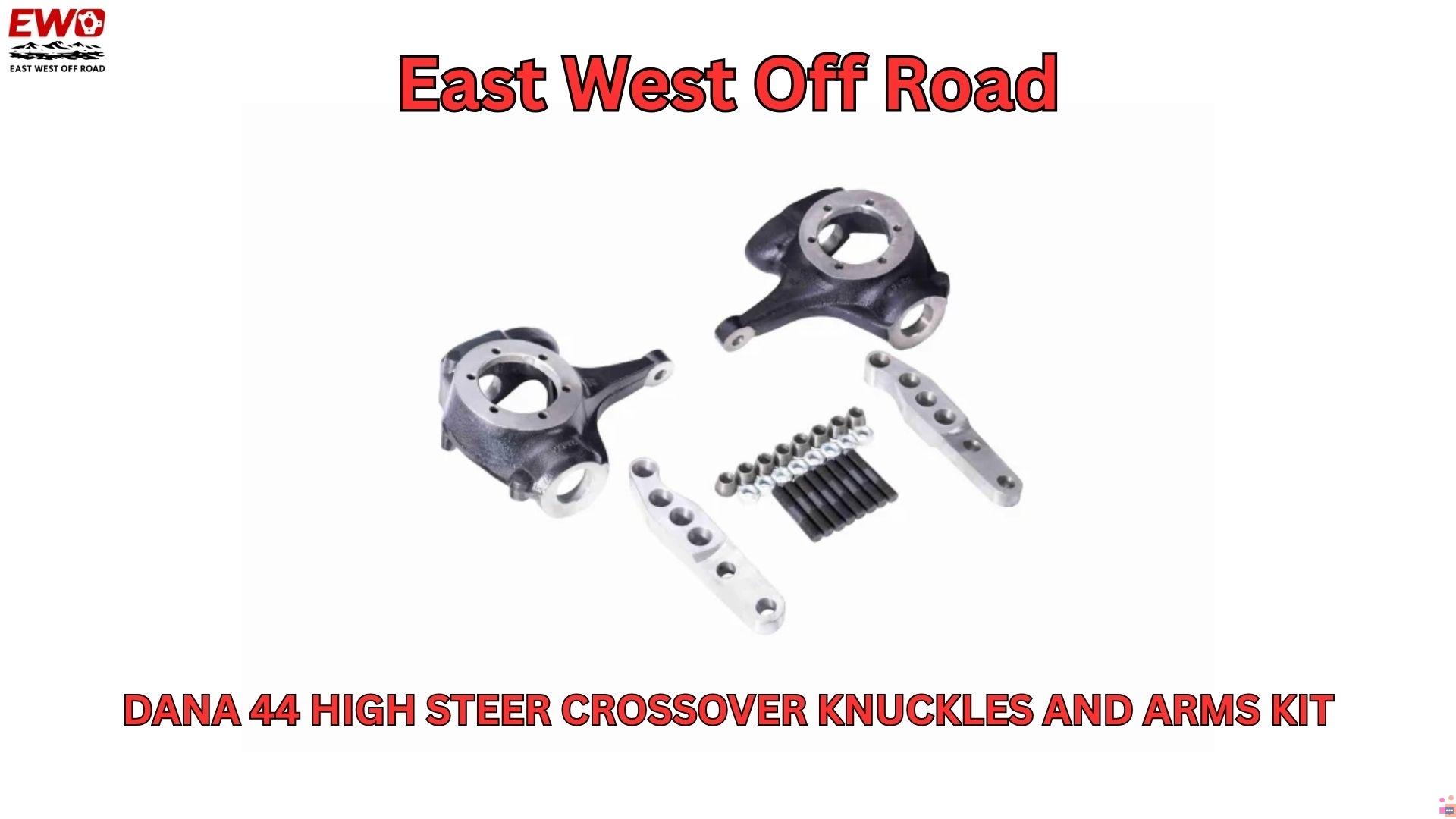
If your rig wanders on the highway or fights you on the trail, you are likely guilty of one of these 5 steering sins. Here is how to fix them with the (https://www.eastwestoffroad.com/product/dana-44-high-steer-crossover-knuckles-and-arms-kit).
Mistake #1: Keeping the "Push-Pull" Drag Link
The Error: Stock GM and Dodge trucks used a "Push-Pull" steering system where the drag link runs front-to-****. When you lift the truck, this link sits at a steep vertical angle. The Consequence: Every bump you hit pushes the drag link up or down, which forces the steering wheel to turn. This is Bump Steer. The Fix: Convert to Crossover Steering. Our kit moves the drag link to the passenger side knuckle, running it side-to-side. This flattens the angle and isolates the steering from suspension movement.
Mistake #2: Using "S" Shaped Drag Links
The Error: To correct the steep angle mentioned above, some people install a **** "S" shaped drag link. The Consequence: Steering components are strongest in a straight line. A **** bar acts like a spring. When you turn the wheel, the bar tries to straighten out (flex) before it actually turns the tires. This results in vague, "mushy" steering response. The Fix: Our High Steer Arms sit high enough that you can use a Straight Drag Link. This transfers 100% of your steering box input directly to the knuckles with zero flex.
Mistake #3: Leaving the Tie Rod Low
The Error: Leaving the tie rod in the stock position (under the knuckle) on a trail rig. The Consequence: The tie rod is the lowest hanging bar on your front end. One encounter with a stump or boulder will bend it into a pretzel, ruining your toe alignment and leaving you stranded. The Fix: High Steer Geometry. Our kit includes two arms (Driver and Passenger) that allow you to mount the tie rod on TOP of the knuckle, gaining you critical ground clearance and protecting the linkage.
Mistake #4: Trusting 40-Year-Old Castings
The Error: Reusing rusty, pitted factory knuckles found in a junkyard. The Consequence: Old gray iron knuckles are brittle. The stress of 35"+ tires and modern power steering can crack the casting ears or strip the threads. The Fix: Our kit uses Brand New USA-Made Nodular Iron Knuckles. These are cast from a modern ductile alloy designed to flex slightly under impact rather than shattering, providing a safety factor OEM parts can't match.
Mistake #5: Underestimating Clamping Force
The Error: Using standard bolts or a 3-stud setup for high steer arms. The Consequence: Steering generates massive shear forces. Standard bolts allow the arm to shift slightly on the knuckle, eventually shearing the studs off completely. The Fix: The Cone Washer System. Our kit uses 4 studs per arm with split conical washers. As you tighten the nuts, the cones compress and lock the arm to the knuckle, creating a mechanical friction fit that is virtually impossible to loosen.
Frequently Asked Questions (FAQ)
Q: Can I use this kit on a daily driver? A: Absolutely. In fact, correcting your geometry with Crossover Steering makes a lifted truck safer and more comfortable to drive on the highway than the stock setup.
Q: Does this kit work with leaf springs? A: Yes, this kit is specifically designed for leaf-sprung vehicles like the Chevy K5/K10/K20 and Jeep Wagoneers. The 1.25" thick arms are designed to clear most leaf spring packs.
Q: Do I need to weld anything? A: The knuckles and arms are 100% bolt-on. However, you will need to fabricate your new drag link and tie rod tubes (cutting and welding the threaded inserts), as every lift height and axle width varies slightly.
Q: Will my stock wheels fit? A: High steer arms take up space inside the wheel. We generally recommend 16" or larger wheels, or 15" wheels with low backspacing (3.75" or less) to ensure the tie rod ends don't rub the tire sidewall or rim.
Conclusion
Don't let poor geometry ruin your build. Fix all 5 of these mistakes in one afternoon with the East West Offroad Complete High Steer Kit. It’s the insurance policy your truck deserves.
Shop the Kit Here: 👉 (https://www.eastwestoffroad.com/product/dana-44-high-steer-crossover-knuckles-and-arms-kit)
Lifting a solid-axle Chevy, Jeep, or Dodge is a rite of passage. But too often, we see builders spend thousands on suspension and tires, only to treat their steering as an afterthought. The result? A truck that looks great but drives like a shopping cart with a wobbly wheel.
If your rig wanders on the highway or fights you on the trail, you are likely guilty of one of these 5 steering sins. Here is how to fix them with the (https://www.eastwestoffroad.com/product/dana-44-high-steer-crossover-knuckles-and-arms-kit).
Mistake #1: Keeping the "Push-Pull" Drag Link
The Error: Stock GM and Dodge trucks used a "Push-Pull" steering system where the drag link runs front-to-****. When you lift the truck, this link sits at a steep vertical angle. The Consequence: Every bump you hit pushes the drag link up or down, which forces the steering wheel to turn. This is Bump Steer. The Fix: Convert to Crossover Steering. Our kit moves the drag link to the passenger side knuckle, running it side-to-side. This flattens the angle and isolates the steering from suspension movement.
Mistake #2: Using "S" Shaped Drag Links
The Error: To correct the steep angle mentioned above, some people install a **** "S" shaped drag link. The Consequence: Steering components are strongest in a straight line. A **** bar acts like a spring. When you turn the wheel, the bar tries to straighten out (flex) before it actually turns the tires. This results in vague, "mushy" steering response. The Fix: Our High Steer Arms sit high enough that you can use a Straight Drag Link. This transfers 100% of your steering box input directly to the knuckles with zero flex.
Mistake #3: Leaving the Tie Rod Low
The Error: Leaving the tie rod in the stock position (under the knuckle) on a trail rig. The Consequence: The tie rod is the lowest hanging bar on your front end. One encounter with a stump or boulder will bend it into a pretzel, ruining your toe alignment and leaving you stranded. The Fix: High Steer Geometry. Our kit includes two arms (Driver and Passenger) that allow you to mount the tie rod on TOP of the knuckle, gaining you critical ground clearance and protecting the linkage.
Mistake #4: Trusting 40-Year-Old Castings
The Error: Reusing rusty, pitted factory knuckles found in a junkyard. The Consequence: Old gray iron knuckles are brittle. The stress of 35"+ tires and modern power steering can crack the casting ears or strip the threads. The Fix: Our kit uses Brand New USA-Made Nodular Iron Knuckles. These are cast from a modern ductile alloy designed to flex slightly under impact rather than shattering, providing a safety factor OEM parts can't match.
Mistake #5: Underestimating Clamping Force
The Error: Using standard bolts or a 3-stud setup for high steer arms. The Consequence: Steering generates massive shear forces. Standard bolts allow the arm to shift slightly on the knuckle, eventually shearing the studs off completely. The Fix: The Cone Washer System. Our kit uses 4 studs per arm with split conical washers. As you tighten the nuts, the cones compress and lock the arm to the knuckle, creating a mechanical friction fit that is virtually impossible to loosen.
Frequently Asked Questions (FAQ)
Q: Can I use this kit on a daily driver? A: Absolutely. In fact, correcting your geometry with Crossover Steering makes a lifted truck safer and more comfortable to drive on the highway than the stock setup.
Q: Does this kit work with leaf springs? A: Yes, this kit is specifically designed for leaf-sprung vehicles like the Chevy K5/K10/K20 and Jeep Wagoneers. The 1.25" thick arms are designed to clear most leaf spring packs.
Q: Do I need to weld anything? A: The knuckles and arms are 100% bolt-on. However, you will need to fabricate your new drag link and tie rod tubes (cutting and welding the threaded inserts), as every lift height and axle width varies slightly.
Q: Will my stock wheels fit? A: High steer arms take up space inside the wheel. We generally recommend 16" or larger wheels, or 15" wheels with low backspacing (3.75" or less) to ensure the tie rod ends don't rub the tire sidewall or rim.
Conclusion
Don't let poor geometry ruin your build. Fix all 5 of these mistakes in one afternoon with the East West Offroad Complete High Steer Kit. It’s the insurance policy your truck deserves.
Shop the Kit Here: 👉 (https://www.eastwestoffroad.com/product/dana-44-high-steer-crossover-knuckles-and-arms-kit)
5 Common Steering Mistakes That Are Ruining Your Lifted Truck's Handling
Lifting a solid-axle Chevy, Jeep, or Dodge is a rite of passage. But too often, we see builders spend thousands on suspension and tires, only to treat their steering as an afterthought. The result? A truck that looks great but drives like a shopping cart with a wobbly wheel.
If your rig wanders on the highway or fights you on the trail, you are likely guilty of one of these 5 steering sins. Here is how to fix them with the (https://www.eastwestoffroad.com/product/dana-44-high-steer-crossover-knuckles-and-arms-kit).
Mistake #1: Keeping the "Push-Pull" Drag Link
The Error: Stock GM and Dodge trucks used a "Push-Pull" steering system where the drag link runs front-to-back. When you lift the truck, this link sits at a steep vertical angle. The Consequence: Every bump you hit pushes the drag link up or down, which forces the steering wheel to turn. This is Bump Steer. The Fix: Convert to Crossover Steering. Our kit moves the drag link to the passenger side knuckle, running it side-to-side. This flattens the angle and isolates the steering from suspension movement.
Mistake #2: Using "S" Shaped Drag Links
The Error: To correct the steep angle mentioned above, some people install a bent "S" shaped drag link. The Consequence: Steering components are strongest in a straight line. A bent bar acts like a spring. When you turn the wheel, the bar tries to straighten out (flex) before it actually turns the tires. This results in vague, "mushy" steering response. The Fix: Our High Steer Arms sit high enough that you can use a Straight Drag Link. This transfers 100% of your steering box input directly to the knuckles with zero flex.
Mistake #3: Leaving the Tie Rod Low
The Error: Leaving the tie rod in the stock position (under the knuckle) on a trail rig. The Consequence: The tie rod is the lowest hanging bar on your front end. One encounter with a stump or boulder will bend it into a pretzel, ruining your toe alignment and leaving you stranded. The Fix: High Steer Geometry. Our kit includes two arms (Driver and Passenger) that allow you to mount the tie rod on TOP of the knuckle, gaining you critical ground clearance and protecting the linkage.
Mistake #4: Trusting 40-Year-Old Castings
The Error: Reusing rusty, pitted factory knuckles found in a junkyard. The Consequence: Old gray iron knuckles are brittle. The stress of 35"+ tires and modern power steering can crack the casting ears or strip the threads. The Fix: Our kit uses Brand New USA-Made Nodular Iron Knuckles. These are cast from a modern ductile alloy designed to flex slightly under impact rather than shattering, providing a safety factor OEM parts can't match.
Mistake #5: Underestimating Clamping Force
The Error: Using standard bolts or a 3-stud setup for high steer arms. The Consequence: Steering generates massive shear forces. Standard bolts allow the arm to shift slightly on the knuckle, eventually shearing the studs off completely. The Fix: The Cone Washer System. Our kit uses 4 studs per arm with split conical washers. As you tighten the nuts, the cones compress and lock the arm to the knuckle, creating a mechanical friction fit that is virtually impossible to loosen.
Frequently Asked Questions (FAQ)
Q: Can I use this kit on a daily driver? A: Absolutely. In fact, correcting your geometry with Crossover Steering makes a lifted truck safer and more comfortable to drive on the highway than the stock setup.
Q: Does this kit work with leaf springs? A: Yes, this kit is specifically designed for leaf-sprung vehicles like the Chevy K5/K10/K20 and Jeep Wagoneers. The 1.25" thick arms are designed to clear most leaf spring packs.
Q: Do I need to weld anything? A: The knuckles and arms are 100% bolt-on. However, you will need to fabricate your new drag link and tie rod tubes (cutting and welding the threaded inserts), as every lift height and axle width varies slightly.
Q: Will my stock wheels fit? A: High steer arms take up space inside the wheel. We generally recommend 16" or larger wheels, or 15" wheels with low backspacing (3.75" or less) to ensure the tie rod ends don't rub the tire sidewall or rim.
Conclusion
Don't let poor geometry ruin your build. Fix all 5 of these mistakes in one afternoon with the East West Offroad Complete High Steer Kit. It’s the insurance policy your truck deserves.
Shop the Kit Here: 👉 (https://www.eastwestoffroad.com/product/dana-44-high-steer-crossover-knuckles-and-arms-kit)
0 Comments
0 Shares
3K Views
0 Reviews


 Arabic
 Français
 Español
 Português
 Deutsch
 Türkçe
 Dutch
Dutch
 Italiano
 Russian
 Romaian