


How Brands Can Use WhatsApp Marketing During the FIFA World Cup
Every four years, something strange happens in India. A country that doesn't even have a team in the tournament turns into one of the most emotionally invested football audiences on the planet. Office chats fill up with match predictions. Friends argue over Messi versus Ronaldo. Local cafes put up big screens and fill every table on match nights. For a few weeks, football becomes the biggest conversation in the room — even in homes that don't follow the sport the rest of the year.
For brands, this is not just a fun cultural moment to post about on Instagram. It's a genuine business opportunity. And the channel best suited to capture it isn't a billboard, a TV spot, or even a social media feed — it's WhatsApp, the app that's already open on almost every Indian phone, in the very same chats where fans are already talking about the match.
Why the World Cup Is Different From a Normal Campaign Window
Most marketing campaigns have to work hard to create urgency. The World Cup already comes with it built in. Matches happen on fixed dates and times. Knockout rounds raise the stakes. A final creates a shared, almost national mood. People aren't just watching passively — they're planning watch parties, placing food orders, betting on outcomes in friendly group chats, and shopping for jerseys of teams they've never even visited.
And yet, this is exactly where a lot of brands fail to use the moment properly. Too many campaigns treat the World Cup as nothing more than a design theme: swap the colour scheme, add a football graphic, post a "good luck" creative, and call it a campaign. That approach might get a few likes or a passing glance, but it rarely gets a customer to do anything.
A campaign built only around visibility misses the real question a brand should be asking: what happens after someone sees this? Can they act on it right there? Can the brand keep talking to them once the tournament is over, or does the relationship end the moment the final whistle blows? Brands that only chase impressions during the World Cup usually walk away from it with nothing more than a folder of creatives and no real customer relationships to show for it.
Why WhatsApp Fits This Moment Better Than Other Channels
Think about how people actually experience a big match. They're switching between the TV, their phone, a food delivery app, and three different group chats — often at the same time. Their attention is scattered, but their interest is high.
Email feels too slow for this. A push notification gets lost. A social media post competes with a thousand others in the same feed. WhatsApp, on the other hand, is where people are already talking to their friends about the match. A message from a brand doesn't feel like an ad interrupting them — it fits naturally into a space they're already checking every few minutes.
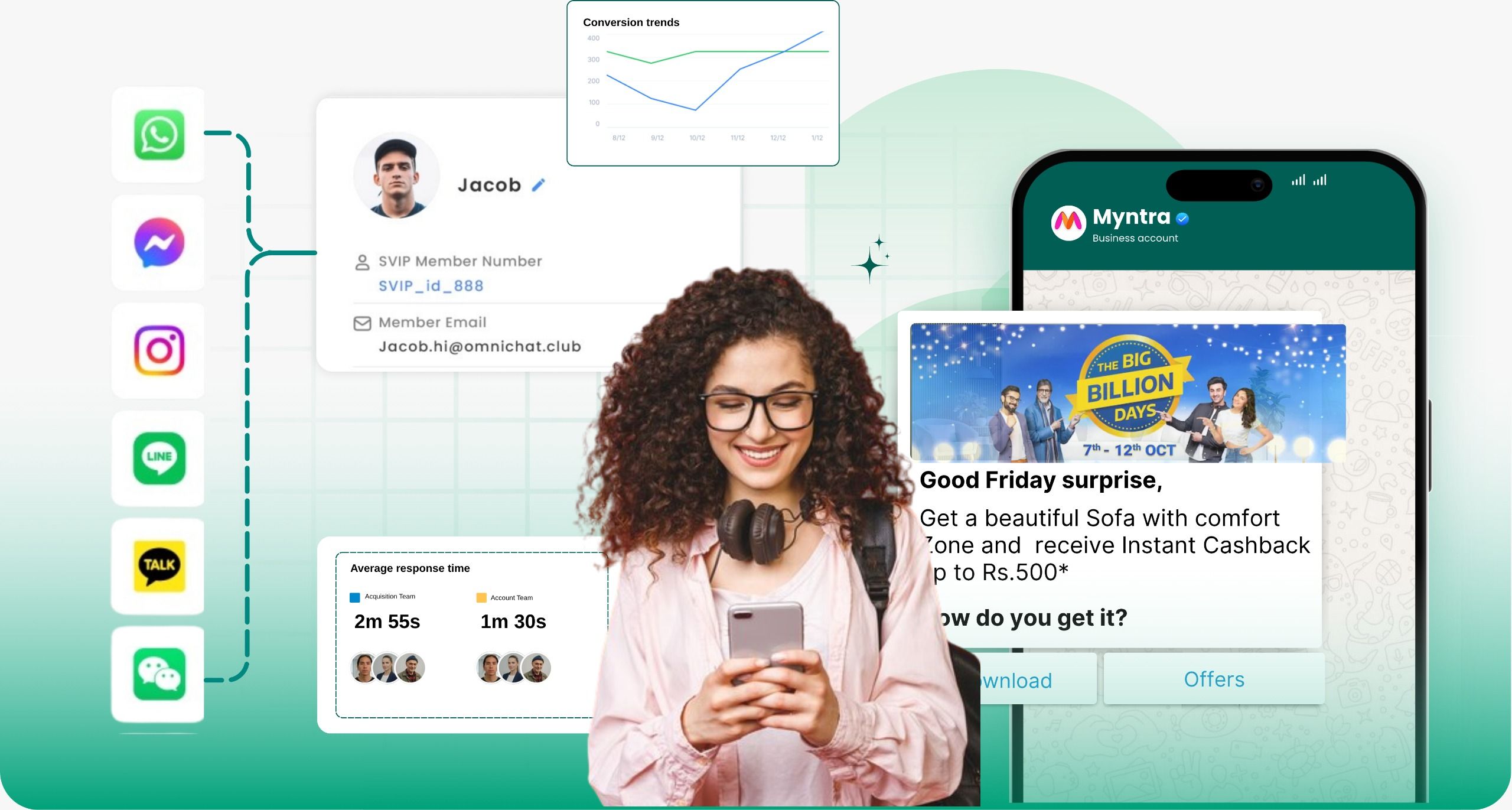
It also allows for far richer interactions than a plain text message. Businesses can send images, buttons, quick polls, product catalogues, and payment links, and build entire conversations instead of one-way blasts. That's a big difference from traditional SMS or email marketing, where the customer's only real option is to read and move on.
With the right setup, a business can automatically segment its audience, send different messages to different groups, hand off complicated queries to a human agent, and track exactly how each campaign is performing — all from one place, instead of juggling spreadsheets and multiple tools.
Practical Ways Brands Can Use WhatsApp Around the Tournament
Let fans choose what they want to hear about
Instead of sending every update to everyone, let users pick their favourite team, preferred language, and city right at the start of the conversation. A Brazil fan doesn't need updates about a match they don't care about, and someone only interested in the final doesn't want daily notifications for three weeks straight. This kind of preference-first approach protects the campaign from feeling like spam, because every message that follows is something the person actually asked to receive. It's a small step, but it's the difference between a list of engaged subscribers and a list of people waiting to hit "block."
Turn predictions into a game
People love being proven right, and football gives everyone an opinion to defend. A simple "who wins tonight" or "guess the scoreline" campaign, with a small reward like a discount code, loyalty points, or early access to a ****, keeps users coming **** before every big match. This is one of the easiest ways to create repeat engagement without repeat effort — the format stays the same, only the match changes. Over a full tournament, a brand can even build a leaderboard or reward users on a streak, which keeps people opening the chat match after match instead of just once.
Bring people in through short, one-tap journeys
A "Click-to-WhatsApp" style ad that takes someone straight from a social media post into a chat removes a lot of the friction of filling out a form on a separate landing page. In a normal campaign, every extra step — click, load a page, scroll, fill a form, wait for a callback — loses a share of the audience. During a live event, when attention spans are shorter than usual and a customer's interest can shift the moment the match restarts, that shortcut matters even more than it would in an ordinary campaign.
The Takeaway
The World Cup will be watched on television screens, but for a lot of Indian audiences, it will actually be experienced through conversations — in group chats, over shared predictions, and in plans made for watch parties. Brands that understand this and meet customers where those conversations are already happening, through simple, timely, and useful WhatsApp messages, stand to gain a lot more than the ones simply shouting the loudest on social media. The tournament gives every brand the same window of attention; what separates the ones who benefit from it is how well they turn that attention into an actual conversation to know more about it read the full blog.
For more information kindly visit - https://anantya.ai/


 English
 Arabic
 Français
 Español
 Deutsch
 Türkçe
 Dutch
Dutch
 Italiano
 Russian
 Romaian