


Machine Safety Market Restraints: How High Costs and Regulatory Variability Limit Industry Expansion
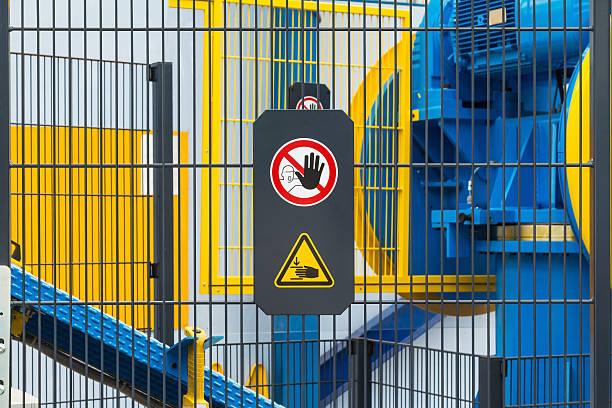
The machine safety market, a sector that focuses on ensuring safe operations of machinery in various industries, has witnessed significant growth over the past decade. As automation and digitalization continue to advance, safety standards and regulations are becoming increasingly important. While the industry offers numerous benefits, several restraints can hinder its expansion and development. In this article, we explore the key challenges facing the machine safety market, including high costs, technological limitations, regulatory complexities, lack of skilled personnel, and the resistance to change from traditional industries.
1. High Initial and Ongoing Costs
One of the primary constraints of the machine safety market is the high cost of implementing safety systems. Investing in state-of-the-art safety technologies such as safety sensors, interlock systems, and emergency stop mechanisms can be prohibitively expensive for many businesses, especially small and medium-sized enterprises (SMEs). Moreover, the cost doesn't stop at installation; ongoing maintenance, calibration, and the need for periodic updates add to the overall expenditure. For many companies, particularly those operating in cost-sensitive sectors, these financial burdens may outweigh the perceived benefits of enhancing machine safety.
2. Technological Limitations and Compatibility Issues
As technology advances rapidly, many older machinery models are not compatible with the latest safety systems. Retro-fitting these machines to comply with new safety standards often requires significant modifications or complete replacement of parts, which can be expensive and time-consuming. Furthermore, integrating newer safety technologies with existing legacy systems poses challenges in terms of software compatibility, communication protocols, and overall system performance. This technological mismatch becomes an obstacle for industries seeking to upgrade their operations to meet modern safety standards while trying to avoid significant downtime or productivity loss.
3. Regulatory Complexity and Variability
The machine safety market is heavily influenced by regulatory requirements that vary across regions and industries. Different countries have distinct safety standards, and navigating this complex regulatory landscape can be a daunting task for multinational organizations. Compliance with local safety regulations often requires continuous monitoring and adapting to changing laws, creating operational uncertainty. In some cases, companies may face difficulty meeting these regulations due to a lack of standardized procedures or guidance. Moreover, the absence of globally harmonized standards complicates the implementation of uniform safety systems across borders, making it challenging for companies to standardize their operations.
4. Shortage of Skilled Personnel
A major obstacle for the machine safety market is the shortage of qualified personnel capable of designing, implementing, and maintaining safety systems. Machine safety involves a deep understanding of both machinery and safety standards, requiring professionals with specialized knowledge in engineering, automation, and safety protocols. The growing demand for such skilled workers has outpaced the supply, leading to a talent gap. This shortage results in delays in system implementation, inefficiencies in machine safety management, and an increased risk of human error in ensuring that safety systems are correctly installed and maintained.
5. Resistance to Change and Adoption in Traditional Industries
Many industries, particularly those with longstanding practices, exhibit a resistance to adopting new safety technologies. These sectors may prioritize production efficiency over safety, viewing machine safety measures as an unnecessary or burdensome cost. In some cases, managers or workers may be hesitant to adopt new technologies due to a lack of understanding of their benefits or fear of disrupting established workflows. Additionally, businesses in traditional industries may be more inclined to continue using legacy machinery that is not designed to support modern safety systems, making it more challenging to integrate these technologies into existing operations. Overcoming this resistance requires education, awareness, and a demonstrated ROI on machine safety investments.
Conclusion
While the machine safety market is poised for growth, several restraints must be addressed for companies to fully realize the potential of enhanced safety technologies. High implementation costs, technological limitations, regulatory complexity, the shortage of skilled personnel, and resistance to change are significant barriers. Overcoming these challenges requires a combination of innovation, training, and regulatory alignment. By addressing these issues, the machine safety market can continue to grow and evolve, helping to safeguard workers and enhance operational efficiency across industries.

 Arabic
 Français
 Español
 Português
 Deutsch
 Türkçe
 Dutch
Dutch
 Italiano
 Russian
 Romaian