


Small Satellite Market Developments Include Ride-Sharing Launch Models and Onboard Processing Capabilities
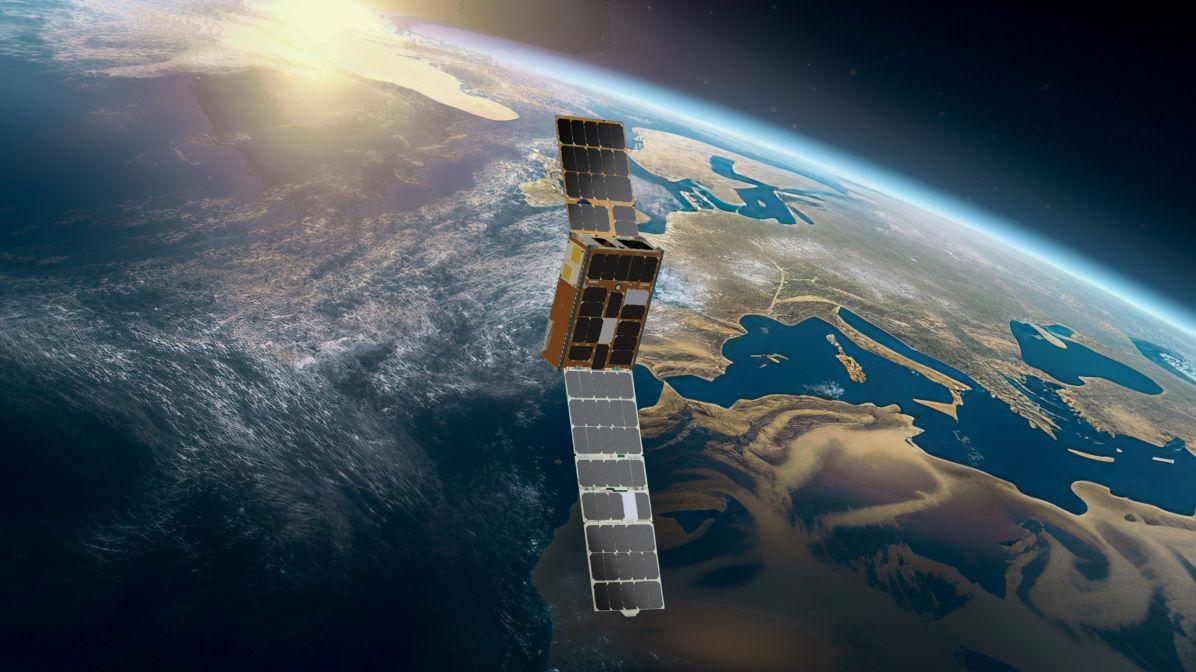
The Small Satellite Market is undergoing a remarkable evolution driven by two significant developments—ride-sharing launch models and onboard processing capabilities. As the number of small satellite missions grows, these advancements are streamlining deployment, reducing latency, and enhancing satellite autonomy. Ride-sharing models lower launch costs and increase access to space, while onboard processing boosts efficiency by enabling real-time analytics directly from orbit. Together, they are shaping the next era of satellite operations with more responsive, scalable, and intelligent missions across commercial, academic, and defense sectors.
Ride-Sharing Launch Models: Democratizing Access to Orbit
The concept of ride-sharing has transformed the economics of satellite launches. Instead of needing a dedicated rocket, small satellites can now hitch a ride alongside larger payloads or travel with other small satellites in batch missions.
Key Benefits of Ride-Sharing Launches:
-
Substantial cost reduction: Splitting launch costs among multiple customers
-
Higher launch frequency: More windows and locations for deployment
-
Accessible for startups and small missions
-
Flexible integration with various orbital parameters
Companies like SpaceX (via Transporter missions), Rocket Lab, and ISRO’s PSLV-Cubesat missions have championed this model, opening space access to a wide range of users.
Launch Aggregators and Brokers
Specialized aggregators and brokers are making it easier for small satellite operators to find and book launch slots. Providers like Spaceflight Inc., Exolaunch, and Momentus handle integration, regulatory approvals, and mission logistics, creating an end-to-end launch service.
These services are especially valuable for:
-
Research institutions with limited budgets
-
Governments from emerging space nations
-
Commercial players testing prototypes
By handling the technical and legal complexity, aggregators allow customers to focus on mission objectives.
Standardization Enabling Volume-Based Launching
Standardized satellite formats—particularly CubeSats—have been pivotal to the success of ride-sharing. With form factors like 1U, 3U, 6U, and 12U, launch providers can easily integrate multiple small payloads into a single mission.
This uniformity has enabled batch launches of:
-
Earth observation constellations
-
Educational satellites
-
Experimental payloads
-
Communications nodes
The result is a streamlined path to orbit and reduced time from design to deployment.
Onboard Processing: Shifting Intelligence to Orbit
Traditionally, satellite data would be sent to ground stations for processing—a time- and bandwidth-intensive process. However, recent advancements are enabling onboard data processing, allowing satellites to analyze data in orbit and only transmit actionable insights.
Advantages of Onboard Processing:
-
Reduced data transmission volume: Saves bandwidth and time
-
Faster decision-making: Real-time responses for defense, agriculture, or disaster monitoring
-
Enhanced privacy: Sensitive data can be processed and discarded in space
This development is especially important for missions where timeliness is critical—such as wildfire detection or enemy movement tracking.
Technologies Driving Onboard Intelligence
Advanced computing technologies are being miniaturized for use in space environments, enabling more capable satellites.
-
Field Programmable Gate Arrays (FPGAs) and AI chips are embedded for custom processing
-
Radiation-hardened edge computing platforms improve durability
-
Machine learning models are deployed for object detection, anomaly tracking, and image classification
Providers such as HyperSat, SatSure, and Capella Space are integrating onboard AI to extract insights without reliance on ground-based analytics.
Combined Impact on Mission Agility
Together, ride-sharing and onboard processing enhance the flexibility and responsiveness of satellite missions.
-
From design to deployment: Satellites can now launch within months, not years
-
From data capture to action: Results can be generated in minutes, not hours
-
From centralized control to autonomous operations: Satellites make in-orbit decisions based on real-time conditions
These shifts represent a move toward intelligent, autonomous constellations capable of responding to Earth-based events with unprecedented speed.
Challenges to Address
Despite their promise, these developments come with some limitations:
-
Orbital congestion: Shared launches can result in crowded orbits requiring precise coordination
-
Limited maneuverability: Ride-share payloads may not reach optimal orbital slots
-
Power and thermal limitations: Onboard processing demands more energy and thermal control systems
-
Radiation risks: Processing units need to survive harsh space conditions without malfunction
Continuous innovation in satellite design, AI software, and thermal regulation will be key to overcoming these barriers.
Market Impact and Expansion Potential
These technological shifts are enabling a broad range of new applications, including:
-
Real-time disaster alert systems
-
Smart agriculture with precision crop analytics
-
Defense surveillance with faster intelligence loops
-
Autonomous maritime tracking and logistics monitoring
Governments, startups, and enterprises are recognizing the competitive edge offered by faster, more intelligent satellite capabilities—driving further investment and innovation.
Conclusion: Evolving Toward Smarter, Faster Satellite Ecosystems
The Small Satellite Market is benefiting immensely from ride-sharing launch efficiencies and onboard intelligence. These developments empower organizations to deploy quickly and operate smarter in space. The upcoming article will explore Small Satellite Market Opportunities, focusing on how these capabilities are being used in climate tracking, disaster response, and precision agriculture.

 English
 Arabic
 Français
 Português
 Deutsch
 Türkçe
 Dutch
Dutch
 Italiano
 Russian
 Romaian