


Metric Length Conversion Made Simple – Your Everyday Guide
Let’s be real for a moment — converting metric lengths shouldn’t feel like decoding a secret language. Yet, so many people still find themselves stuck when switching between meters, centimeters, millimeters, and other units. I’ve been there too.
Whether you're planning a DIY home project, helping a child with school homework, or just measuring your new desk, understanding metric length conversion units saves time, prevents errors, and boosts confidence.
That’s why I decided to break it down in the simplest way possible. No scientific jargon. No complicated equations. Just real-world understanding.
What is Metric Length Conversion, Anyway?
Metric length conversion is all about switching between different units of length within the metric system — think millimeters (mm), centimeters (cm), meters (m), and kilometers (km). These units help us measure how long, tall, wide, or deep something is.
So, instead of guessing how big a room is or whether a box will fit in your car, you simply use the right unit — and if needed, convert it to another. Easy, right?
Why Metric System is Easier Than You Think
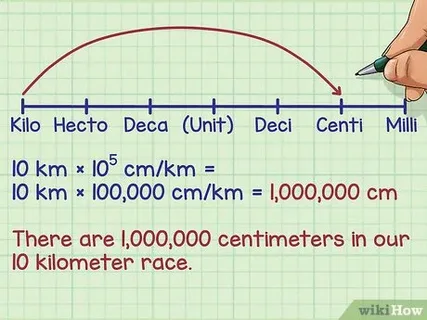
Here’s what I love most about the metric system: it’s all based on tens. Every unit is either 10 times bigger or smaller than the next. That means conversions are super straightforward — no need for 12 inches in a foot or 3 feet in a yard nonsense.
Let me explain:
-
10 mm = 1 cm
-
100 cm = 1 m
-
1,000 m = 1 km
Because it follows a logical pattern, once you understand one part of the system, the rest becomes a breeze.
The Most Common Metric Units You Should Know
You don’t need to memorize every metric unit ever invented. These four will cover 99% of what you’ll deal with in real life:
1. Millimeter (mm)
Used for: Super small stuff — think screws, pen tips, phone thickness.
A millimeter is one-thousandth of a meter. That means 1,000 mm = 1 meter.
2. Centimeter (cm)
Used for: Rulers, small lengths, heights of people, books, etc.
1 cm = 10 mm.
And 100 cm = 1 meter.
3. Meter (m)
Used for: Room dimensions, cloth measurements, sports fields.
This is the base unit in the metric system.
Everything else (like cm or km) connects back to meters.
4. Kilometer (km)
Used for: Long distances — running tracks, roads, map distances.
1 km = 1,000 meters.
Real-Life Examples You Can Relate To
To make this even clearer, let me walk you through some everyday scenarios where metric length conversion matters:
-
You’re buying fabric online. The website lists it in meters, but you’re used to thinking in centimeters. Just multiply the meters by 100, and you're good to go.
Example: 1.5 meters = 150 cm -
You measure your table and get 1200 mm. But your tape measure uses centimeters. No problem. Just divide 1200 by 10 to get 120 cm.
-
You’re checking your morning walk on your fitness app. It shows 2.4 kilometers. Want to know how many meters that is? Multiply 2.4 by 1,000. Boom — 2,400 meters.
See how easy it becomes once you understand the basic pattern?
How to Convert Between Metric Length Units
Now comes the practical part. Let’s go over how you can actually do the conversions — manually or with tools like Whatever Converter.
From Millimeters to Centimeters
Divide the millimeter value by 10.
Example: 60 mm → 60 ÷ 10 = 6 cm
From Centimeters to Meters
Divide by 100.
Example: 300 cm → 300 ÷ 100 = 3 m
From Meters to Kilometers
Divide by 1,000.
Example: 1,500 m → 1,500 ÷ 1000 = 1.5 km
And to go the other way?
Just multiply instead of divide.
That’s it. No tricky steps. Just move the decimal.
Tips to Remember Length Conversions Easily
I get it — numbers can be overwhelming. So here are some tips that help me remember metric conversions without even thinking:
-
“MCMK” Rule: Millimeter → Centimeter → Meter → Kilometer. Smallest to biggest.
-
Count the Zeros:
-
10 mm = 1 cm
-
100 cm = 1 m
-
1,000 m = 1 km
Just count the zeros while converting.
-
-
Use Visuals: Picture a ruler. That’s 30 cm. Now picture a car — about 4 meters long. That helps build a reference in your brain.
When Should You Use Which Unit?
Let’s make this crystal clear.
-
Use millimeters when precision matters, like measuring a phone case.
-
Use centimeters when measuring people or small objects.
-
Use meters when dealing with room sizes or furniture.
-
Use kilometers when you're on the road or measuring outdoor distances.
Once you match the right unit with the right use case, conversions happen naturally.
Can’t Remember It All? Use a Conversion Tool
Even after learning everything, sometimes you just don’t want to calculate. That’s where online tools like Whatever Converter come in. I personally use it all the time because:
-
It’s fast
-
It shows multiple units at once
-
It saves me from math mistakes
Just type your value, choose the unit, and let the tool do the rest.
Why You Should Teach This to Kids Early
Quick tip for parents or teachers: teach children metric length conversions in a fun way. Because the earlier they learn this, the easier their schoolwork and real-life measuring tasks will be.
Use building blocks, rulers, or everyday items to show them how long a centimeter or meter is. You’ll be surprised how fast they catch on.
Final Thoughts: Metric Conversion Doesn’t Have to Be Complicated
If you’ve ever felt frustrated converting between metric lengths, I hope this guide changed that for you. You now know:
-
What does each metric unit mean
-
How to convert between them
-
When to use each one
-
Why the system is your friend
And hey, you don’t have to remember all the numbers — just bookmark Whatever Converter and let it handle the math for you.
Written with love by Whatever Converter — the easiest way to convert any unit online.
Every number made simple. Every calculation is just a click away.
Let’s make measuring feel human again.
Let me know if you'd like a shorter version, image alt texts, internal link suggestions, or the same format adapted for another keyword.

 English
 Arabic
 Français
 Español
 Português
 Deutsch
 Türkçe
 Dutch
Dutch
 Italiano
 Romaian