


How Computer Vision is Revolutionizing Retail and E-commerce
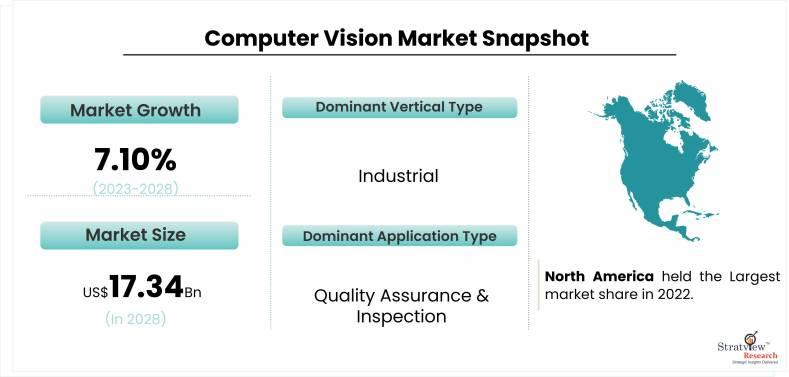
In today's digital era, technology has become an integral part of our lives, transforming various industries and sectors. One such area has witnessed a significant revolution in retail and e-commerce, thanks to the advancements in computer vision technology. Computer vision, a field of artificial intelligence, enables computers to interpret and understand visual information, empowering retailers, and e-commerce businesses with groundbreaking capabilities. According to a report by Stratview Research, the computer vision market is estimated to grow from USD 11.45 billion in 2022 to USD 17.34 billion by 2028 at a CAGR of 7.10% during the forecast period.
Enhanced Customer Experience:
Computer vision technology has revolutionized the way customers interact with retailers and e-commerce platforms. With the help of computer vision algorithms, businesses can now offer personalized product recommendations based on a customer's browsing and purchase history. By analyzing customer behavior and preferences, computer vision algorithms can understand the specific needs and interests of individual customers, resulting in more accurate recommendations and a tailored shopping experience.
Seamless Product Discovery:
Product discovery plays a vital role in the success of any retail or e-commerce business. With computer vision, retailers can enhance the product discovery process, making it more seamless and intuitive. By analyzing images and videos, computer vision algorithms can automatically tag and categorize products, allowing customers to search for items using visual cues rather than relying solely on text-based search queries. This approach simplifies the search process, reduces the time taken to find products, and ultimately improves customer satisfaction.
Visual Search Capabilities:
Computer vision has empowered retailers and e-commerce platforms with powerful visual search capabilities. Customers can now take a photo of a product they like or upload an image from the internet and find similar products available for purchase. Computer vision algorithms analyze the visual features of the image, such as color, shape, and texture, and match them with the existing product database, providing customers with accurate search results. This technology not only enhances the customer experience but also increases the chances of converting visual inspiration into actual sales.
Improved Inventory Management:
Effective inventory management is crucial for retail and e-commerce businesses to optimize costs and streamline operations. Computer vision technology can assist in automating inventory management processes by accurately tracking and monitoring stock levels in real time. With computer vision-enabled cameras and algorithms, retailers can automatically detect when shelves need restocking, identify misplaced items, and even monitor inventory levels during peak shopping hours. This helps businesses to optimize their inventory, reduce out-of-stock situations, and improve overall operational efficiency.
Loss Prevention and Security:
Computer vision also plays a crucial role in enhancing security measures and minimizing losses in retail and e-commerce environments. By utilizing computer vision algorithms, retailers can monitor in-store activities and identify suspicious behavior in real-time. This helps in detecting and preventing shoplifting, reducing shrinkage, and improving overall store security. Additionally, computer vision can be used to analyze customer movements, enabling businesses to optimize store layouts and product placements to maximize sales.
Conclusion:
Computer vision technology has ushered in a new era for the retail and e-commerce industry, transforming the way businesses operate and interact with customers. From enhancing the customer experience with personalized recommendations to revolutionizing product discovery with visual search capabilities, computer vision has become an invaluable tool for retailers. By leveraging this technology, businesses can streamline operations, optimize inventory management, and enhance security measures. As computer vision continues to advance, we can expect even more innovative applications in the retail and e-commerce sector, creating a more immersive and efficient shopping experience for consumers worldwide.

 English
 Arabic
 Français
 Español
 Português
 Deutsch
 Türkçe
 Italiano
 Russian
 Romaian