


How Functionality Testing Software Ensures Feature Reliability Before Release?
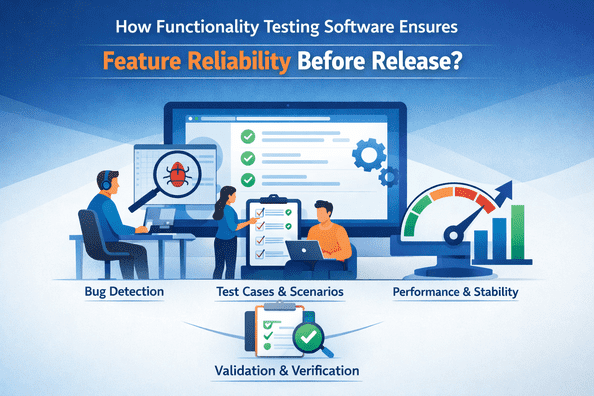
In today’s fast-paced software development landscape, delivering reliable features quickly is critical. Agile methodologies and continuous delivery pipelines demand that every feature undergo thorough validation before it reaches end users. This is where functional testing software plays a vital role. Unlike ad-hoc manual testing, these tools provide a structured way to verify that each feature behaves as expected under real-world conditions.
Why Feature Reliability Matters
Every software release carries a risk: even small bugs can lead to significant user frustration, revenue loss, or operational disruption. Functional testing software helps mitigate these risks by systematically verifying that new or updated features meet their functional requirements. This ensures that development teams can deploy confidently without compromising quality.
Core Capabilities of Functional Testing Software
Effective functional testing software typically offers:
-
Test Script Creation and Management: Allows teams to define reusable test cases that cover both standard workflows and edge cases.
-
Automated Execution: Reduces manual effort and ensures tests can run consistently across different environments.
-
Reporting and Analytics: Provides insights into test coverage, failure patterns, and potential risk areas.
-
Integration With CI/CD Pipelines: Enables automated testing as part of build and deployment workflows.
By combining these capabilities, functional testing software ensures that every feature is validated thoroughly before release.
Reducing Regression Risk
One of the biggest challenges in modern software development is regression—where new changes inadvertently break existing functionality. Functional testing software addresses this by:
-
Maintaining regression test suites that run automatically whenever code changes
-
Identifying which existing features are impacted by new updates
-
Highlighting failures early in the development cycle, reducing the cost and effort of fixes
When integrated with test automation practices, functional testing software significantly reduces regression risk while accelerating release cycles.
Supporting Test Automation Strategies
Functional testing software is a cornerstone of effective test automation. By automating repetitive and high-priority test cases, teams can focus manual testing efforts on exploratory and complex scenarios. This synergy ensures that:
-
Critical workflows are consistently validated
-
Test execution is faster and more reliable
-
Developers receive immediate feedback on potential issues
Modern tools, including solutions like Keploy, even allow recording real-world usage to generate automated test cases, ensuring functional testing stays aligned with actual user behavior.
Enhancing Confidence Through CI/CD Integration
CI/CD pipelines are central to continuous delivery, but they only provide value if testing is integrated effectively. Functional testing software fits into CI/CD pipelines by:
-
Automatically executing tests on every commit or build
-
Generating clear, actionable reports for developers and QA teams
-
Serving as a gate for feature promotion, ensuring only reliable code reaches production
This integration helps teams maintain high confidence in each release, even when changes are frequent and complex.
Measuring Effectiveness and Coverage
Functional testing software often includes metrics that allow teams to assess test coverage and effectiveness. Key indicators include:
-
The proportion of features covered by automated tests
-
Frequency of test failures and recurring defects
-
Test execution time and reliability
By monitoring these metrics, teams can continuously improve their functional testing approach and maintain high release quality over time.
Conclusion
Functional testing software is essential for ensuring feature reliability before release. By providing structured test management, automated execution, regression risk reduction, and seamless integration with CI/CD pipelines, these tools help teams deliver high-quality software consistently. When used effectively alongside test automation practices, functional testing software not only improves confidence in each release but also accelerates development velocity, allowing organizations to respond quickly to market demands without compromising quality.

 English
 Français
 Español
 Português
 Deutsch
 Türkçe
 Dutch
Dutch
 Italiano
 Russian
 Romaian