


Layout Systems Every Developer Should Master
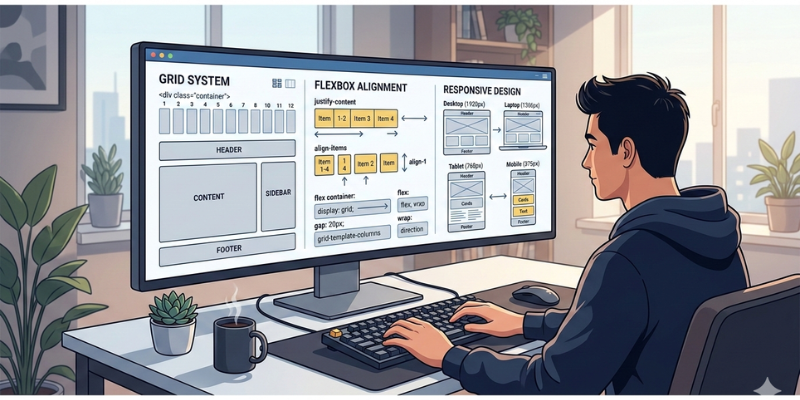
Modern web interfaces rely on strong layout systems to organize content clearly and create smooth user experiences. A good layout ensures that elements appear in the right place, adapt to different screen sizes, and remain visually balanced. When developers understand layout fundamentals, they can design interfaces that are flexible, maintainable, and easy to scale.
Every full stack developer benefits from learning how layout structures work behind the scenes. From simple page alignment to complex responsive designs, layout systems form the backbone of user interfaces. If you want to build a solid understanding of these foundations and apply them in real projects, you can consider enrolling in the Full Stack Developer Course in Mumbai at FITA Academy to strengthen your practical skills.
Why Layout Systems Matter in Web Development
Layout systems control how elements appear and interact on a page. Without them, web pages would look inconsistent and difficult to navigate. Developers rely on layout structures to maintain alignment, spacing, and visual hierarchy across different devices.
A well designed layout improves usability and helps users find information quickly. It also helps teams maintain consistency when working on large applications. When developers follow established layout principles, they can avoid messy styling and create interfaces that remain predictable even as the project grows.
Layout systems also support responsive design. Websites today must adapt to phones, tablets, laptops, and large screens. Understanding layout foundations allows developers to build designs that adjust naturally to different screen sizes while maintaining readability and structure.
Core Layout Systems Every Developer Should Know
Several layout approaches form the core of modern web development. Each one solves different design challenges and plays a role in building flexible interfaces.
Block based layouts are the starting point. In this approach, elements stack vertically and follow the natural flow of a document. This structure is simple but forms the base for understanding spacing, margins, and alignment.
Flexbox introduces a more dynamic layout model. It allows developers to control how elements align in rows or columns and how they distribute space. Flexbox is especially useful for navigation bars, card layouts, and interface components that require flexible alignment.
Grid layouts provide two dimensional control. Developers can organize elements into rows and columns with precise positioning. This approach works well for dashboards, galleries, and complex page structures.
Mastering these layout techniques allows developers to design pages that are structured, scalable, and responsive. If you want guided learning and practical experience with these concepts, you can explore structured programs like the Full Stack Developer Course in Kolkata to practice building real world layouts with modern tools.
Choosing the Right Layout for Your Project
Selecting the right layout system depends on the design requirements of a project. Some interfaces require simple stacking structures, while others need advanced grid based organization.
Flexbox works well for smaller interface components that need alignment and spacing control. It is commonly used for navigation menus, buttons, and content cards. Grid layouts are more suitable when designing entire page structures that require both rows and columns.
Developers often combine multiple layout systems in a single project. A grid can control the overall page structure while flexbox manages smaller sections within the layout. This layered approach creates flexible designs that are easier to maintain.
Understanding when to use each system allows developers to write cleaner styles and build layouts that remain consistent across devices.
Layout systems are a fundamental skill for every developer who wants to build professional web applications. They provide the structure that organizes content, improves usability, and supports responsive design. When developers master layout concepts, they gain the ability to design interfaces that are both visually appealing and technically reliable.
Learning these systems early helps developers avoid common design problems and build scalable user interfaces. If you want to deepen your full stack development knowledge and apply layout concepts in practical projects, consider signing up for the Full Stack Developer Course in Delhi to develop strong real world development skills.
Also check: Dockerizing a Full Stack App for Easier Deployment

 English
 Arabic
 Français
 Español
 Português
 Deutsch
 Türkçe
 Italiano
 Russian
 Romaian