


Comparing Different Types of Used Oil Distillation Machine Technologies
Used oil distillation machines are essential equipment for recycling waste oils into reusable fuel or base oil. As environmental regulations tighten and the demand for sustainable energy solutions grows, more industries are turning to used oil distillation technology. However, there are several different types of distillation systems available on the market, each with unique advantages and operational characteristics. Understanding these technologies can help businesses choose the most suitable solution for their recycling needs.
Atmospheric Distillation Technology
Atmospheric distillation is one of the most traditional and widely used technologies in used oil recycling. This method operates at normal atmospheric pressure and separates oil components based on their boiling points. During the process, used oil is heated until various fractions evaporate and then condense into different products.
The main advantage of atmospheric distillation systems is their relatively simple design and lower initial investment cost. They are often suitable for small- to medium-scale recycling facilities that process moderate volumes of waste oil. However, because the process requires higher temperatures, there is a greater risk of thermal cracking and carbon formation, which may reduce the quality of the recovered oil.
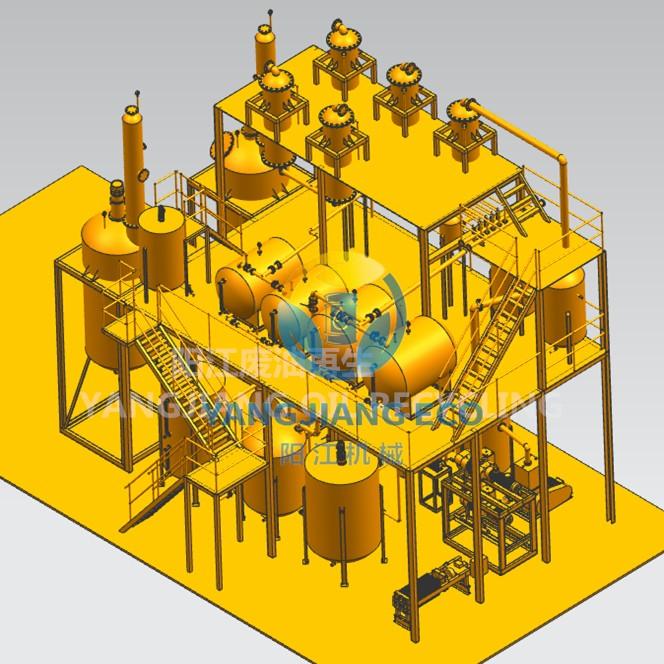
Vacuum Distillation Technology
Vacuum distillation technology operates under reduced pressure, allowing oil components to evaporate at lower temperatures compared to atmospheric systems. This lower-temperature process helps protect the molecular structure of the oil and results in higher-quality base oil products.
One of the key benefits of vacuum distillation machines is their improved efficiency and product quality. The reduced temperature minimizes oxidation and coke formation inside the equipment, extending the lifespan of the system. Although vacuum distillation systems require more complex equipment and higher investment, they are widely considered the preferred choice for large-scale used oil recycling plants that aim to produce high-quality regenerated oil.
Thin Film Evaporation Technology
Thin film evaporation technology represents a more advanced form of used oil distillation. In this system, the oil forms a very thin film on a heated surface while rotating blades spread the oil evenly. Because the oil layer is extremely thin, heat transfer becomes highly efficient and evaporation occurs rapidly.
This technology offers several advantages, including shorter residence time, reduced thermal degradation, and improved separation efficiency. Thin film evaporators are particularly effective when processing oils with high contamination levels or heavy residues. However, the equipment is more sophisticated and requires higher capital investment and skilled operation.
Molecular Distillation Technology
Molecular distillation is an advanced vacuum-based separation technology that operates at extremely low pressures. It relies on the difference in molecular mean free paths rather than traditional boiling point differences to separate components.
The biggest advantage of molecular distillation is its ability to produce extremely high-purity base oils with minimal thermal damage. Because the process occurs at very low temperatures and pressures, sensitive compounds can be separated without decomposition. However, molecular distillation systems are significantly more expensive and are typically used in high-end refining applications rather than standard waste oil recycling operations.
Choosing the Right Technology
Selecting the appropriate used oil distillation technology depends on several factors, including production capacity, desired product quality, investment budget, and feedstock composition. Atmospheric systems may work well for smaller operations, while vacuum or thin film technologies are often better suited for facilities aiming for higher efficiency and better oil recovery rates.
Ultimately, the right distillation machine should balance operational cost, product quality, and long-term reliability. By understanding the differences between these technologies, businesses can make more informed decisions when investing in used oil recycling equipment.

 English
 Arabic
 Français
 Español
 Português
 Deutsch
 Türkçe
 Dutch
Dutch
 Italiano
 Romaian