


From Shaky Ground to Solid Structures — How Mumbai Builders Get It Right From Day One
A developer in Andheri once noticed hairline cracks forming across his newly completed ground floor just eight months after possession. Investigations revealed uneven soil settlement beneath the plinth. The root cause? Inadequate foundation design on waterlogged fill soil. Stories like this are not rare in Mumbai. They are warnings. And the most effective way to avoid them is to invest in the right foundation system before construction begins, not after problems surface. If you are a builder, structural consultant, or project developer, understanding pile foundation services in Mumbai is no longer optional. It is a fundamental part of responsible construction planning in this city. Vijay Infra has spent years solving exactly these ground-level challenges for clients across Mumbai and the broader MMR region. This article walks you through everything you need to know clearly, honestly, and practically.
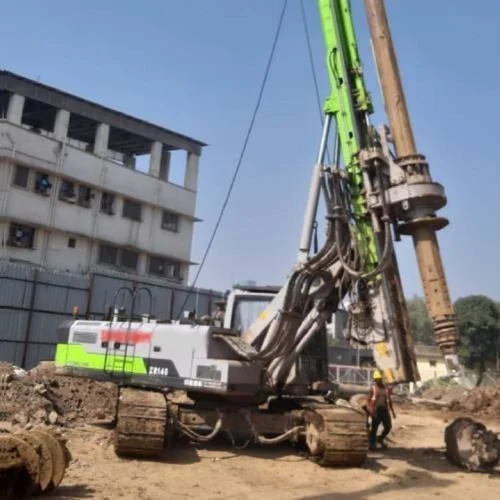
Why Mumbai's Ground Conditions Make Piling Non-Negotiable
Mumbai is not built on simple, stable ground. The city's rapid expansion has pushed development onto reclaimed land, coastal fringes, creek-side plots, and low-lying zones — all of which carry significant geotechnical risk.
Here is what makes Mumbai's soil uniquely challenging:
-
Reclaimed land zones (parts of South Mumbai, BKC, and Bandra) have loose, unconsolidated fill with very low bearing capacity
-
Marine clay deposits found in Navi Mumbai and Thane compress significantly under structural loads
-
High water table across western suburbs affects foundation stability year-round
-
Basalt rock appears at shallow depth in some eastern zones, requiring different piling approaches
These conditions vary sharply — even within the same ward. That is why deep foundation services Mumbai specialists must always begin with a proper soil investigation before recommending any foundation system.
What Makes Pile Foundations the Preferred Choice Here
A pile foundation bypasses weak upper soil by transferring structural loads to deeper, stable strata. Unlike spread footings or raft foundations that rely on surface soil, piles go down — sometimes 15, 25, or even 40 metres — to find reliable ground.
Two core mechanisms make this work:
End-bearing capacity: The pile tip rests on hard rock or dense gravel, directly transferring load to that firm base.
Skin friction: Load distributes along the full pile length through friction between the pile surface and surrounding soil layers.
Both approaches are used across Mumbai depending on site-specific data. Vijay Infra, as a leading piling company in Mumbai, determines the right mechanism only after reviewing bore logs, SPT values, and geotechnical lab reports — never through assumptions or shortcuts.
Full Spectrum of Piling Services Provided by Vijay Infra
Vijay Infra functions as a full-service pile foundation company, offering multiple pile types to match diverse site conditions and structural requirements across Mumbai:
Bored Cast-In-Situ Piles
These are formed by drilling a hole, inserting a reinforcement cage, and filling with M25 or higher grade concrete. They generate minimal vibration — making them ideal for Mumbai's congested urban neighbourhoods.
Driven Precast Concrete Piles
Factory-manufactured piles driven into the ground using hydraulic hammers. They suit sites with consistent soil profiles and deliver faster mobilisation timelines.
Micro Piles
Small-diameter, high-capacity piles for constrained access sites. Excellent for underpinning existing structures, heritage buildings, or basement retrofitting projects in older Mumbai localities.
Under-Reamed Piles
These feature bell-shaped enlargements at the base, dramatically increasing load resistance. They perform well in expansive black cotton soils found in parts of the MMR periphery.
Large Diameter Bored Piles
Used for bridges, flyovers, heavy industrial foundations, and high-load commercial towers where conventional pile sizes are insufficient.
As a trusted foundation contractor Mumbai professionals depend on, Vijay Infra selects pile type based purely on engineering data — never based on convenience or cost-cutting.
How Vijay Infra Executes Every Piling Project
Vijay Infra follows a structured, transparent project delivery model that clients across Mumbai have come to rely on:
Geotechnical Investigation Bore holes are drilled, soil samples are collected, and SPT tests are conducted. Laboratory analysis determines bearing capacity, settlement characteristics, and groundwater depth.
Foundation Design Structural engineers design pile diameter, depth, spacing, and reinforcement to match the column load schedule and soil report. All designs follow IS 2911 guidelines strictly.
Mobilisation and Setup Modern hydraulic rigs, tremie pipes, and concreting equipment are mobilised to site. Temporary casing is installed where needed to prevent borehole collapse.
Pile Installation Drilling, cage insertion, and concreting proceed pile by pile. Every pile is logged for depth, concrete volume, and reinforcement details.
Load Testing and Documentation Static and dynamic load tests verify pile performance. Vijay Infra provides certified load test reports, pile completion certificates, and as-built drawings — essential for MCGM approvals and bank disbursements.
This end-to-end discipline is what defines genuine foundation engineering services Mumbai clients need not partial services or outsourced execution.
A Ground-Level Example: Vasai Commercial Complex
A real estate developer approached Vijay Infra for a six-storey commercial building in Vasai West. The soil report revealed soft silty clay up to 22 metres depth with SPT values below 5 in several layers completely unsuitable for any shallow foundation system.
Vijay Infra designed 450mm diameter bored piles extending to 26 metres, resting on a firm sandy stratum identified in the bore log. The team installed 96 piles across the plot within 32 working days. Post-installation load tests confirmed pile capacity exceeded design requirements by an acceptable margin.
The client received full documentation, and the building proceeded to superstructure without a single foundation-related concern. This is exactly what professional pile foundation services in Mumbai should deliver engineering certainty, not hopeful guesses.
Compliance and Standards Vijay Infra Follows
Vijay Infra aligns every project with the Bureau of Indian Standards IS 2911: Code of Practice for Design and Construction of Pile Foundations. This covers:
-
Minimum concrete mix grades (M25 and above for structural piles)
-
Reinforcement cover and lap requirements for pile cages
-
Permissible pile head deviation during installation
-
Load test frequency — one initial load test per 100 piles minimum
-
Pile integrity testing using low-strain sonic echo methods
Compliance with these standards protects the developer legally, satisfies structural auditors, and ensures long-term performance of the foundation system.
Hear It From Mumbai's Own Builders
"We compared four piling contractors before finalising Vijay Infra for our Mira Road project. Their geotechnical report was thorough, their equipment was modern, and the site engineer never left the project unsupervised. Delivered on time, no surprises. Exactly what we needed." — Hemant Joshi, Director, HJ Constructions, Mira Road
"Vijay Infra handled a tricky site for us in Ulwe — high water table, restricted access, and tight timelines. They managed everything professionally. If you need a reliable piling contractor in Mumbai, these are the people to call." — Nisha Kulkarni, Senior Civil Engineer, Navi Mumbai
FAQs — Pile Foundation Services in Mumbai
Q1. How do I know if my site in Mumbai needs pile foundations? A soil investigation report will answer this definitively. Generally, sites with SPT values below 10 in upper strata or soft clay deposits require deep foundations. Vijay Infra can arrange soil investigation as part of its service scope.
Q2. What is the typical cost of piling work in Mumbai? Costs depend on pile type, diameter, depth, quantity, and site access. Vijay Infra provides detailed, itemised quotations after reviewing the soil report and structural drawings no vague estimates.
Q3. Can Vijay Infra work on residential plots as well as commercial projects? Yes. Vijay Infra handles everything from individual bungalow plots to large residential towers, commercial complexes, and infrastructure projects across Mumbai and MMR.
Q4. How many piles does a typical Mumbai building require? It varies by column layout, load intensity, and pile capacity. A mid-size residential building typically needs between 40 and 150 piles. Vijay Infra provides pile layout drawings as part of the project package.
Q5. Does Vijay Infra handle projects outside Mumbai? Yes. While Mumbai remains a core market, Vijay Infra also undertakes projects across Thane, Navi Mumbai, Pune, Nashik, and other Maharashtra districts.
Conclusion: Your Project Is Only as Strong as What Lies Beneath
Mumbai's skyline is impressive. But every tower, warehouse, bridge, and commercial hub standing confidently above this city rests on a foundation that no one sees and that most people never think about until something goes wrong.Do not wait for cracks to appear. Do not cut corners on the one element your entire structure depends on. Choose engineering over optimism. Choose verification over guesswork. Choose pile foundation services in Mumbai from a team that treats every bore log, every pile, and every load test with the seriousness your project deserves. Vijay Infra is ready to assess your site, design the right solution, and deliver with complete transparency from day one to final certification.

 English
 Arabic
 Français
 Español
 Português
 Deutsch
 Türkçe
 Italiano
 Russian
 Romaian