


Key Skills Needed for ITIL Service Managers
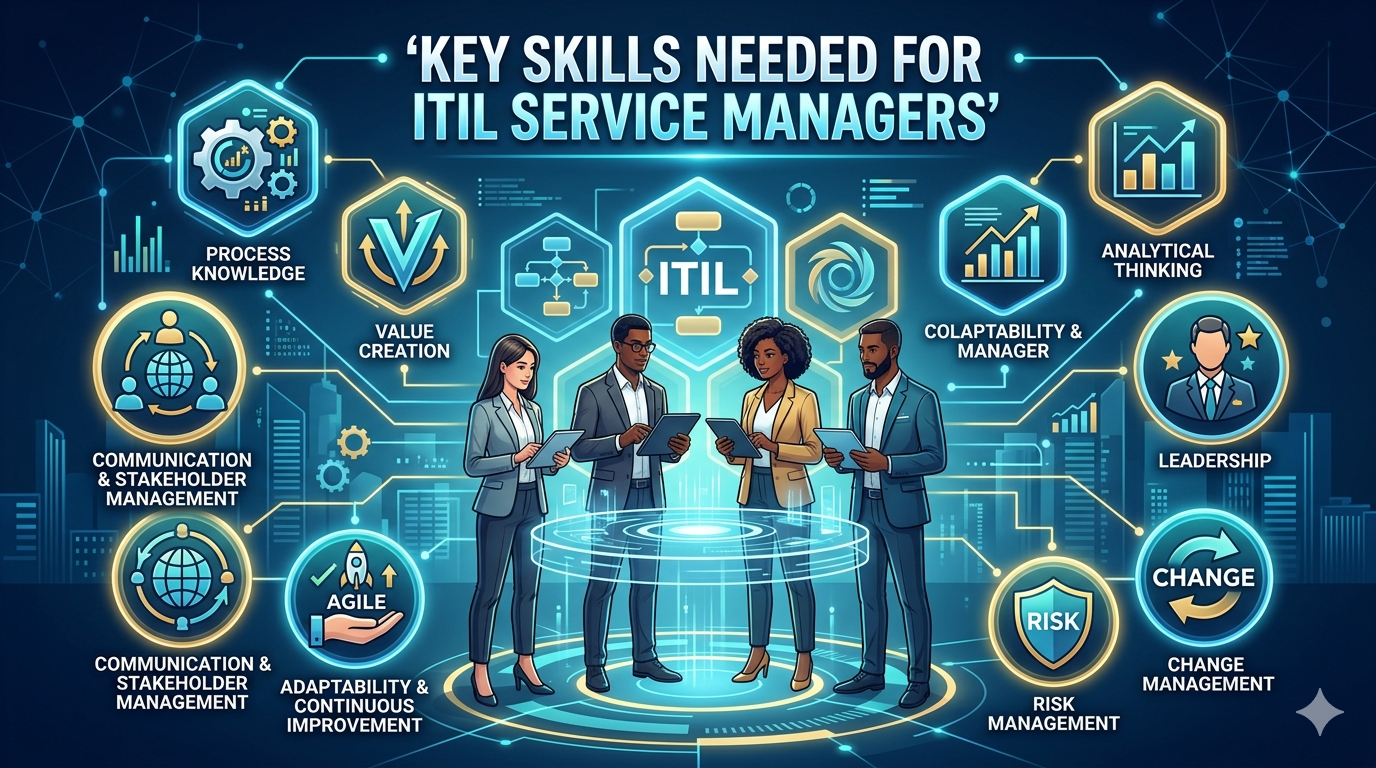
In today’s fast-changing IT environment, organizations need skilled professionals who can manage IT services efficiently and align them with business goals. This is where ITIL service managers play a major role. Whether you are planning to pursue an ITIL 4 Certification or exploring the possibility of an ITIL 5 Certification in the future, understanding the key skills required for ITIL service management is essential for career growth.
1. Strong Understanding of IT Service Management
An ITIL service manager must have deep knowledge of IT Service Management (ITSM) principles. They should understand service lifecycle management, incident management, problem management, change management, and continual improvement processes. Professionals with an ITIL 4 Certification gain practical knowledge of modern ITSM frameworks that help organizations improve service delivery and customer satisfaction.
2. Communication Skills
Effective communication is one of the most important skills for ITIL professionals. Service managers regularly interact with technical teams, stakeholders, vendors, and customers. They must explain complex technical issues in a simple and understandable way. Good communication also helps in handling service disruptions and maintaining transparency during incidents.
3. Leadership and Team Management
ITIL service managers often lead cross-functional teams. Strong leadership skills help them motivate employees, manage conflicts, and ensure smooth collaboration between departments. They should also be capable of driving service improvement initiatives and encouraging teams to adopt best practices.
4. Problem-Solving and Analytical Thinking
IT environments are complex, and issues can arise unexpectedly. A successful service manager should be able to identify root causes, analyze service trends, and make informed decisions quickly. Analytical thinking helps reduce downtime, improve operational efficiency, and deliver better customer experiences.
5. Knowledge of Automation and Emerging Technologies
Modern IT service management is evolving with automation, AI, and cloud technologies. Service managers should stay updated with emerging trends and understand how automation can improve workflows and reduce repetitive tasks. This knowledge becomes increasingly important as organizations prepare for future frameworks like ITIL 5 Certification concepts and advanced digital transformation strategies.
6. Customer-Centric Mindset
ITIL focuses heavily on delivering value to customers. Service managers should understand customer expectations and ensure services meet business requirements. Building strong customer relationships and continuously improving service quality are key responsibilities in ITSM roles.
7. Risk and Change Management Skills
Managing risks and implementing changes without affecting business operations are critical tasks. ITIL service managers should know how to assess risks, plan changes properly, and minimize disruptions. These skills help organizations maintain stability while adapting to new technologies and business demands.
Is ITIL Certification Worth It?
Many professionals ask, “Is ITIL Certification Worth It?” The answer is yes for individuals looking to build a career in IT service management. ITIL certifications improve your understanding of ITSM best practices, increase job opportunities, and enhance your credibility in the industry. Companies worldwide value certified professionals because they help improve efficiency, reduce operational risks, and deliver high-quality IT services.
As businesses continue to prioritize digital transformation, skilled ITIL service managers will remain in high demand. Earning an ITIL 4 Certification today can provide a strong foundation for future advancements and long-term career success.

 English
 Arabic
 Français
 Español
 Português
 Deutsch
 Türkçe
 Italiano
 Russian
 Romaian